Is a Private Egyptologist Worth It at the Grand Egyptian Museum?
The galleries are well signed and easy to walk alone, so the guide question is real. Here is what a private Egyptologist actually adds, and who genuinely needs one.
Booking choice: Private English-speaking Egyptologist and Cairo/Giza hotel transfers. Admission, lunch and tips are extra. Approximately 3.5 hours. Check Private GEM Egyptologist Visit Dates
Your next choice is how to visit: Buy specialist interpretation and a private pace, or retain a fully independent museum visit.
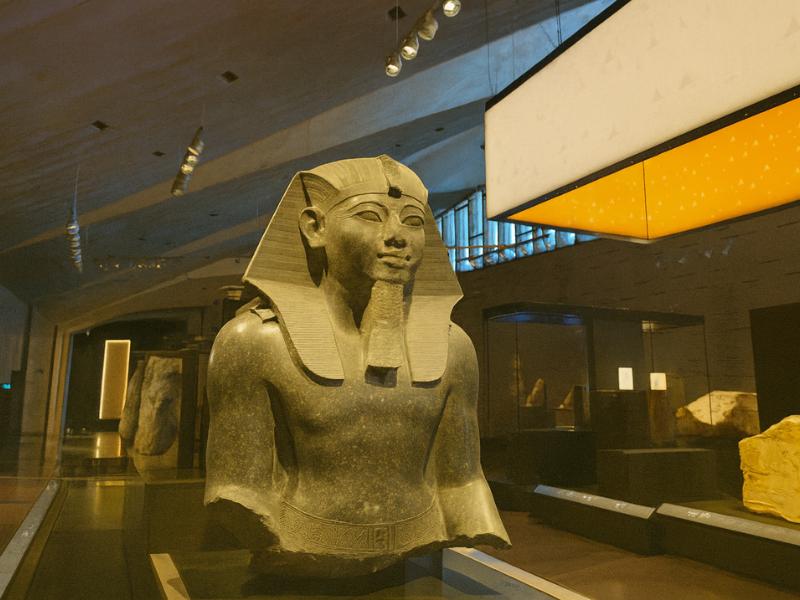
The museum is large, well labelled and logically arranged, which makes the guide decision genuinely open. You can absolutely walk it alone. The question is whether a private Egyptologist changes the visit enough to justify the cost.
Is a private Egyptologist worth it at the Grand Egyptian Museum?
For most first-time visitors without a background in Egyptian history, yes. A private Egyptologist turns a walk past impressive objects into a connected story, and moves at your pace rather than a group's. The cost is modest against the trip as a whole, roughly $40 to $80 for two to three hours. For repeat visitors or confident solo travelers, self-guided works fine.
The value is not in reading you the labels. It is in the context that labels cannot hold: why the death mask combines a vulture and a cobra, what the Grand Staircase statues are arranged to say, how the Khufu Solar Boat fits into beliefs about the afterlife. That kind of explanation takes a guide seconds and changes what you are actually looking at.
A private guide also solves the pace problem. You can linger where you are gripped and move quickly where you are not, which no fixed itinerary allows.
What does a private guide cost?
A private, third-party Egyptologist runs roughly $40 to $80 USD for a two to three hour visit, on top of your admission. That sits above the official group option but well below what most travelers spend on a single day of touring, and it buys a session shaped entirely around your interests and questions.
Prices vary with language, group size and whether transport is included. A private guide who also handles hotel pickup and museum entry in one booking costs more than a guide alone, but removes every logistics headache from the day. For a family or a small group splitting the fee, the per-person cost drops quickly.
Set that against the ticket picture: standard admission is about EGP 1,450 for a foreign adult, so a private guide is often a larger line than the entry itself. Whether that is worth it comes down to how much the story matters to you, which the fuller GEM ticket prices breakdown can help you weigh.
What does the official guided-tour ticket include instead?
The museum sells a guided-tour ticket at about EGP 1,950, which is admission plus a group tour led by an official museum Egyptologist. It runs roughly 90 minutes to two hours and covers the Grand Hall and Ramesses II, the Grand Staircase, the Tutankhamun galleries and the main galleries. It is a fixed route at a fixed pace, shared with other visitors.
That format is a real upgrade on walking alone with no context, and it is cheaper than a private guide. The limitation is the group: you follow a set path, you cannot linger on the one thing that fascinates you, and if the group is large the acoustics and sightlines work against you.
So the honest comparison is three tiers, not two: fully self-guided, the official group ticket, and a private Egyptologist. Our side-by-side on guided versus non-guided tickets lays out where each one earns its price.
| Option | Approx. cost | Best for |
|---|---|---|
| Self-guided admission | ~EGP 1,450 entry | Confident, well-read or repeat visitors |
| Official group guided ticket | ~EGP 1,950 | Budget-minded first-timers wanting some context |
| Private Egyptologist | ~$40 to $80 plus entry | First-timers who want depth and their own pace |
When is self-guided enough?
Self-guided works well if you have read up beforehand, you have visited major Egyptian collections before, or you simply prefer setting your own rhythm. Signage is in English, French and Arabic, the galleries run chronologically, and the headline stops are easy to find. A prepared solo visitor can have a genuinely good day with no guide at all.
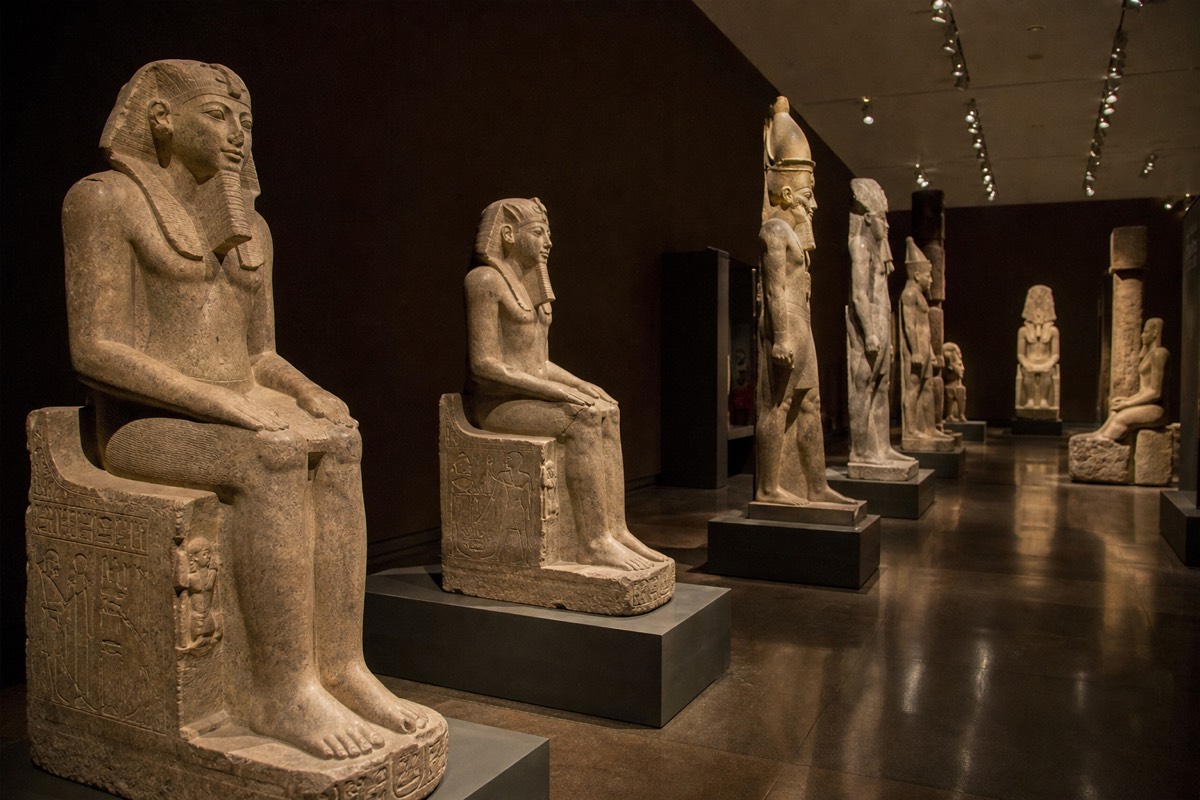
It also suits travelers who want to photograph slowly, sit with a single gallery, or come back a second time to go deep on one period. In those cases a guide can feel like a constraint rather than a help. If you know what you came for, the building lets you find it.
Who benefits most from a private guide?
First-time visitors to Egypt, families with curious children, and anyone who wants the civilisation behind the objects rather than just the objects. If your Egypt knowledge is thin and this is a once-in-a-lifetime trip, a private Egyptologist is probably the single highest-value add to the day.
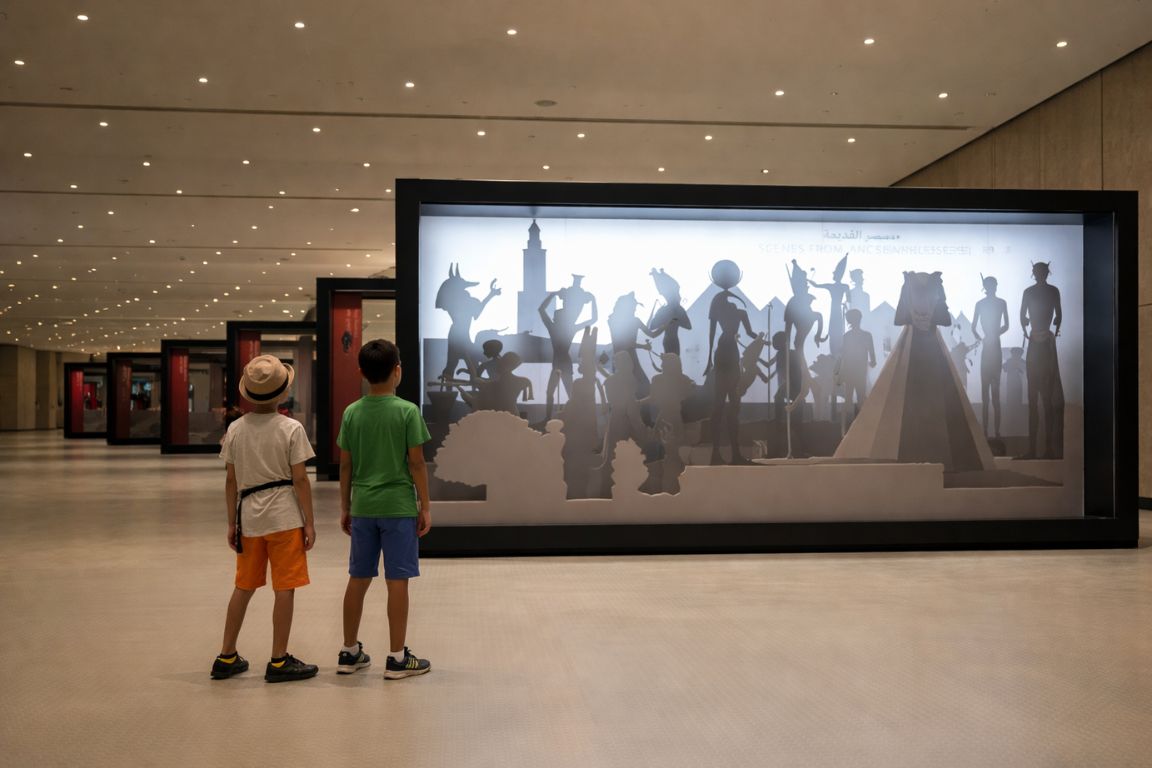
A guide can use stories, answer your questions and connect the collection with the monuments you see elsewhere in Egypt. For families, confirm the guide’s approach and the children’s needs before booking.
For travelers who want the museum and the plateau under one guide, a private day covering both is the fuller version of the same idea, and it carries the context across from the galleries to the Pyramids in a single narrative.
Planning a trip? Start with our guide to visiting the Grand Egyptian Museum.