How to Visit the Grand Egyptian Museum
The Grand Egyptian Museum opened Nov 4, 2025 near the Giza Pyramids. Tickets must be booked online - plan 4-6 hours to see Tutankhamun and more.
Booking choice: Self-guided GEM admission including permanent galleries, Tutankhamun and the Solar Boat. No guide or transfers. Non-refundable; this provider listing is for ages 6 and above. Check GEM Admission Dates
Keep your museum route independent, or add a private guide and hotel pickup if they serve your day.
| Official opening | November 4, 2025 (public access) |
| Location | Alexandria Desert Road, Al Remaya Square, Giza, Egypt. 2 km from the Pyramids of Giza |
| Foreign adult ticket | EGP 1,450 (~$30 USD). Prices verified March 2026 |
| Foreign child/student | EGP 730 (~$15 USD). Prices verified March 2026 |
| Opening hours | Complex: 8:30 AM – 7:00 PM daily. Galleries: 9:00 AM – 6:00 PM. Extended on Wed & Sat: complex to 10 PM, galleries to 9 PM |
| Last ticket purchase | 5:00 PM standard days. 8:00 PM on Wed and Sat |
| Where to book | visit-gem.com only. No on-site ticket sales |
| Recommended visit time | 4 to 6 hours minimum. Full day for serious visitors |
| Children under 6 | Free entry all days |
| Photography | Allowed in most areas. No flash, no tripods, no selfie sticks |
What Is the Grand Egyptian Museum and Why Is It Different From Anything Else in Cairo?
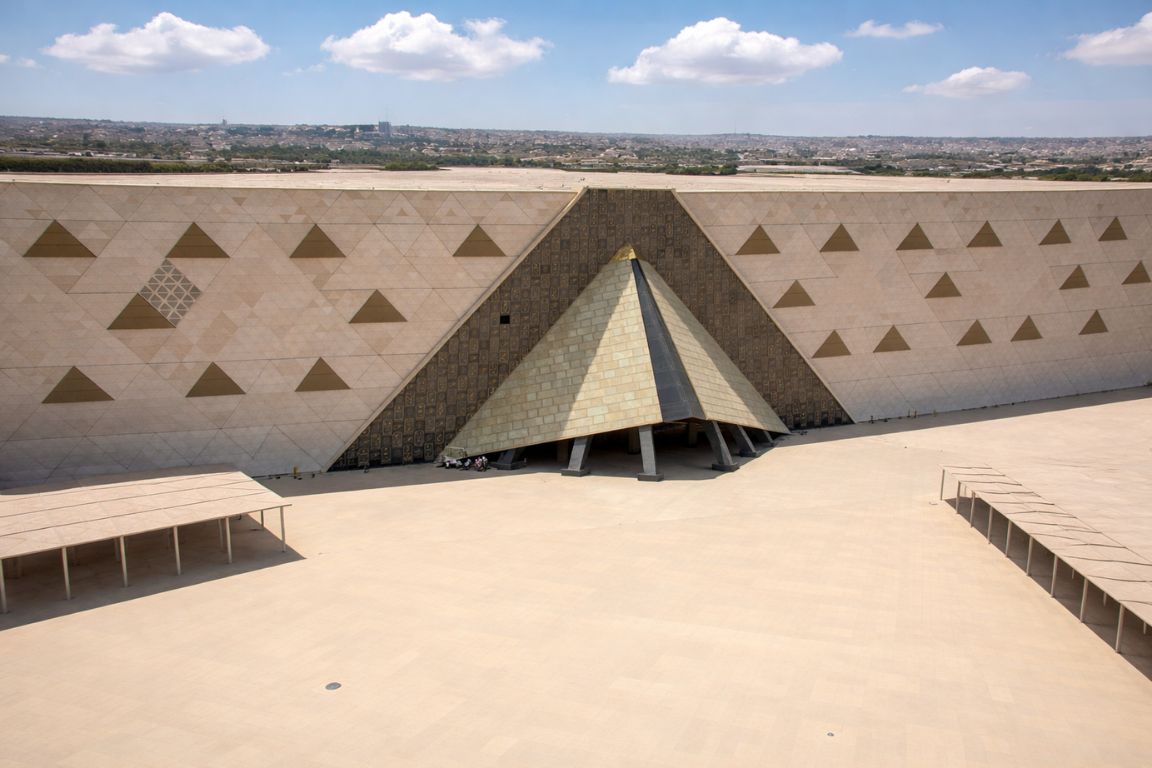 The Grand Egyptian Museum is the largest archaeological museum in the world dedicated to a single civilization. It opened fully to the public on November 4, 2025, next to the Giza Pyramids, and now holds over 100,000 artifacts spanning 7,000 years of Egyptian history. Nothing else on earth puts this much ancient history in one air-conditioned, purpose-built space.
People walk through the entrance and stop. Not because they’re tired from the parking lot walk, but because the scale of the thing is genuinely disorienting. The atrium alone is enormous. In the center stands a colossal statue of Ramesses II, 11 meters tall and weighing 83 tons, and it doesn’t dominate the room so much as anchor it. The ceiling soars. Natural light pours through the angular glass facade. And somewhere in the background, through the windows, the silhouette of the Pyramids of Giza sits exactly where it should be.
That view is not accidental. The architects at Heneghan Peng designed the museum’s three main axes to align with the three great pyramids. Wherever you are in the building, the plateau is the backdrop. Ancient and modern in constant conversation, separated by exactly 2 kilometers.
This is different from every other museum in Egypt. The Egyptian Museum in Tahrir has 120 years of accumulated density, which is part of its charm. The GEM was built from the ground up with a single purpose: to give these 100,000 objects the space, the light, and the storytelling they deserve. It cost $1.2 billion and took more than two decades to complete. Whether or not the wait was worth it is not really a debate. The Tutankhamun collection alone, all 5,300 objects shown together for the first time in history, makes the answer obvious.
We’ve broken down Grand Egyptian Museum vs Pyramids of Giza so you can figure out which suits your limited Cairo time – or whether you need to make room for both.
Which GEM Ticket Type Is Right for You?
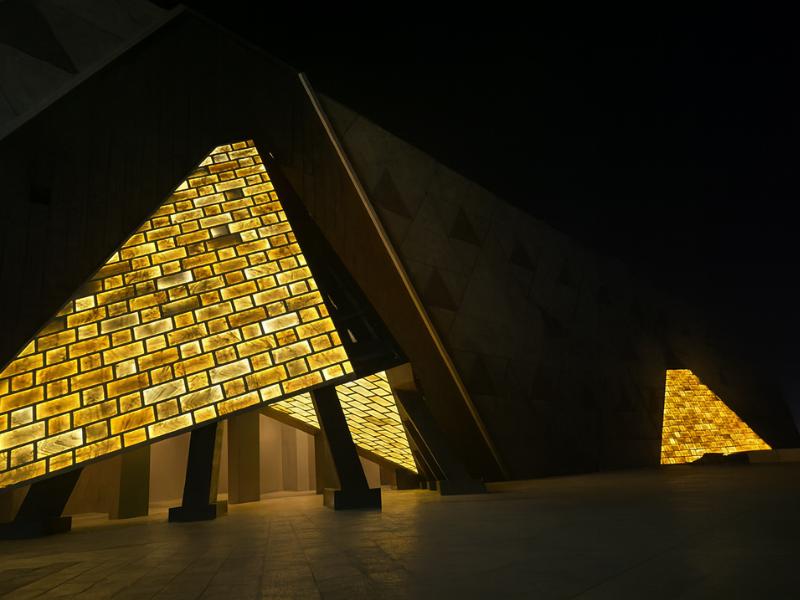
Most international visitors need the standard admission ticket (EGP 1,450 for adults, EGP 730 for children and students). Tickets come with a timed entry slot and must be booked at visit-gem.com before your visit. If you want a guided experience, the museum offers group guided tour tickets. For deeper, private access, book a private Giza Pyramids and Grand Egyptian Museum tour.
The GEM runs a timed entry system with 8 time slots per day. This is not optional. When you book online, you pick your entry window: 8:30 AM, 11:00 AM, or 1:00 PM are the main options. The system is strict. Your ticket is date-specific, time-specific, and non-refundable. Once you book, that slot is yours.
Here’s the breakdown for foreign visitors:
| Foreign adult | 1,450 | ~$30 |
| Foreign child (6-12) / student | 730 | ~$15 |
| Expatriate adult | 730 | ~$15 |
| Egyptian adult | 200 | ~$4 |
| Children under 6 | Free | Free |
| Visitors with disabilities | Free | Free |
Prices verified March 2026 via visit-gem.com official portal. Always confirm at checkout as rates are subject to change.
One thing travelers often miss: the group guided tour ticket includes a shared tour, which moves at a fixed pace and may skip things that matter to you. If history is the reason you came to Egypt, a private guide is worth the cost difference. Omar and our team arrange private GEM Egyptologist visit with hotel transfers regularly, and the difference in what you actually understand and remember is significant.
Payment at the official site is Visa or Mastercard only. The portal is available in English and Arabic. After completing payment, you receive a PDF voucher by email. Save it. That QR code is your entry pass.
If you’re torn between options, here’s our honest comparison of guided vs non-guided tickets in Grand Egyptian Museum based on what each delivers for understanding the artifacts.
How Do You Book GEM Tickets in Advance (and Should You)?
Yes, you absolutely must book in advance. The GEM no longer sells tickets on-site. The only official booking channel is visit-gem.com. During peak season (October through April), popular date-and-time slots sell out days or even weeks ahead. Booking the moment your Egypt dates are confirmed is not overcautious. It is necessary.
The museum hit 27,000 visitors in a single day during its opening week, against a recommended capacity of 20,000. That’s not a temporary novelty effect. Egypt’s tourism numbers are rising, the GEM is the headline attraction, and the timed entry system means each slot has a hard ceiling.
Here’s how the booking process works, step by step. Go to visit-gem.com and click the admissions section. Choose your date. Available slots show in green, sold-out slots in grey. Select your entry time window, then choose your ticket category (you’ll want “Arabs or Other Nationalities” if you’re a foreign visitor). Add the number of tickets. The portal limits individual bookings to 10 tickets per transaction. Pay by card, and your PDF voucher arrives by email. Screenshot it or download the PDF before you land in Egypt. Mobile data is not always reliable near the Giza Plateau.
One important note: Many travelers run into frustrations when trying to book tickets directly on the official Grand Egyptian Museum website, visit-gem.com. While this remains the only authorized platform for purchasing standard entry tickets, and the museum repeatedly warns against using any other sites to steer clear of scams or invalid bookings – the site itself can feel clunky or unreliable at times. That’s exactly why a lot of visitors end up preferring trusted third-party platforms like GetYourGuide or Viator. These alternatives tend to deliver a much smoother experience, especially for international travelers.
Need help with the purchase? Our guide on how to buy Grand Egyptian Museum tickets walks you through the official site, pricing tiers, and when to book versus just showing up.
What Is the Best Time to Visit the Grand Egyptian Museum?
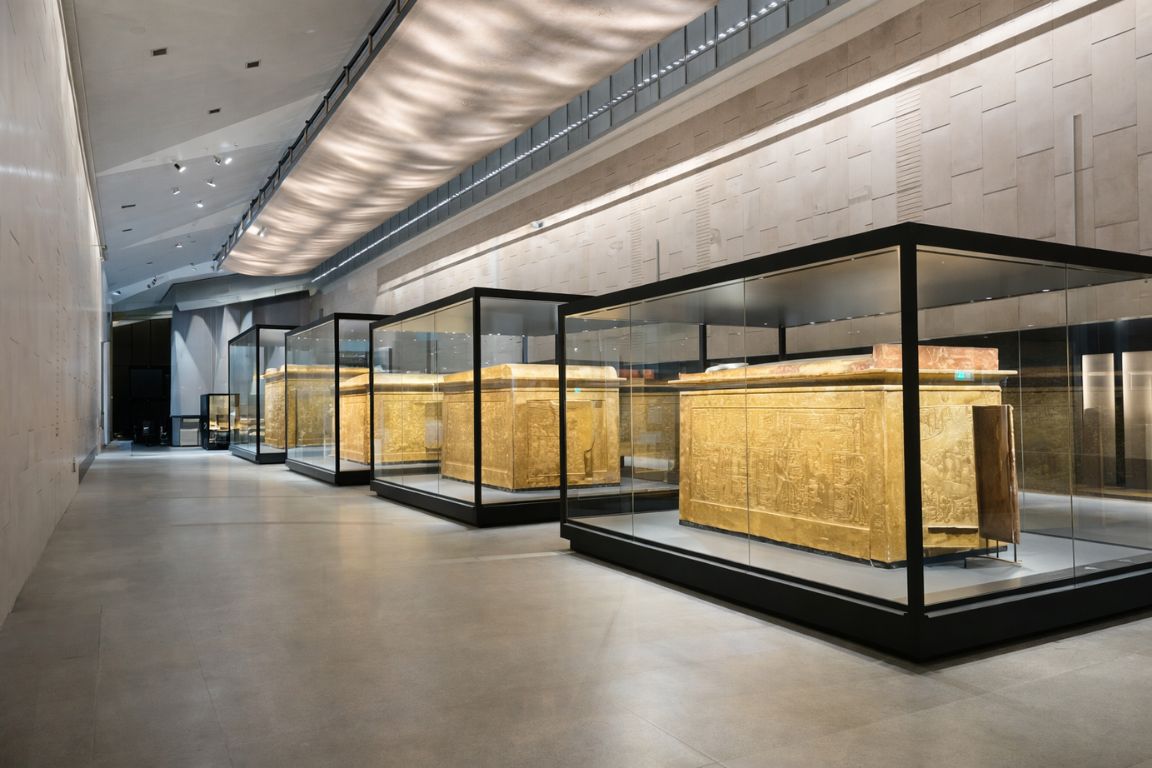 The first entry slot of the day (8:30 AM complex, 9:00 AM galleries) is the best time to visit. Crowd levels are lower, natural light through the glass facade is at its most dramatic, and you get the Tutankhamun galleries before tour groups arrive. October through April is peak season overall. Wednesday and Saturday evenings offer extended hours and a completely different atmosphere.
Here’s what the day actually looks like across different entry windows:
| 8:30 AM (complex opens) | Low | Photography, King Tut galleries | Best light. Galleries open at 9 AM |
| 11:00 AM | Moderate to high | General visit | Tour groups arrive. Tutankhamun queue lengthens |
| 1:00 PM | High | Combining with Pyramids visit (do GEM first) | Peak crowds in King Tut section |
| Wed/Sat evening | Lower after 7 PM | Atmosphere, less crowded galleries | Complex open to 10 PM, galleries to 9 PM |
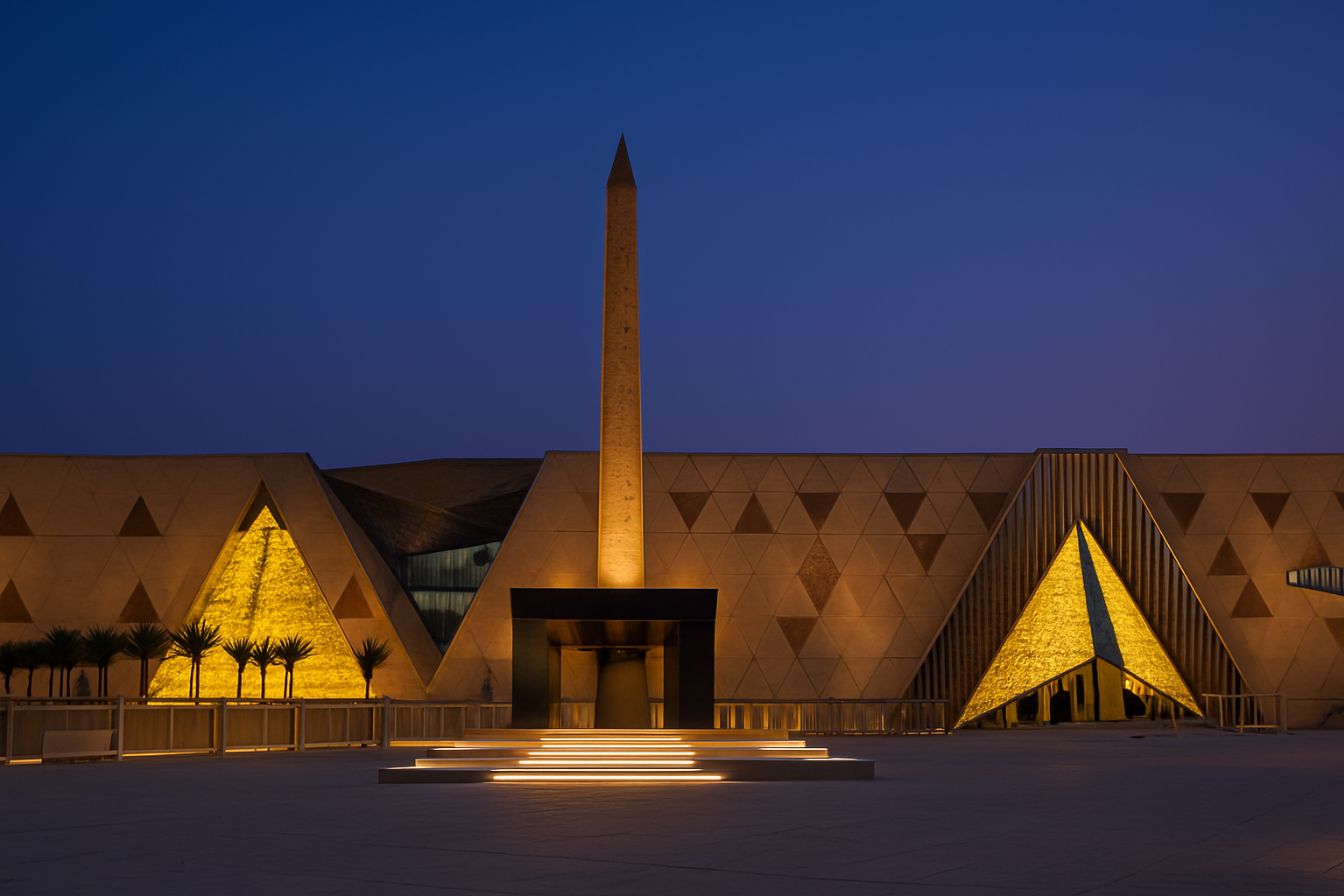
One thing nobody tells you before you go: the light matters. The glass facade of the GEM catches the morning sun differently than at any other time of day. The shadows of the obelisk and statues in the forecourt fall in ways that feel almost deliberate at 9 AM. By noon, that’s gone. If photography is part of why you’re here, the morning slot is not optional.
Seasonally, Egypt’s high season runs October through April. That’s when the GEM is at its busiest. If your travel dates land in May through September, the crowds thin noticeably. The heat outside is more intense, but the museum is fully air-conditioned throughout. Some experienced Egypt travelers deliberately choose shoulder months and find the GEM significantly more peaceful.
Timing matters more than you’d think. The best time of day to visit Grand Egyptian Museum depends on crowds, Egyptian heat, and whether you want energy to actually take in this massive collection.
How Long Do You Need at the Grand Egyptian Museum?
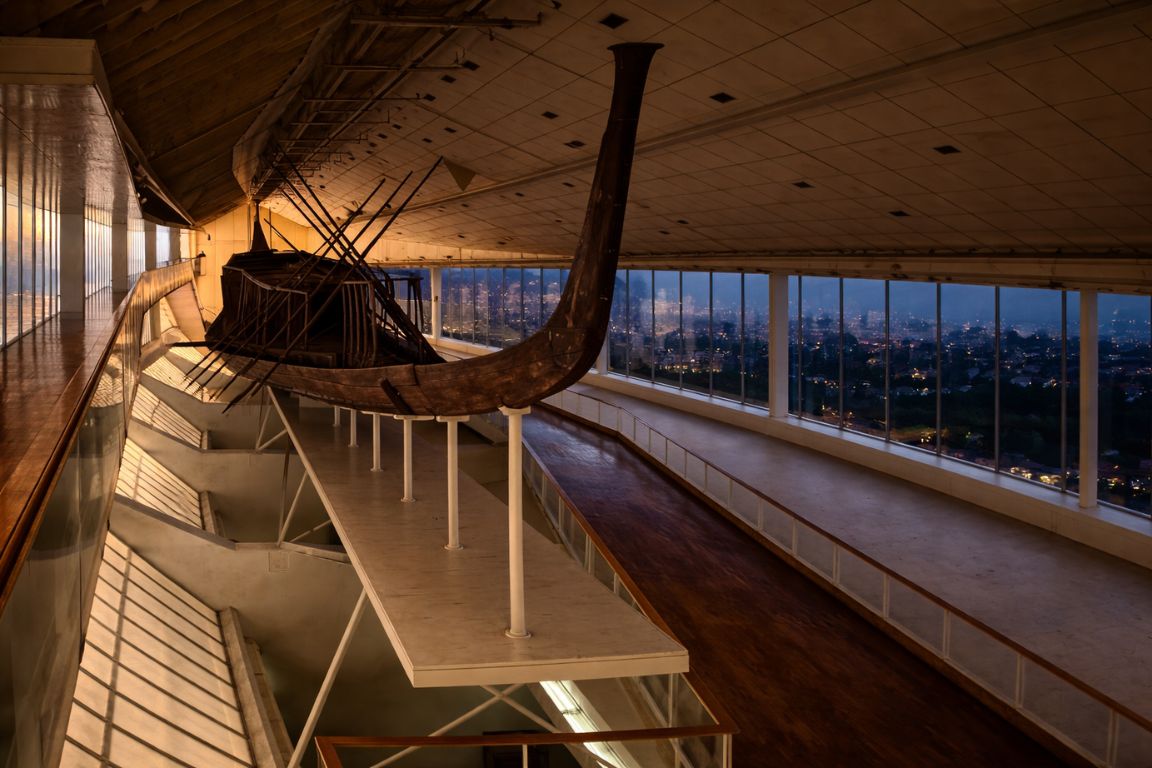 Budget at least 4 hours for a meaningful visit covering the Grand Staircase, main galleries, and Tutankhamun collection. If you want to experience the Solar Boat Museum and spend real time reading exhibits, plan 6 hours. History enthusiasts and families with children frequently find a full day barely enough.
The GEM is enormous. The 12 main galleries alone trace Egypt’s history from prehistory through the Greco-Roman period. That’s 7,000 years of civilization, chronologically arranged, with artifacts that stop you mid-walk and make you read every label. Then there’s the Grand Staircase, lined with 60 ancient monuments and colossal statues of pharaohs. One visitor who walked it said it felt like the scale kept shifting, every time you thought you’d seen the biggest piece, the next one was larger.
A practical breakdown by section:
- Grand Hall and entrance area: 30 to 45 minutes, including the Ramesses II statue and orientation
- Grand Staircase: 1 to 2 hours depending on pace. Taking the moving walkway up then walking down is the recommended approach
- 12 main galleries: 2 to 3 hours for a solid pass. More if you’re reading labels and lingering
- Tutankhamun collection: 1 to 1.5 hours. Expect a queue for the golden death mask
- Khufu’s Solar Boat Museum: 45 minutes to 1 hour
- Lunch break (GEM restaurants): 45 to 60 minutes. The commercial area has proper sit-down options
If you’re combining with the Pyramids of Giza in one day, the GEM should come first. Arrive for the 8:30 AM opening. Be in the galleries by 9 AM. Finish by 1 or 2 PM. Then head the 2 kilometers to the plateau for the afternoon. That sequence works. The reverse doesn’t. Nobody thinks clearly about 5,000-year-old artifacts after four hours of walking in the Giza sun.
If you’re trying to plan your schedule, here’s our honest comparison of half-day vs full-day at Grand Egyptian Museum based on what you can actually absorb before exhaustion sets in.
What Should You Know Before You Arrive (Practical Logistics)?
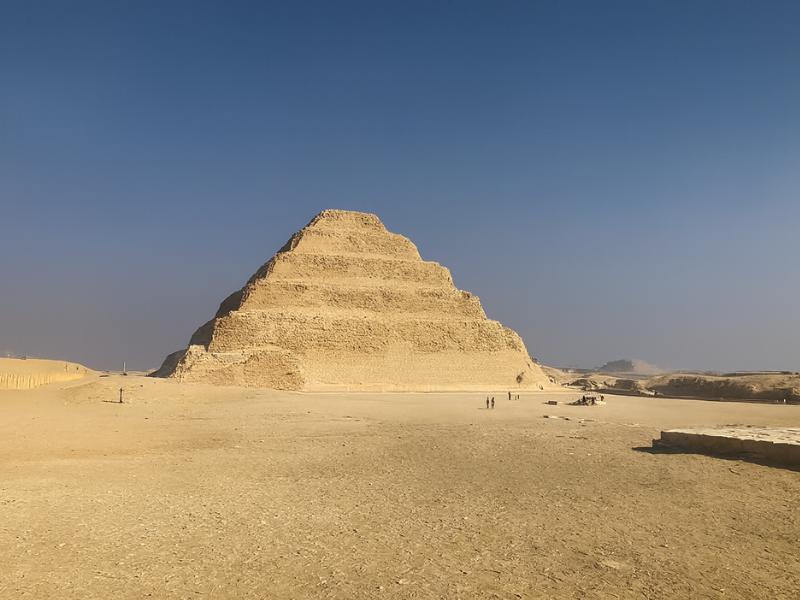
The GEM sits 2 km from the Pyramids and about 45 minutes from central Cairo by car. Uber and Careem are the most reliable transport options. There is paid parking on-site. The museum is fully air-conditioned, has restaurants, gift shops, and complimentary golf cart shuttles from the parking area to the main entrance. Comfortable walking shoes are not optional given the scale of the building.
Getting there: most visitors arriving from Downtown Cairo or Zamalek use Uber or Careem. The ride runs 30 to 45 minutes depending on traffic. Taxis work too, but agree on the fare before you get in. Some drivers will try to drop you short of the entrance. A firm “to the main entrance” in advance handles this. Hotels with concierge services can arrange dedicated transfers, which removes the negotiation entirely.
The walk from parking to the main entrance is longer than most expect. The museum is massive and the approach is designed to be monumental. Complimentary golf carts/buggies shuttle visitors from the far parking areas to the main building. Use them if you have older travelers, young children, or any mobility concerns. That energy is better spent inside.
Photography rules: cameras and phones are welcome throughout most of the museum. No flash, no tripods, no selfie sticks. The Tutankhamun gallery has additional restrictions inside. Flash specifically damages artifacts with fragile pigments, so this is enforced. Live streaming is also prohibited.
Dress code: there is no strict requirement, but modest, comfortable clothing and flat walking shoes make the day significantly more enjoyable. The GEM is fully air-conditioned, so the temperature inside is consistent regardless of the Egyptian heat outside. Bring a light layer if you’re sensitive to cool air.
The children’s museum operates on more limited hours. If you’re visiting with younger children, confirm current times at visit-gem.com before booking.
What Will You Actually See Inside the Grand Egyptian Museum?
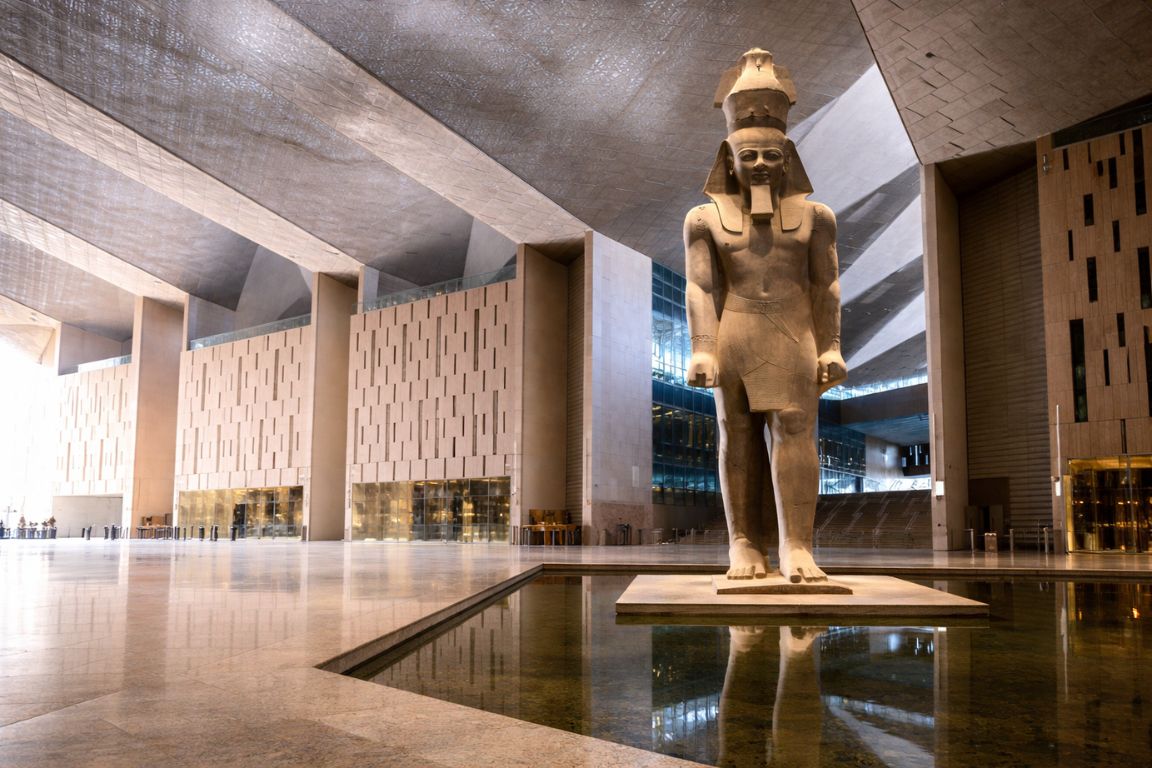 The GEM holds over 100,000 artifacts across 12 main galleries, the Grand Staircase, the Tutankhamun collection, and Khufu’s Solar Boat Museum. The highlights are the complete Tutankhamun collection (5,300 objects, all shown together for the first time), the colossal Ramesses II statue at the entrance, and the 4,500-year-old solar boat of Khufu.
Start with the colossal Ramesses II at the entrance. This statue was found broken in six pieces near ancient Memphis in 1820, and moved to Ramses Square in Cairo before eventually being transferred here. At 11 meters and 83 tons, it’s the kind of piece that makes you realize photographs have been lying to you your whole life. Scale is the thing that doesn’t translate.
The Grand Staircase is next, and it takes time. It’s not a staircase in any conventional sense. It’s a processional lined with 60 ancient monuments, colossal seated pharaohs, busts, columns, obelisks. The tip that actually works: take the moving walkway to the top, then walk back down. You can absorb the individual pieces without fighting your way up stairs.
The 12 main galleries run chronologically. They begin with predynastic Egypt, pottery fragments and early civilization markers from before the pharaohs. Then the Old Kingdom, the pyramid builders, the world-historical confidence of a civilization that decided the answer to death was to build something permanent. The galleries move through the Middle and New Kingdoms, each period with its own visual language. By Gallery 12, you’re in the Ptolemaic and Roman eras, and the artifacts have a hybrid quality that tells you exactly what happens when Greek and Egyptian civilizations meet.
The Tutankhamun galleries are the centerpiece. The 19-year-old king’s tomb, discovered in 1922 with over 5,300 objects still intact, was the greatest single archaeological find in modern history. In the old Egyptian Museum, only a fraction of those objects were displayed. Here, all of them are together: golden shrines, beds, chariots, model boats, wine jars, board games, linen garments, and at the center, the death mask. Gold, lapis lazuli, carnelian, obsidian. Howard Carter’s famous journal notes that the gilded face was the first thing he saw when he opened the innermost coffin. Visitors tend to go quiet in front of it. Not reverently quiet. Something more like the brain recalibrating.
Khufu’s Solar Boat rounds out the major exhibits. Built 4,500 years ago from Lebanese cedar, the boat was buried in a sealed pit beside the Great Pyramid to carry the pharaoh’s soul alongside the sun god Ra across the sky. It’s enormous: 43 meters long, made of 1,224 individual pieces that survived millennia in the desert. The story of its restoration and display is as impressive as the artifact itself.
Not sure where to focus your time? Check out our guide on what to see at the Grand Egyptian Museum – it’s massive and you need a plan to hit the highlights.
What Are the Most Common Mistakes First-Time GEM Visitors Make?
 The most damaging mistake is not booking tickets in advance, which means arriving at a fully sold-out museum with no recourse. The second is underestimating time. Most people who planned two hours and arrived with two hours left wishing they’d given themselves the full day. Third is skipping the Tutankhamun galleries due to the queue. The queue is worth it. Every time.
Omar has observed patterns over thousands of guided visits. The same mistakes come up repeatedly, and they’re all avoidable.
Not printing or saving the ticket voucher is more common than it should be. The QR code is your entry. If your phone dies or you lose data coverage, you need a screenshot or the PDF downloaded locally. The GEM’s entry gates are strict about valid codes. This is not a place to rely on mobile connectivity.
Trying to rush the Tutankhamun galleries. The queue circles around to the golden death mask. Visitors who join the line, start feeling impatient, and consider skipping ahead, nearly always regret it. The mask is the destination. Standing in front of it, reading what it means, understanding the context of the burial, that takes a few minutes. The queue takes maybe 20 minutes on a busy day. The math is simple.
Arriving without comfortable shoes. The GEM is not a small building. A full visit involves several kilometers of walking on polished stone floors. Sandals are fine for a café terrace. They are not fine for six hours at the world’s largest archaeological museum.
Wondering about clothing? Check out our guide on what to wear to the Grand Egyptian Museum – you’re dealing with heavy air conditioning inside and Cairo heat outside.
Combining too much into one day without prioritizing. The GEM plus the Pyramids is achievable in a single day, but only with a clear plan: GEM in the morning, Pyramids in the afternoon. Adding the old Egyptian Museum in Tahrir to the same day is almost universally reported as a mistake. Two destinations, both genuinely requiring 3 to 4 hours minimum, is a recipe for doing both badly.
Not using the complimentary buggies. The walk from the outer parking area to the museum entrance is longer than expected. That same energy spent walking across the forecourt is energy not available for the galleries. Take the cart. Save it for the statues.
Timed entry has to be booked before you arrive. Check dates on the Grand Egyptian Museum entry ticket.
How Does the Grand Egyptian Museum Compare to the Egyptian Museum in Tahrir Square?
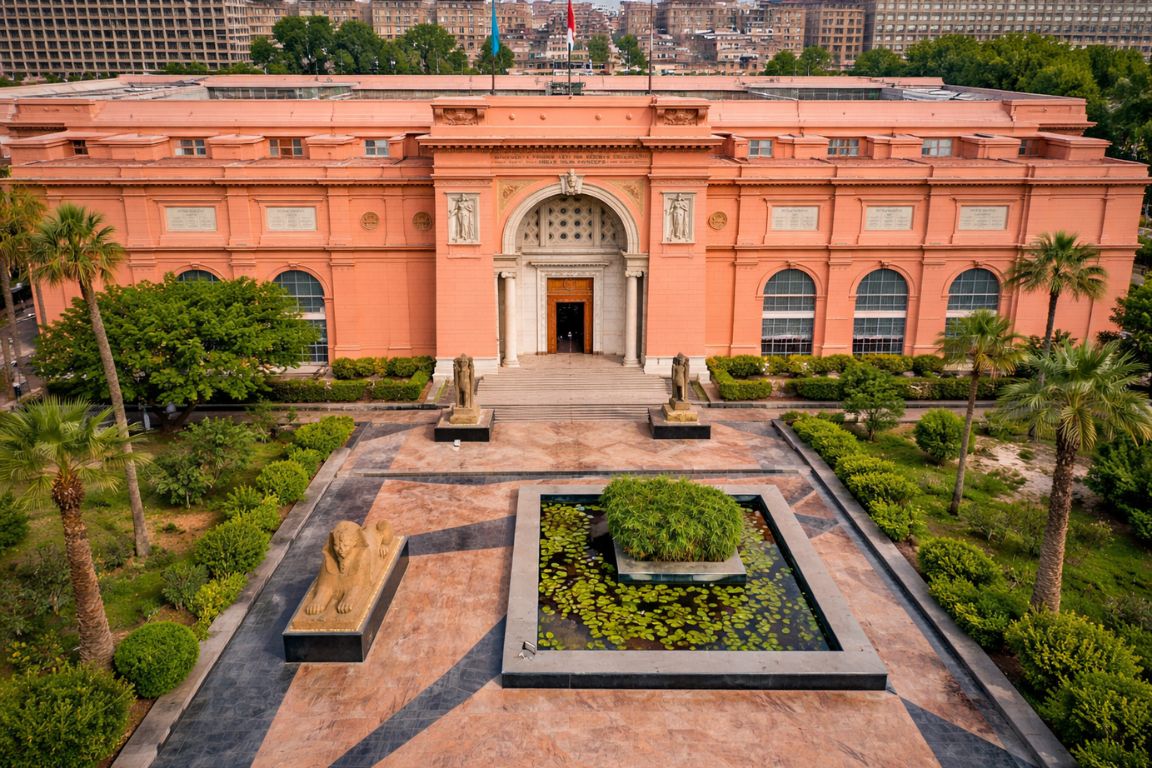 The GEM and the Egyptian Museum in Tahrir Square are fundamentally different experiences. The GEM is modern, spacious, chronological, and holds the complete Tutankhamun collection. The Tahrir museum is a 120-year-old building with a dense, atmospheric collection including the Royal Mummies and intimate artifacts the GEM doesn’t have. Most first-time visitors should prioritize the GEM. Anyone with 3 or more days in Cairo should visit both.
The comparison is not about which is better. It’s about what each does that the other cannot.
| Opened | 2025 | 1902 |
| Location | Giza Plateau (next to Pyramids) | Tahrir Square, central Cairo |
| Foreign adult ticket | EGP 1,450 (~$30) | EGP 550 (~$11) |
| Tutankhamun collection | Complete (5,300 objects) | Most pieces moved to GEM |
| Royal Mummies | Visit NMEC for the principal Royal Mummies collection | The principal Royal Mummies collection is at NMEC in Fustat |
| Atmosphere | Modern, spacious, chronological storytelling | Dense, atmospheric, like walking into the past |
| Air conditioning | Full building | Limited to none |
| Advance booking required | Yes, online only | No, walk-in available |
| Best combined with | Pyramids of Giza (same day) | Islamic Cairo, Coptic quarter |
| Visit for | First-time visitors, families, Tutankhamun | Mummy enthusiasts, budget travelers, history depth |
Prices verified March 2026. Exchange rate approximately 1 USD = 48 EGP.
A note about the Royal Mummies: they are not at either museum. Since being moved for preservation, the primary Royal Mummies collection (22 pharaohs and queens including Ramesses II, Hatshepsut, and Thutmose III) is now displayed at the National Museum of Egyptian Civilization (NMEC) in Fustat. If seeing the mummies is a priority, that requires a separate trip.
The Tahrir museum retains some pieces most travelers don’t know to look for. The Narmer Palette, one of the earliest known hieroglyphic inscriptions. The tiny Khufu statuette. The Tanis treasures. The Yuya and Thuya tomb collection, which predates Tutankhamun and is almost never discussed by anyone who hasn’t been to Tahrir. These aren’t being moved. They stay there. So the old museum isn’t emptied. It’s just no longer the first answer to “where is the Tutankhamun collection?”
Is a Guided Tour Worth It, or Can You Do the GEM Solo?
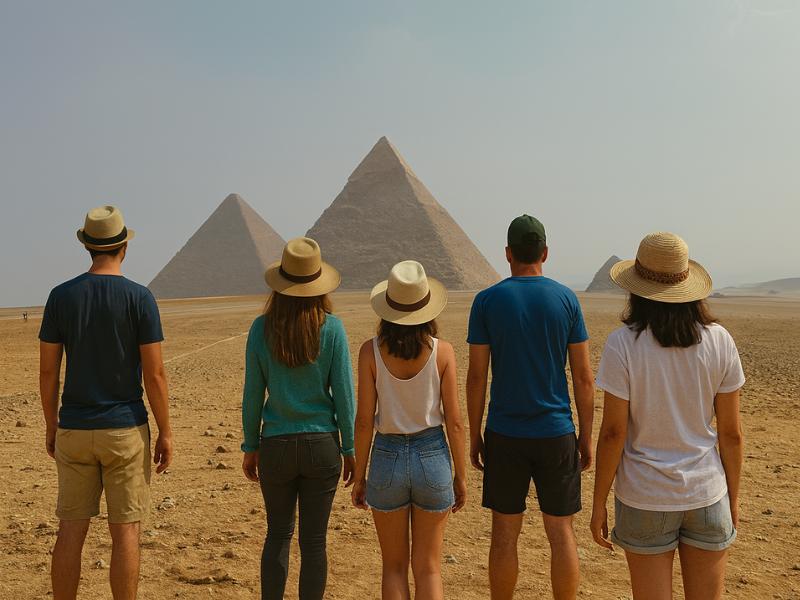
A knowledgeable guide transforms the GEM from an impressive building full of old things into a coherent narrative about 7,000 years of human civilization. Solo visits work well for travelers who have background knowledge or who prefer their own pace. For first-timers without Egyptian history context, a good guide is probably the single highest-value decision you’ll make for the whole trip.
Here’s the honest version of this answer. The GEM has strong signage in English, French, and Arabic. The exhibits are clearly labeled. The chronological structure of the galleries is logical. A prepared solo visitor with some background reading can absolutely have a meaningful experience.
But here’s what changes with a guide. The death mask of Tutankhamun weighs 11 kilograms of gold. It was made to fit his specific face. The striped headdress and the cobra at the forehead have specific religious significance. The vulture represents Upper Egypt. The cobra represents Lower Egypt. Together they mean the king ruled a unified land. That context takes 45 seconds to explain, and it changes what you’re looking at from “a famous gold face” to a political and religious statement about a civilization’s cosmology. That’s what good guides do. Repeatedly. For 4 to 6 hours.
| Most memorable single exhibit | Tutankhamun death mask (cited most frequently) |
| Actual time spent vs. planned | Most who planned 2 to 3 hours ended up staying 5 to 6 |
| Guided vs. solo: satisfaction rate | Guided visitors consistently report higher understanding and enjoyment |
| Biggest regret | Not booking early enough, or arriving too late in the day |
| Best day combination | GEM in the morning + Pyramids of Giza in the afternoon |
| Section most often skipped (regretted) | Khufu’s Solar Boat Museum (visitors who ran out of time wish they’d started earlier) |
The conservation center is something most tourists walk past. The GEM has an observation area where you can watch restoration experts working on actual ancient artifacts with actual ancient artifacts tools. Most museums in the world keep this process entirely invisible. Here you can stand at a window and watch someone carefully treating a piece of wood or textile that is three thousand years old. It’s not the flashiest part of the museum. It might be the most affecting.
For travelers who want the complete picture without the planning overhead, the private Pyramids and GEM tour (choose your inclusions) covers hotel pickup, both sites, a guide, and lunch. We’ve been doing this since 2013. The GEM is different from everything that came before it, and it deserves a visit planned to match.
Frequently Asked Questions
Can I buy Grand Egyptian Museum tickets at the door?
No. The GEM does not sell tickets on-site. All tickets must be purchased in advance through the official portal at visit-gem.com. This applies to all visitor categories. Arriving without a pre-booked ticket means you cannot enter, regardless of when you arrive or how far you’ve traveled.
How far is the Grand Egyptian Museum from Cairo?
The GEM is located in Giza, approximately 30 to 45 minutes from central Cairo (Downtown, Zamalek, Garden City) by car, depending on traffic. It sits 2 kilometers from the Pyramids of Giza. Uber and Careem are the most reliable transport options. The future Cairo Metro Line 4 will eventually provide direct rail access, but that connection is not yet open.
Is the complete Tutankhamun collection now at the GEM?
Yes. As of the full opening in November 2025, all 5,300 objects from Tutankhamun’s tomb are displayed together at the Grand Egyptian Museum for the first time in history. This includes the golden death mask, sarcophagi, golden shrines, chariots, beds, and thousands of smaller objects. The majority of these items were never publicly displayed before the GEM opening.
Can you visit both the GEM and the Pyramids in one day?
Yes, and it works well with the right sequence. Arrive at the GEM for the 8:30 AM complex opening, enter the galleries at 9 AM, and spend 4 to 5 hours. Then take the short 2 km drive or ride to the Giza Plateau for the afternoon. Reverse this order and you’ll likely arrive at the GEM tired, late, and short on time.
What is the GEM cancellation policy?
GEM tickets are non-refundable and non-transferable. They are date-specific and time-slot-specific. Before confirming your booking, be certain of your travel dates and the entry window you need. There is no flexibility built into the system at the gate.
Does the GEM have facilities for visitors with disabilities?
Yes. The museum has ramps, escalators, and elevators throughout. Complimentary golf cart shuttles serve the entrance approach. Visitors with disabilities qualify for free admission and should bring a valid form of identification to verify eligibility at the gate.
Written by Omar Khalil
Egyptian tour guide since 2013 · Founder, The Grand Egyptian Museum Tickets
Omar has guided over 7,200 travelers through the Grand Egyptian Museum and Cairo’s ancient sites since founding the agency.