Visiting GEM with Kids
Visiting the Grand Egyptian Museum with kids? It’s family-friendly, fully accessible, and home to a dedicated Children’s Museum - here’s how to plan it.
Booking choice: Self-guided GEM admission including permanent galleries, Tutankhamun and the Solar Boat. No guide or transfers. Non-refundable; this provider listing is for ages 6 and above. Check GEM Admission Dates
Keep your museum route independent, or add a private guide and hotel pickup if they serve your day.
TL;DR
GEM is genuinely one of the best museum experiences in the world for families with children. The building is fully accessible, climate-controlled, and designed for scale. The dedicated Children’s Museum (ages 6-12) runs its own programmes and lets kids engage independently while parents explore the main galleries. Children under 6 enter free. The museum can exhaust young kids fast – plan 3-4 hours maximum for families, hit the Tutankhamun galleries first, and use the Children’s Museum as a mid-visit reset rather than an afterthought. Book tickets online at visit-gem.com before you arrive. No gate sales exist. You can buy entry ticket to GEM here.
Quick Facts: GEM with Kids
| Children Under 6 | Free entry |
| Foreign Children (6-21) | EGP 730 (~$15 USD) – Prices verified March 2026 |
| Foreign Adult (21+) | EGP 1,450 (~$30 USD) – Prices verified March 2026 |
| GEM Children’s Museum | Separate ticket, ages 6-12, 6 themed galleries |
| Stroller Access | Yes – lifts, ramps, and wide pathways throughout |
| Wheelchair Accessible | Fully. Moving walkway alongside Grand Staircase. |
| Photography in Tutankhamun Galleries | Mobile phones only, no video, no flash |
| Food Inside Museum | Not permitted in galleries. Multiple restaurants inside complex. |
| Recommended Family Visit Duration | 3-4 hours for families with young children |
| Best Entry Slot for Families | 8:30am – before tour groups and midday crowds |
| Busiest Days | Fridays and Saturdays (Egyptian weekend) |
| Gallery Temperature | Maintained at ~23°C year-round |
Is the Grand Egyptian Museum Good for Kids?
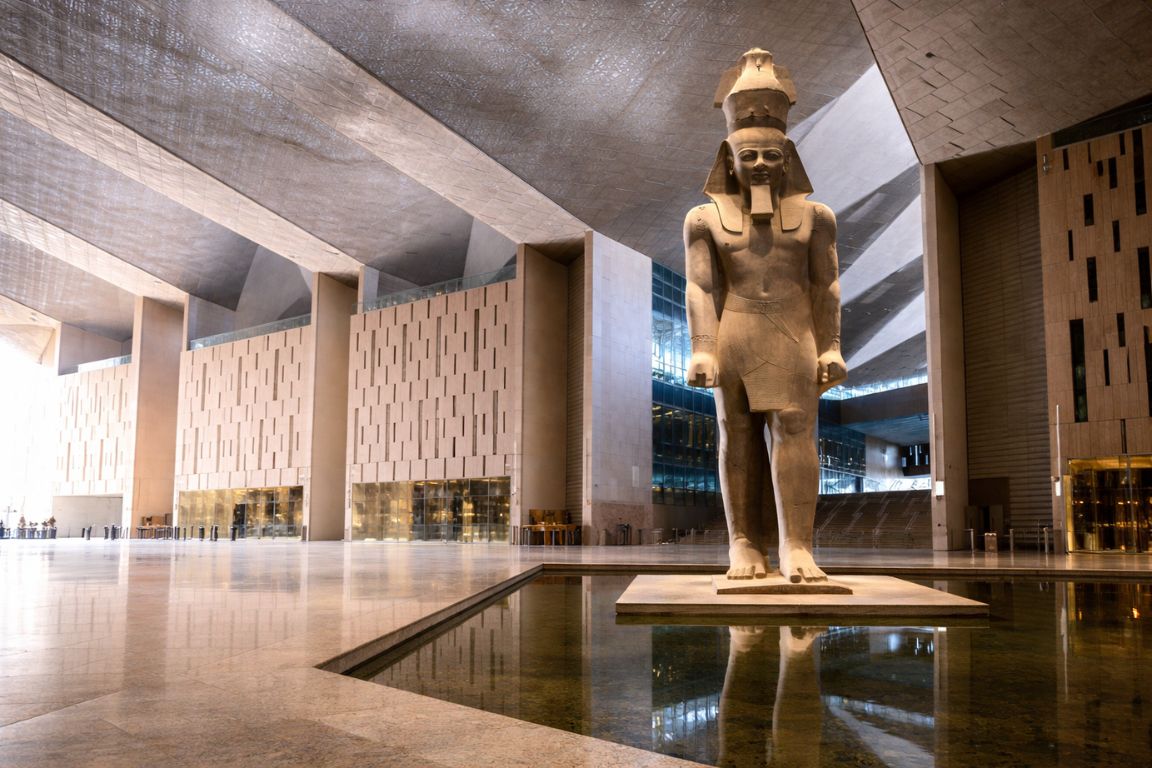 Yes, more than most families expect. GEM was purpose-built with children in mind at a level that the old Egyptian Museum in Tahrir never was. There’s a dedicated Children’s Museum with six themed galleries, hands-on activities and trained staff. The main building has full stroller access, moving walkways, seating throughout, and clear multilingual signage. The colossal scale that overwhelms some adults actually works in children’s favour: big statues, dramatic spaces, and visible pyramids through floor-to-ceiling windows tend to hold young attention in ways that cramped display cases never could. You can buy entry ticket to GEM here.
Omar has watched the transformation happen in real time across hundreds of family groups since GEM opened. A child who goes glassy-eyed in front of glass cases containing pottery shards will stand completely still in front of an 11-metre statue of Ramses II. The scale changes the equation. Kids who claim to hate history become genuinely absorbed inside GEM. Not every time, and not every child. But the ratio is much better here than almost anywhere else.
The honest comparison is with the old Egyptian Museum in Tahrir. No air conditioning, cramped displays, minimal signage, artifacts in cases without real context. GEM is the opposite in every dimension. The galleries are spacious. The lighting is designed. The temperature is controlled. There’s room to step back and look at things properly, which matters especially for children who need physical space to process what they’re seeing.
One thing that helps families specifically: the Children’s Museum is a separate, self-contained space that runs its own programmes for ages 6 to 12. You can split the visit. Parents explore the main galleries at their own pace. Children work with trained staff in an environment built entirely for them. That option doesn’t exist at most major museums, and it genuinely changes how a family day at GEM can be structured.
Wondering if it’s worth your time and money? Check out our honest take on is the Grand Egyptian Museum worth visiting – especially if you’ve already been to the old Egyptian Museum.
What Age Is GEM Right For, and What Should You Expect by Age Group?
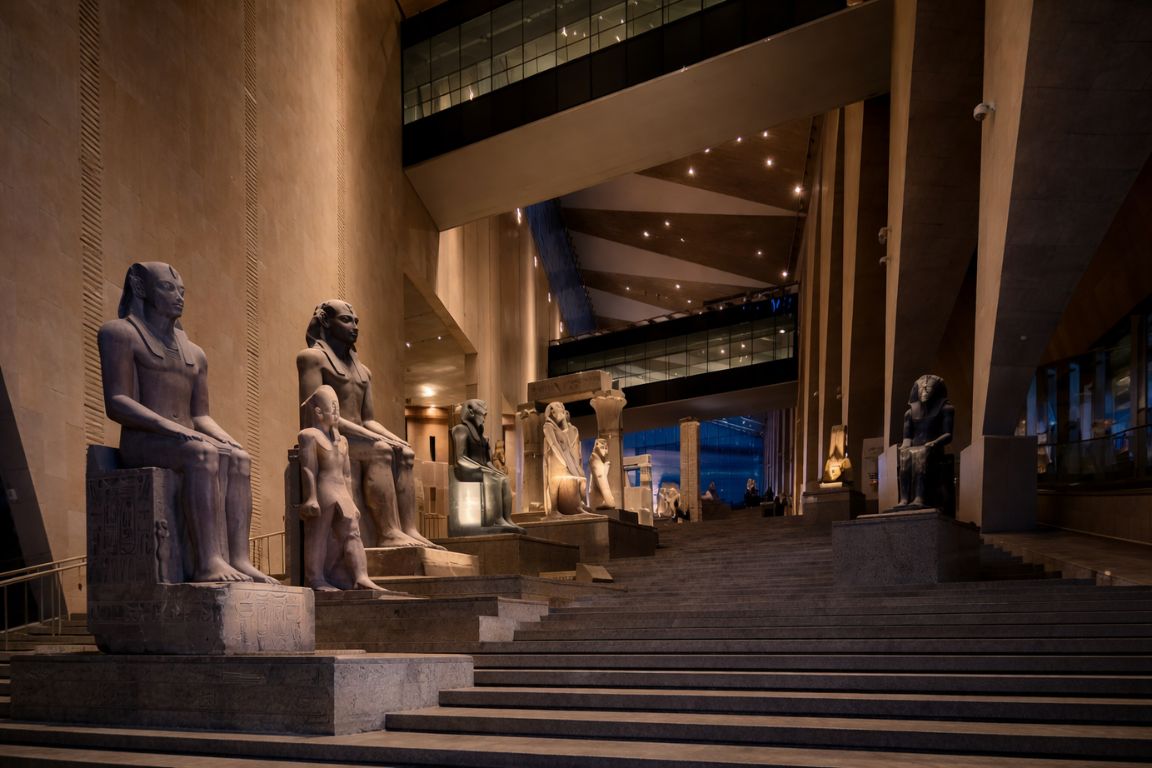 GEM works well from around age 5 upward, though the quality of the experience scales significantly with age. Under-5s enter free and can manage a shorter visit in a stroller, but they won’t retain much beyond the visual scale. Ages 6-12 are the sweet spot: old enough to connect with the stories, young enough to be genuinely awed by the objects. Teenagers often surprise their parents. The Tutankhamun collection, the holographic experiences, and the sheer ambition of the building tend to land differently with older kids than a standard history lesson ever would. You can buy entry ticket to GEM here.
Here’s what families actually encounter by age group, based on what Omar observes across group visits:
GEM Experience by Age Group
| Under 5 | Free entry, stroller-friendly, big visual impact from statues and scale | Short attention span. 2 hours is realistic maximum. Keep them in the stroller for the long walkways. |
| Ages 6-8 | Children’s Museum is ideal. Mummies, chariots, and the golden mask create genuine awe. | Main gallery fatigue sets in fast. Alternate activity with rest. Food timing matters. |
| Ages 9-12 | Sweet spot. Old enough for context, young enough for wonder. Can manage 4-5 hours. | The Tutankhamun galleries are the highlight. Get there first before energy drops. |
| Ages 13-17 | Scale, interactive tech, and the death mask tend to genuinely engage teenagers. | Let them lead through sections. Forced march through galleries loses them quickly. |
Toddlers under 6 enter free, and GEM’s stroller access is genuine rather than nominal. The building has lifts throughout, ramps at all level transitions, and the main Grand Staircase has a moving walkway alongside it that stroller parents can use. The Tutankhamun galleries are narrow in sections and busiest mid-morning, so stroller navigation there requires patience. For families with a mix of ages, the Children’s Museum handles the younger set while older kids and parents take on the main galleries.
What Does the GEM Children’s Museum Actually Offer?
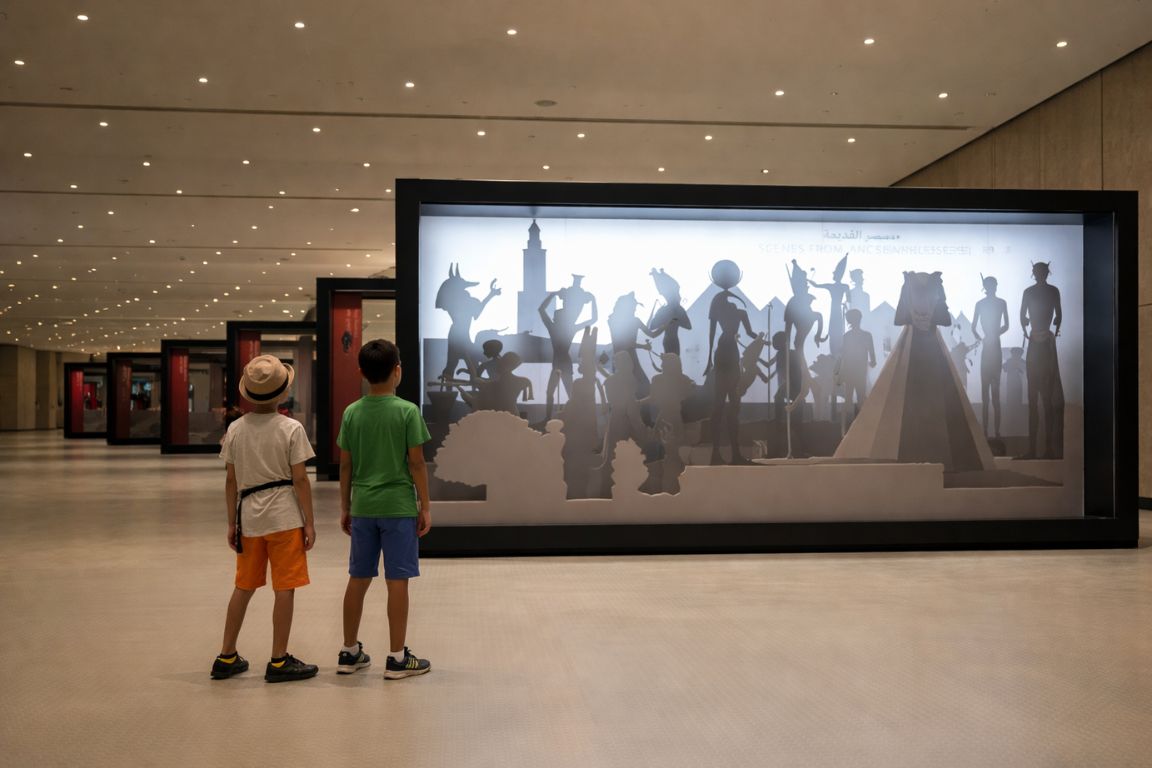 The GEM Children’s Museum is a separate, purpose-built space within the complex, targeting ages 6 to 12. It covers six themes: Timeline, Land of the Nile, Beliefs, Kingship and State, Society and Daily Life, and Ancient Egyptian Art. Each gallery uses hands-on activities, interactive games, and technology rather than passive display cases. Children can role-play as ancient Egyptians, work with trained GEM staff, and engage with content specifically calibrated for their developmental stage. It requires its own ticket and operates its own schedule. You can buy entry ticket to GEM here.
What separates the GEM Children’s Museum from a typical add-on kids’ wing is that it was built with actual educational design, not as an afterthought. Ayman El Sayed, the museum’s Senior Manager of Education Programs, designed the space around a specific philosophy: simulate the daily life and activities of ancient Egyptians rather than simply presenting artifacts for children to look at. The difference in approach shows in the execution.
In the Timeline gallery, children follow the rise of Egyptian civilisation as a connected story, matching artifacts to time periods and comparing how people lived across different dynasties. It’s designed as a starting orientation, giving kids a mental map they carry into the rest of their visit. In the Land of the Nile gallery, they discover how the river’s flooding cycle drove agriculture, settlement, and trade, through interactive stations with soil samples, plant models, and irrigation demonstrations.
The Beliefs gallery handles Egypt’s religious world at a child-appropriate level. Gods and goddesses, the afterlife, mummification. The content is presented with care for age-appropriateness without being sanitised to the point of meaninglessness. Kids leave understanding why tombs were filled with objects and what the soul’s journey was believed to involve. It complements what they’ll see in the Tutankhamun galleries with context that most adults don’t have either.
Kingship and State, Society and Daily Life, and Ancient Egyptian Art round out the six themes. The arts and crafts centre offers hands-on creation sessions. Parents can leave children with trained staff and go explore the main galleries independently. That last point is more significant than it sounds. A genuine child-drop possibility at a world-class museum in Cairo is not something many families expect to find.
How Do You Handle Tickets, Timing, and Logistics with Kids at GEM?
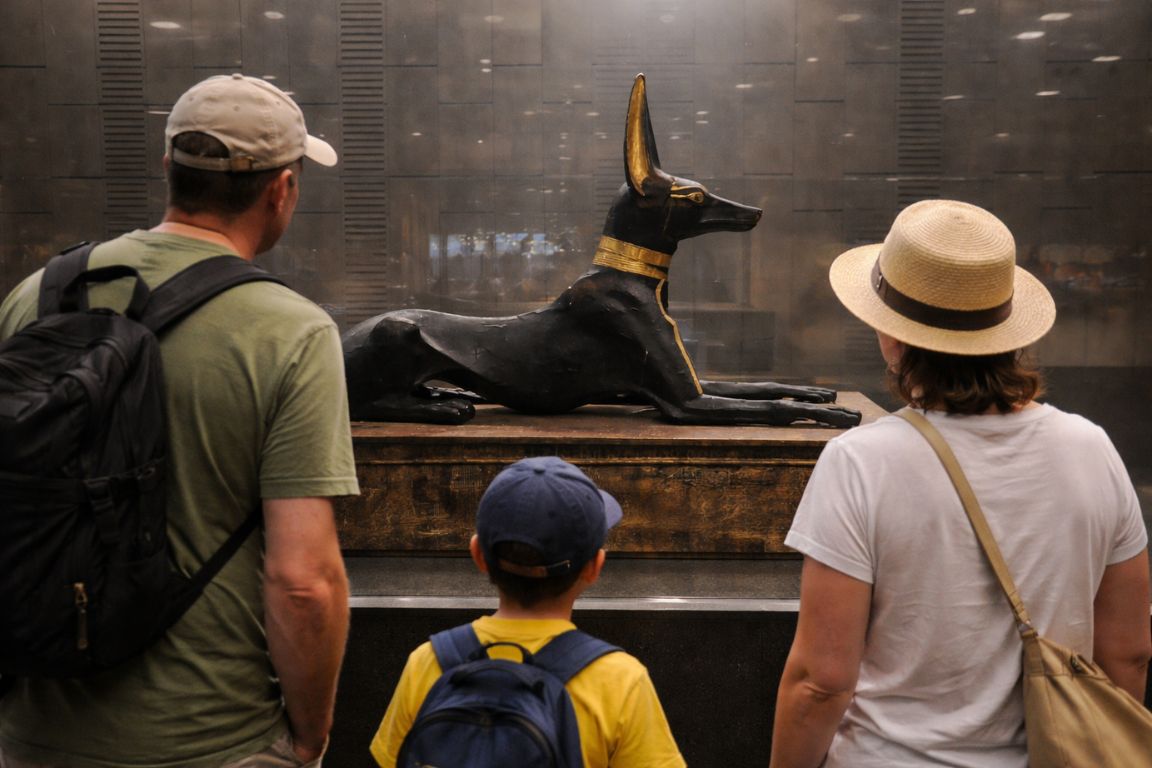 Book all tickets online at visit-gem.com before you arrive. No gate sales exist. Children under 6 are free. Foreign children aged 6 to 21 pay EGP 730 (~$15 USD). The Children’s Museum requires a separate ticket. For families with young children, the 8:30am entry slot is the right choice: fewest crowds, coolest energy in the building, and maximum time before lunch fatigue hits. Avoid Fridays and Saturdays, which draw the largest domestic Egyptian visitor numbers.
One important note: Many travelers run into frustrations when trying to book tickets directly on the official Grand Egyptian Museum website, visit-gem.com. While this remains the only authorized platform for purchasing standard entry tickets, and the museum repeatedly warns against using any other sites to steer clear of scams or invalid bookings – the site itself can feel clunky or unreliable at times. That’s exactly why a lot of visitors end up preferring trusted third-party platforms like GetYourGuide or Viator. These alternatives tend to deliver a much smoother experience, especially for international travelers.
The timed entry system matters for families in a practical way. You select your arrival window (8:30am, 11am, 1pm, or 3pm) when you book. Once inside, there’s no time limit on your visit. But arriving in your slot matters, and arriving early within that slot matters even more. At 8:30am, the Tutankhamun galleries are as quiet as they ever get. By 11am, tour groups are flooding in. With children, that difference in crowd density is felt differently than it is by adults traveling alone.
If you’re torn between options, here’s our honest comparison of guided vs non-guided tickets in Grand Egyptian Museum based on what each delivers for understanding the artifacts.
Food deserves a planning note. You cannot bring food or drinks into the galleries. The complex has multiple food options, including Zooba for Egyptian street food, Beano’s and 30 North for coffee, Ladurée for pastries, and Dolato for gelato. The food court gets congested from roughly 12:30pm. If you’re visiting with young children, plan your meal break before 12pm or after 2pm to avoid lines. Bringing snacks in a bag for the outdoor gardens between sections is fine.
The walk from the parking area to the main building is longer than most visitors expect. GEM is enormous. Passenger buggies shuttle visitors from the large parking lot to the entrance, which helps with prams and tired legs. Don’t let young children burn energy on the approach that they’ll need inside.
Which GEM Exhibits Work Best for Children?
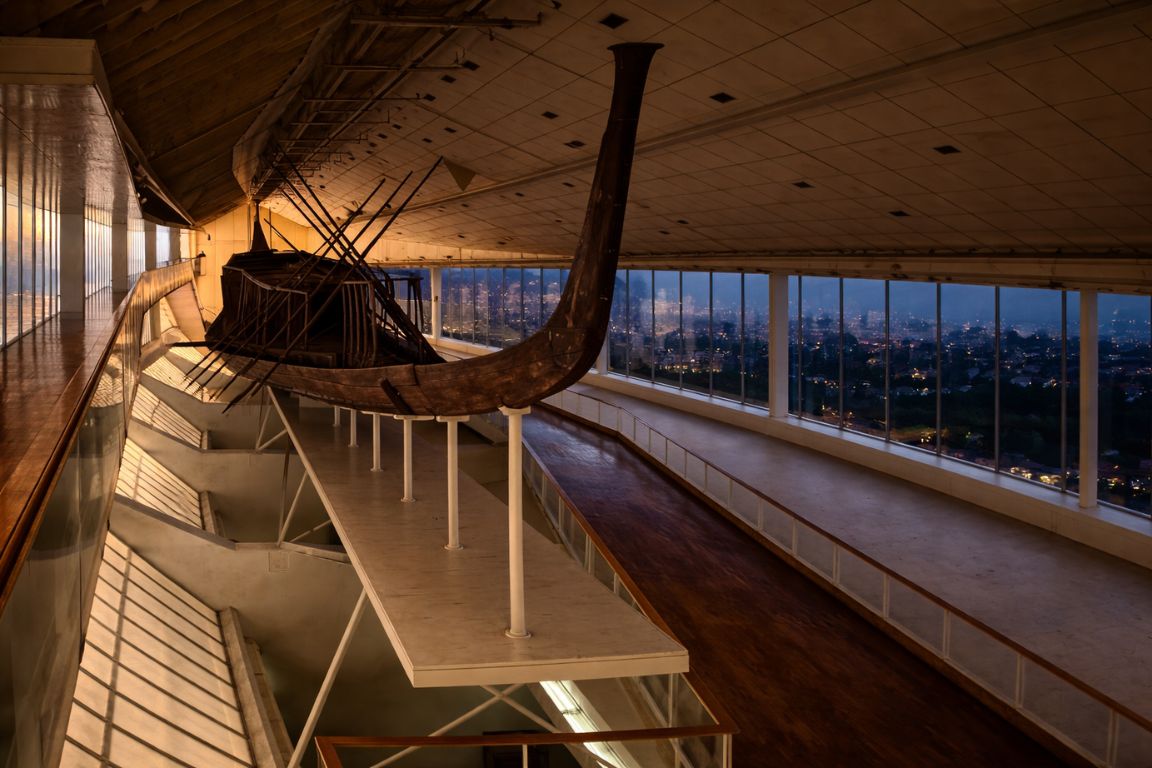
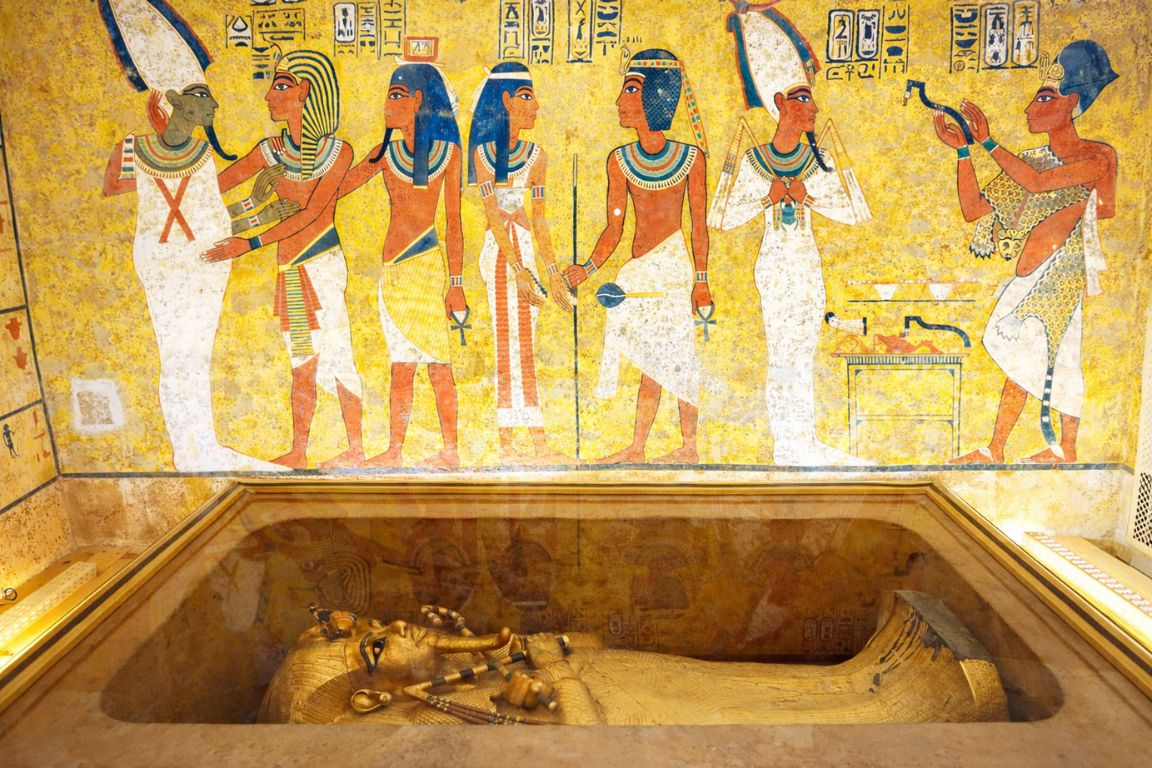 The Tutankhamun Galleries first, always. The scale of the golden funerary mask, the nested shrines, the chariots – these are the exhibits that children talk about afterward. Then the Grand Staircase for the sheer visual drama of 60-plus statues and the pyramid view at the top. The Khufu Solar Boat works well for older children who can grasp the 4,500-year age of the vessel. The Children’s Museum is the right environment for under-12s to process what they’ve seen through activity rather than passive looking. You can buy entry ticket to GEM here.
The Tutankhamun room with the golden funerary mask does something specific to children that it’s hard to fully predict. Omar has watched kids who have spent 20 minutes complaining about being tired go completely quiet in that room. The mask is behind glass but accessible at close range. It’s smaller than people imagine from photographs, which somehow makes it more affecting. A 10-year-old standing a metre from a 3,300-year-old solid gold object made for a boy not much older than they are that registers in a way that no classroom lesson achieves.
Wondering about the Tut exhibits? Check out our guide on the King Tutankhamun collection at the Grand Egyptian Museum – this is the first time his complete treasure is displayed together.
The Grand Staircase earns genuine reactions from children for different reasons. The moving walkway alongside it is already interesting to most kids. But at the top, the floor-to-ceiling windows reveal the pyramids sitting right there across the Giza plateau. That panoramic view, the physical connection between what’s inside the museum and the monuments visible outside, tends to land hard with children who’ve been told the pyramids are nearby but haven’t fully processed what that means.
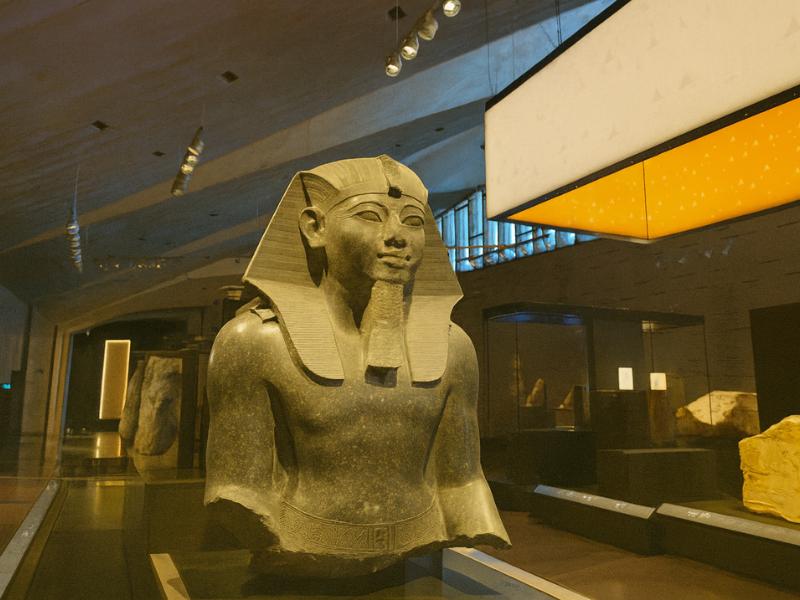
The Ramses II statue in the entrance atrium is a reliable first-impression moment. Eleven metres tall, 83 tonnes, 3,200 years old. Children who need scale to feel history rather than read it start engaging from that first step into the Grand Hall. It’s the right introduction to the visit regardless of age.
For younger children especially, the outdoor gardens and forecourt areas serve as decompression space between gallery sections. The water features along the approach path, the pyramid views, the open air after enclosed gallery time: families who use the exterior spaces as breathing room between sections consistently have better visits than families who try to push through everything indoors without a break.
What Do Parents Consistently Get Wrong When Visiting GEM with Kids?
Three patterns repeat. First: planning an adult-length visit (5-6 hours) with children who will be done in 3. Second: saving the Tutankhamun galleries for last, arriving when kids are tired and crowds are peaking. Third: treating the Children’s Museum as optional or tacking it on at the end, rather than using it strategically mid-visit as a reset. The families who get the most out of GEM are the ones who plan explicitly for children’s energy curves, not adult attention spans. You can buy entry ticket to GEM here.
The time problem is consistent and predictable. Adults read “world’s largest archaeological museum” and plan accordingly. Children read their own bodies. A 7-year-old who was enthusiastic at 9am is a different visitor by noon. The galleries are vast. The walking distances are real. GEM’s sheer scale is one of its defining features as a museum experience, but for families, that scale is the main variable to manage.
The sequencing mistake is specific to GEM’s layout. Most natural visitor flow takes you through the Grand Hall and Grand Staircase before reaching the Tutankhamun galleries. Parents who follow that flow end up at the most important exhibit when children are already in hour three or four. The adjustment is simple but requires deliberate planning: head for the Tutankhamun galleries first thing, before energy drops and before the 11am tour group wave arrives.
The Children’s Museum timing error is widespread. Families plan it as the last stop, a reward after the main galleries. What they find is that children are exhausted by that point and don’t engage well with a space that actually deserves fresh attention. Using the Children’s Museum mid-visit, as a genuine break between the Tutankhamun galleries and the main halls, gives children something active to do while adults get a structured 30-45 minutes in the galleries independently. Both groups get a better experience.
Food planning is underestimated. GEM does not allow outside food into the galleries. The family that arrives at 11am without having eaten and tries to navigate a congested food court with hungry children is a predictable scenario. Planning a meal around the Children’s Museum mid-visit break solves most of this.
How Do You Keep Kids Engaged Through a Long Museum Visit?
 Selective itinerary, physical breaks, and letting children lead within structure. GEM is not a museum you can or should see entirely in one visit with children. Pick four or five things that will create genuine moments: the Tutankhamun golden mask, the Grand Staircase pyramid view, one or two colossal statues, the Solar Boat for older children, and the Children’s Museum. Frame each one before you reach it. Build anticipation. Then give children space at each exhibit rather than rushing through to the next. You can buy entry ticket to GEM here.
The framing technique makes a significant difference with children across age groups. Before entering the Tutankhamun galleries, telling a child: “This mask was made for a real king who died at around 19 years old, more than 3,000 years ago, and this is the first time all of his things have ever been in one room” – that setup lands differently than arriving at a glass case cold. Omar’s guides do this deliberately, and family groups who have that context coming in consistently engage longer and with more focus.
Physical space at exhibits matters for children in a way it doesn’t for adults. GEM’s main galleries are spacious enough to allow this. At the Tutankhamun death mask, giving a child a moment to stand there alone rather than being shuffled through as part of a moving group produces a different experience. The museum’s design supports this; it was built for the scale of 100,000 artifacts and visitor numbers in the tens of thousands, which means crowding is generally better managed here than at comparably famous museums elsewhere.
The outdoor gardens are underused by families. GEM’s landscaped exterior, the water features along the approach, and the views of the Giza plateau all provide genuine decompression between intensive indoor gallery sections. A 15-minute outdoor break mid-visit resets children in a way that sitting inside a food court doesn’t. Families who build in outdoor time between the Tutankhamun section and the main galleries consistently report better second-half visits.
For older children and teenagers especially: the audio guide (available in English, Arabic, and Japanese) changes the experience from passive observation to active listening. It covers over 100 stops with expert narration and operates at the child’s own pace. This is worth the additional fee for ages 10 and up traveling without a private guide.
Curious about the highlights? Here’s what to see at the Grand Egyptian Museum – from King Tut’s complete collection to the colossal statues worth seeking out.
What Families Tell Us: GEM with Kids Patterns
Drawn from feedback across family groups Omar has guided through GEM since opening, these patterns repeat across different nationalities and age groups. This is our own observation, not aggregated data.
| Children 6-12 who had a positive reaction to the Tutankhamun galleries | 85-95% |
| Families who wished they’d visited the Tutankhamun galleries earlier in the day | 60-80% |
| Parents who used the Children’s Museum mid-visit vs. at the end | 60-75% mid-visit / 25-40% at the end |
| Families who stayed under 4 hours total | 70-85% of those with children under 10 |
| Families who rated a private guide as “essential” rather than “optional” | 75-90% |
| Families that combined GEM with the pyramids on the same day | 50-70% |
Frequently Asked Questions
Is the Grand Egyptian Museum suitable for toddlers and babies?
Yes, practically speaking. Children under 6 enter free, and GEM’s accessibility infrastructure is genuine: elevators throughout, a moving walkway alongside the Grand Staircase, ramps at all level transitions, and wide pathways that accommodate strollers comfortably. The challenge is duration. Toddlers and babies won’t retain much, and 2 hours is a realistic maximum for that age group. The outdoor gardens and forecourt are pram-friendly and give families breathing space between gallery sections. If you’re bringing a stroller, use it for the long internal walkways and outdoor approach – the distances are significant.
Does the Children’s Museum require a separate ticket from the main GEM admission?
Yes. The GEM Children’s Museum operates as a separate experience within the complex and requires its own ticket. It’s aimed at ages 6 to 12 and covers six themed galleries: Timeline, Land of the Nile, Beliefs, Kingship and State, Society and Daily Life, and Ancient Egyptian Art. Book through the official site at visit-gem.com or contact the museum directly at [email protected] for school or group enquiries. Check current Children’s Museum ticket pricing at visit-gem.com before your visit, as pricing may be updated seasonally.
Can parents leave children in the GEM Children’s Museum while they explore the main galleries?
Yes. The Children’s Museum has trained staff and runs structured programmes, and the arrangement is specifically designed to allow parents independent time in the main galleries. This is one of the more family-friendly features of GEM that most visitors don’t know about before they arrive. It works best mid-visit: children are engaged and active in the Children’s Museum while parents use that window for the main galleries at a pace that suits them. Coordinate a meeting point and time before separating.
Are the Tutankhamun galleries appropriate for children?
Yes, and they’re often the highlight for children rather than adults. The scale of the golden objects, the chariots, the nested shrines, and particularly the funerary mask create reactions in children that the main galleries sometimes don’t. The one practical note: photography in the Tutankhamun galleries is mobile phone only (no video, no flash). Camera equipment beyond a mobile is not permitted. The galleries can get congested from 11am onward, so the 8:30am entry slot gets you into that section when it’s most manageable with kids.
How long should a family plan to spend at GEM?
Three to four hours is realistic for families with children under 12. That covers the Tutankhamun galleries, the Grand Staircase and pyramid view, the Grand Hall with the Ramses II statue, and the Children’s Museum. Going longer requires older children or teenagers who can sustain museum-pace walking for extended periods. The museum is genuinely vast and seeing everything in one visit isn’t realistic for most families. Prioritise what you’ve come for and leave energy for the children’s museum mid-visit.
Is a private guide worth it for a family visit to GEM?
For families with children aged 8 and up, a private Egyptologist guide makes a measurable difference. An experienced guide frames exhibits for children in terms they actually process, builds anticipation before key moments, and reads the group’s energy to know when to move and when to linger. The official GEM guided tours run 25-35 people and cover highlights in 90 minutes, which isn’t always the right format for families moving at a child’s pace. For a private day that is not tied to a large group, see the private Giza Pyramids and GEM tour.
Bringing children to GEM takes more planning than a solo or adult visit. The ticketing system, the Children’s Museum booking, the sequencing, the timing around food and energy – these are all decisions that benefit from experience.
Written by Omar Khalil
Egyptian tour guide since 2013 · Founder, The Grand Egyptian Museum Tickets
Omar has guided over 7,200 travelers through the Grand Egyptian Museum and Cairo’s ancient sites since founding the agency.