GEM vs Pyramids of Giza
Giza Pyramids or the Grand Egyptian Museum? They’re just 2 km apart - start at the Pyramids early, then explore GEM the same day.
Decide how much time you have for the museum and the plateau before choosing a combined day.
TL;DR
Both sites sit 2 km apart on the same plateau and are connected by a new pedestrian walkway. The Pyramids are an outdoor, physical, emotionally overwhelming experience. GEM is climate-controlled, artifact-rich, and intellectually deep. You don’t choose between them. The only real question is sequence and timing. Most first-timers do best starting at the Pyramids by 8 AM and arriving at GEM around 1 PM. With a full day, both are genuinely doable without rushing either.
Should You Visit the Grand Egyptian Museum or the Pyramids of Giza First?
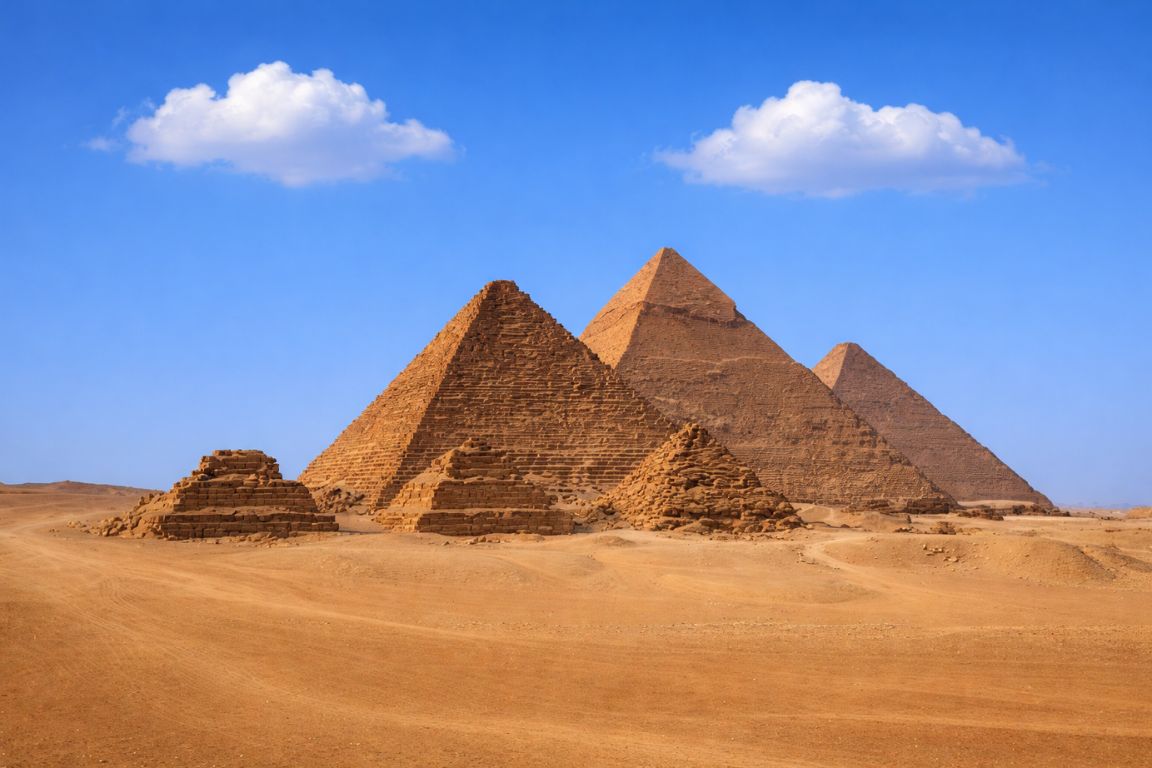 Visit the Pyramids of Giza first. Arrive at the plateau by 8 AM, spend three to four hours including the Sphinx and at least one pyramid interior, then make your way to GEM for a 1 PM entry. This sequence takes advantage of cooler morning temperatures at the outdoor site, avoids the brutal midday desert sun, and delivers you to GEM’s climate-controlled galleries right as the plateau reaches its peak heat and peak crowd density.
I’ve been asked this question by thousands of travelers over 13 years of guiding around Giza. The framing of “GEM or the Pyramids” implies a competition that doesn’t actually exist. These two sites don’t compete. They complete each other. The pyramids show you what ancient Egypt built. GEM explains why they built it, who built it, and what filled those burial chambers when the last stone was finally sealed.
That said, sequence matters enormously. The Pyramids are an outdoor site with no shade, no air conditioning, and a last-entry cutoff that varies by season. GEM has climate-controlled galleries open until 6 PM on most days and until 9 PM on Wednesdays and Saturdays. Starting at the Pyramids early preserves your physical energy for the plateau while giving you GEM’s cooler hours in the afternoon, when your feet are tired anyway and you’d rather be walking polished museum floors than desert sand.
The one exception: if you’re visiting on a Wednesday or Saturday, I sometimes flip this for serious museum visitors who want the full GEM experience and don’t mind a late-afternoon pyramid visit. GEM’s extended evening hours on those two days mean you can start at the plateau, leave by noon, spend a long afternoon at GEM, and stay until 9 PM for the thinned-out evening crowd in the Tutankhamun galleries. More on that under the combined-day section.
Not sure about the logistics? I’ve put together a complete guide on how to visit the Grand Egyptian Museum so you understand tickets, timing, and getting there from Cairo.
What Is the Difference Between the GEM and the Pyramids of Giza Experience?
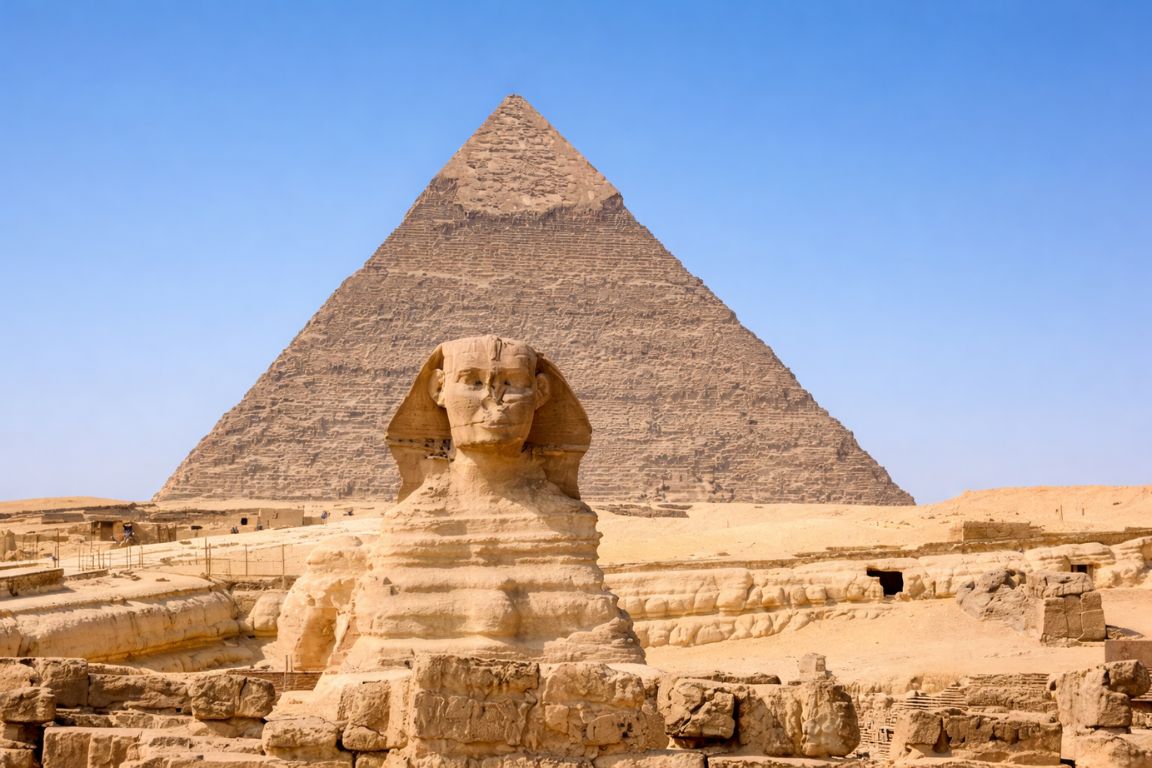 The Pyramids of Giza are a visceral, outdoor, physical encounter with structures so large they stop conversation mid-sentence. GEM is an interior, climate-controlled, artifact-first experience that fills in everything the stones outside cannot tell you. One hits you in the gut. The other hits you in the mind. Neither replaces the other.
The Giza Plateau is roughly 2.5 square kilometers of open desert. There are three main pyramids, the Great Sphinx, satellite pyramids, mortuary temples, and the Queen’s Pyramids. You move between them on foot, in heat, across uneven sand and stone. The scale is genuinely disorienting in person, not the same as photographs. The base of the Great Pyramid of Khufu covers 5.3 hectares. Each side is 230 meters long. You can walk up to the stones and touch them. You can enter the interior of Khufu’s pyramid through the narrow ascending passage to the Grand Gallery and King’s Chamber, which is a physically demanding claustrophobic experience that some travelers find profound and others find genuinely stressful.
GEM is none of those things. It’s 500,000 square meters of purpose-built museum space with alabaster stone facades, a glass roof over the Grand Hall that lets in natural light, and 12 galleries organized by historical period from Predynastic through Greco-Roman. The floors are cool. The lighting is controlled. The cases are modern, and the interpretive panels are detailed. Where the Pyramids confront you with scale and silence, GEM surrounds you with context and object. The difference in energy is dramatic.
What they share: proximity. GEM sits exactly 2 kilometers northwest of the pyramid complex along the Cairo-Alexandria Desert Road, and a pedestrian walkway opened in late 2025 now links the two directly. The walk takes about 20 to 25 minutes at a comfortable pace. An eco-friendly electric shuttle runs the same route for those who don’t want to walk. This physical proximity is the core argument for doing both in one day, which is entirely realistic if you plan properly.
Quick Facts: GEM vs Pyramids of Giza at a Glance
| Location | Cairo-Alexandria Desert Road, Kafr Nassar, Giza | Giza Plateau, Al Haram, Giza Governorate |
| Distance between sites | ~2 km · 5-min taxi/shuttle or 20-25 min walk via new pedestrian promenade | |
| Ticket price (foreign adult) | 1,450 EGP (~$30 USD) · online only via visit-gem.com | 700 EGP plateau general admission · interior tickets extra (Khufu 1,500 EGP) |
| Standard hours | Galleries 9 AM-6 PM (until 9 PM Wed & Sat) | 7 AM-4 PM (Oct-Mar) · 7 AM-5 PM (Apr-Sep) · Last pyramid entry 1 hr before close |
| Indoor/Outdoor | Fully indoor, climate-controlled at ~73°F year-round | Fully outdoor · full desert sun exposure · no shade except inside pyramids |
| Recommended visit length | 3-4 hours minimum · 5-6 for museum lovers | 3-4 hours (exterior + Sphinx) · 4-5 with pyramid interior access |
| Booking | Online only via visit-gem.com, no walk-up sales since December 2025 | Online via egymonuments.com or on-site · pyramid interiors have daily capacity caps |
| What you experience | 100,000+ artifacts, Tutankhamun collection, Khufu’s solar boats, Grand Staircase colossi | 3 pyramids exterior, Sphinx, optional pyramid interiors, panoramic desert views |
| Physical demand | Moderate walking on flat polished floors · wheelchair accessible | High · uneven terrain, desert heat, pyramid interiors require crouching/climbing |
| Best for | History depth, artifact detail, families, hot weather days, afternoon visits | Iconic views, physical experience, photography, early morning visits |
How Long Does Each Site Actually Take?
 Budget 3 to 4 hours for the Pyramids if you’re covering the exterior of all three pyramids, the Sphinx, and a panoramic viewpoint stop. Add at least 45 minutes if you’re going inside Khufu’s pyramid. For GEM, 3 hours is a bare minimum for a highlights visit. Most first-timers need 4 to 5 hours to feel they’ve actually seen it rather than sprinted through it.
The Giza Plateau is bigger than people expect. There’s a reason the Giza free shuttle service (four routes, launched in 2025) exists: the distance between the main visitor entrance and the panoramic viewpoint overlooking all three pyramids is substantial, and that’s before you’ve made it to the Sphinx area on the eastern end. A typical flow looks like this: arrive at the main gate, walk to Khufu, continue south to Khafre and Menkaure, proceed to the panoramic point for the classic three-pyramid shot, then come back down and east to the Sphinx and Valley Temple. That loop is comfortably three hours without rushing. Interior pyramid access adds time and energy.
At GEM, the challenge is opposite. The museum is vast and meticulously curated, but the curation creates a problem: everything looks worth reading. I’ve watched travelers spend 40 minutes in the first two rooms of the Tutankhamun galleries because every panel and every object had their full attention. That’s not wrong. But it means the two-hour “highlights tour” that group operators advertise is genuinely insufficient for most people. Three hours gets you through Tutankhamun, Khufu’s Boats, the Grand Staircase, and a pass through the Main Galleries. Four to five gets you something closer to actually understanding what you’re looking at.
Note: GEM’s official guided tour is 2 hours covering the Tutankhamun Galleries, Grand Hall, Grand Staircase, and Main Galleries. That’s the floor, not the ceiling.
Wondering how much time you actually need? Our guide on half-day vs full-day at Grand Egyptian Museum shows you exactly what changes when you double your visit length.
Realistic Time Breakdown by Visitor Type
| Quick overview (no pyramid interior) | 2.5-3 hrs | 2.5-3 hrs | 6-7 hrs including transit and lunch |
| Standard first-time visitor | 3-4 hrs | 3-4 hrs | 8-9 hrs (full day) |
| With Khufu pyramid interior | 4-5 hrs | 3-4 hrs | 9-10 hrs (very full day) |
| Museum-focused traveler | 2.5-3 hrs (exterior only) | 5-6 hrs | 9-10 hrs |
| Family with young children | 2-3 hrs | 2.5-3 hrs (GEM children’s museum included) | 6-7 hrs |
Booking your GEM entry in advance is non-negotiable since December 2025. All tickets are timed slots via the official platform only. Check availability and secure your slot here before you finalize your Giza day plan.
Can You Visit the Grand Egyptian Museum and the Pyramids of Giza in One Day?
Yes, and most visitors from my experience do exactly this. The two sites are 2 kilometers apart with direct pedestrian access and a 5-minute taxi ride as backup. A well-sequenced day starting at the plateau by 8 AM and arriving at GEM around 1 PM gives you three to four solid hours at each site without running between them. The main thing that kills the combined day is poor sequencing, not the distance.
The common version of “doing both in one day” that I see go wrong is starting at GEM in the morning on the belief that the museum should be fresh first, then arriving at the Pyramids in full midday heat. That’s backwards. The Pyramids at midday in peak season (October through April, when most international visitors arrive) are genuinely brutal. Tour groups have been stacking up since 10 AM, the desert sun is overhead with no angle for interesting photographs, and the interior pyramid queues are longest. Meanwhile, GEM’s morning crowd hasn’t thinned yet either.
The right version: Pyramids by 8 AM, leave the plateau by 11:30 or noon, eat lunch in the area (there are restaurants near both sites), then walk or take the shuttle or a short taxi to GEM for a 1 PM entry. You get the cool morning desert light for pyramid photographs, beat the plateau crowd peak, and arrive at GEM when morning group tours are wrapping up. This leaves the afternoon for GEM with more breathing room in the galleries.
Curious about timing strategy? Here’s the best time of day to visit Grand Egyptian Museum – when to arrive, how long you’ll need, and when most tourists show up.
One practical note that often surprises people: the pedestrian promenade connecting GEM to the Giza Plateau officially opened in late 2025. It’s roughly 1.3 kilometers, landscaped, lit with golden lighting at night, and designed to accommodate electric shuttle vehicles alongside pedestrians. Walking it takes about 20 to 25 minutes. It also happens to be a genuinely scenic connection, with pyramid views visible from the promenade throughout the walk. For anyone not in a hurry, walking beats taking a taxi between the two sites purely as an experience.
Which Site Is Better for First-Time Visitors to Egypt?
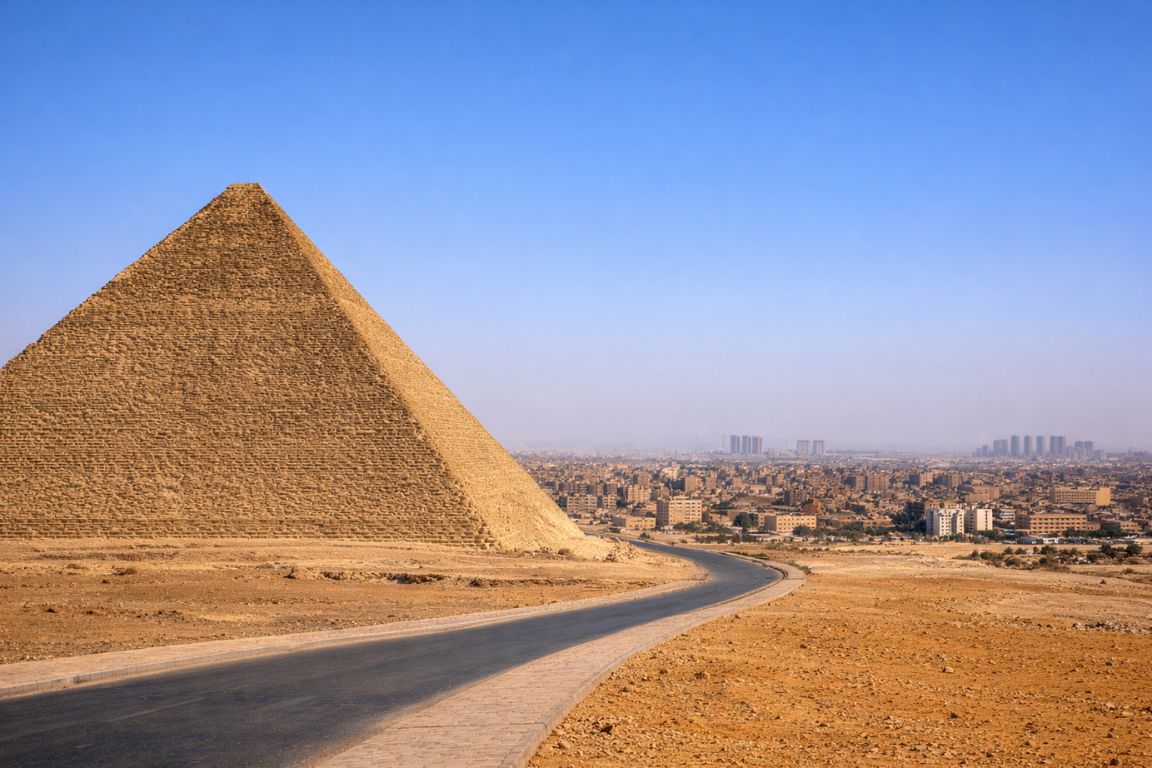 For a pure “which one if I could only do one” answer: the Pyramids of Giza. Nothing replaces standing at the base of a structure that was already 2,500 years old when Julius Caesar visited Egypt. But that’s a false choice for anyone spending more than one day in Cairo. First-timers with a full day should do both, in order.
What makes the Pyramids irreplaceable for a first visit is that photographs cannot prepare you for scale. I have seen people cry at the base of Khufu’s pyramid who had no intention of being emotional about a stone structure. The Great Pyramid was the tallest human-made structure on earth for 3,800 years. Walking around its base takes 15 to 20 minutes. You are physically inside an experience that photographs and documentaries cannot transmit. That’s rare.
What makes GEM irreplaceable, especially now that it has fully opened with the complete Tutankhamun collection, is that it gives the Pyramids meaning. Many visitors I’ve worked with find that the Pyramids were more resonant after GEM, not before it. Seeing the 110-kilogram solid gold coffin, the death mask, the golden throne, the canopic shrine at four meters tall, all of these objects recontextualize the engineering you just walked around. The pyramids become tombs again rather than tourist attractions. That reversal of understanding is real, and it’s exactly why GEM was built where it was: to be inseparable from the plateau experience.
For families with children, GEM has a dedicated 5,000-square-meter children’s museum for ages 6 to 12 with augmented reality, interactive screens, and hands-on programming. The Pyramids are thrilling for kids but physically demanding on hot days and require close supervision on uneven terrain. Many families split the day with the plateau in the morning and GEM in the afternoon specifically because GEM’s children’s museum is air-conditioned and structured for sustained engagement.
Bringing the family along? I’ve broken down visiting Grand Egyptian Museum with kids so you know which exhibits keep them engaged and how to handle this massive museum with young attention spans.
How Do the Ticket Prices and Logistics Compare?
GEM general admission is 1,450 EGP (approximately $30 USD) for foreign adults. Giza Plateau general admission is 700 EGP (~$14 USD). The big variable at the Pyramids is pyramid interior access: Khufu’s interior runs an additional 1,500 EGP (~$31 USD), which makes the interior ticket worth more than the museum itself. Both sites have very different booking systems, and this is where visitors run into trouble.
GEM tickets must be booked online in advance via visit-gem.com. Since December 2025, there are no walk-up sales at all. Tickets are timed entry slots, and once your slot is gone, it’s gone. In peak season (October through April), popular slots on Friday and Saturday sell out well ahead. Book at least 3 to 5 days in advance for weekdays and a week or more for weekends.
The Pyramids of Giza are different. General plateau admission can still be purchased at the gate. Interior pyramid access tickets are sold on-site and are capped at a limited number of daily entries per pyramid, which means arriving late in the day with the hope of going inside Khufu’s pyramid is a real risk. Interior tickets for the Great Pyramid sell out by mid-morning on busy days. If going inside Khufu is on your list, this is the reason to arrive right at opening. Buying your plateau ticket online via egymonuments.com in advance is now common and recommended, but it remains possible to buy at the entrance.
For GEM audio guides: available in Arabic, English, and Japanese at the museum. The guide covers 100+ stops inside, works offline, and adds meaningful depth to both the Tutankhamun galleries and the Main Exhibition Halls. Well worth it for anyone visiting without a personal guide.
Ticket Prices and Booking: Side by Side (March 2026)
| GEM – foreign adult general admission | 1,450 | ~$30 | visit-gem.com only (online advance) |
| GEM – child under 4 | Free | $0 | visit-gem.com |
| Giza Plateau – foreign adult general admission | 700 | ~$14 | On-site or egymonuments.com |
| Giza Plateau – student (ISIC card required) | 350 | ~$7 | On-site with valid ID |
| Giza Plateau – child 6–12 | 350 | ~$7 | On-site |
| Interior – Great Pyramid of Khufu (additional) | 1,500 | ~$31 | On-site only · daily cap applies |
| Interior – Pyramid of Khafre (additional) | 280 | ~$6 | On-site (may be closed for rotation) |
| Interior – Pyramid of Menkaure (additional) | 200 | ~$4 | On-site |
| Sound and Light Show at Giza (evening, optional) | ~1,100 | ~$23 | On-site or via tour operators |
What Do the Pyramids Offer That GEM Cannot, and Vice Versa?
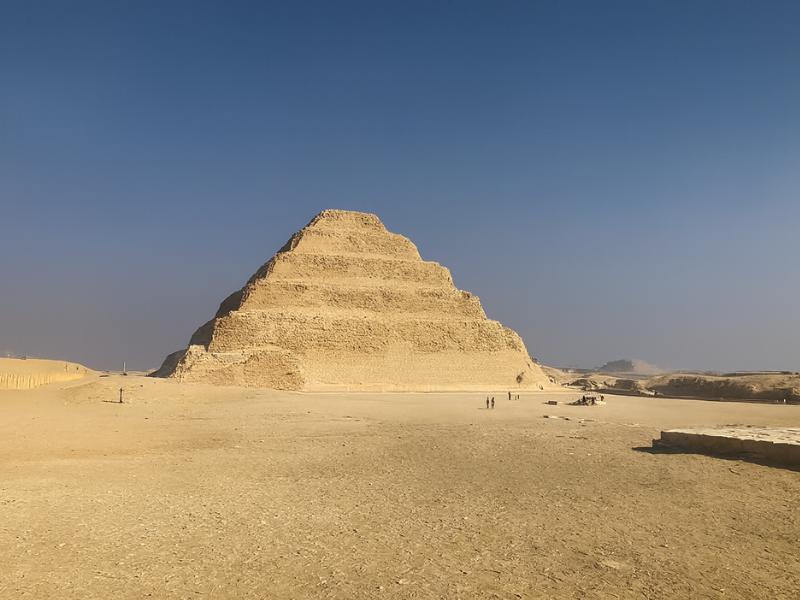
The Pyramids offer an irreplaceable physical and spatial experience: standing next to the only surviving Wonder of the Ancient World, in the open desert, at a scale no museum can replicate. GEM offers something the plateau cannot: the objects that explain the civilization that built those structures, seen in purpose-built conditions with proper lighting, context, and conservation. Neither site is redundant. Each reveals what the other lacks.
This is the section I’d push back on the typical “GEM vs Pyramids” framing most directly. Travel content tends to treat these sites as competing attractions fighting for the same day. That’s not how I understand them after guiding 7,200 people through both.
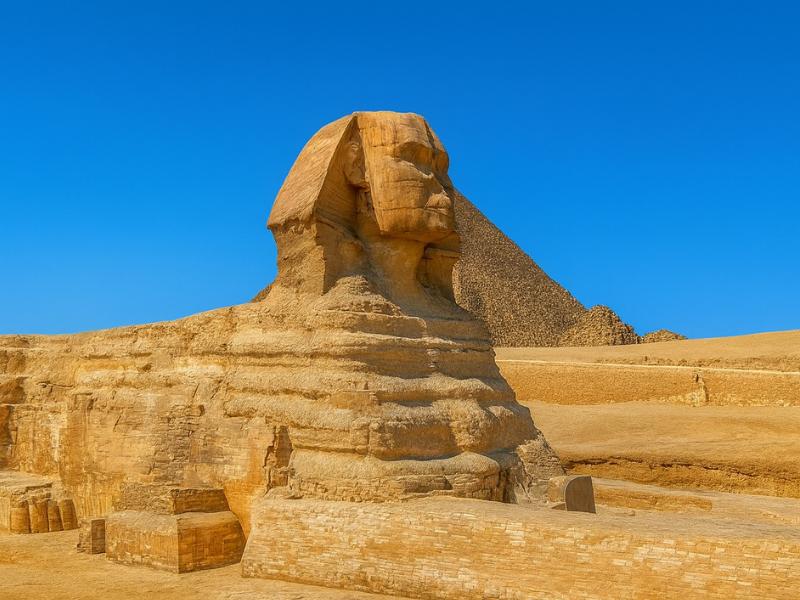
The Pyramids offer scale, landscape, and a kind of time vertigo that has no substitute. You can stand 15 meters from the northeast corner of Khufu’s pyramid and physically feel the mass of 5.57 million tonnes of limestone stacked over 26 years by a civilization that had no iron tools. The Sphinx, carved from a single limestone bedrock outcrop 73 meters long and 20 meters high, is viewable at close range from the eastern enclosure. The mortuary temples still have granite floor blocks in position. The plateau has a panoramic viewpoint where all three pyramids line up in a single frame with the desert behind them. None of this exists anywhere inside GEM.
GEM offers something the stones cannot: the people who built them. Tutankhamun’s solid gold coffin, weighing 110 kilograms, would have been buried beneath a pyramid not unlike those on the plateau. His meteorite iron dagger, the iron rarer than gold in 1323 BC and almost certainly a diplomatic heirloom from the king of Mitanni to Tutankhamun’s grandfather, was wrapped against his body when Carter found it. His throne shows him and his wife Ankhesenamun in the intimate Amarna style, one of the most human images to survive from pharaonic Egypt. GEM contains 20,000 artifacts never previously displayed publicly. You cannot get this at the plateau because there is nothing left inside those pyramids. Khufu’s burial chamber holds only an empty granite sarcophagus. The contents were plundered in antiquity.
The core argument is this: the Pyramids without GEM are architecture. GEM without the Pyramids is a museum. Together, in a single day, they are ancient Egypt.
If you don’t want to miss the best artifacts, here’s what to see at the Grand Egyptian Museum so you spend time on Tutankhamun and the iconic pieces instead of generic pottery.
How Do You Build the Perfect Combined GEM and Pyramids Day?
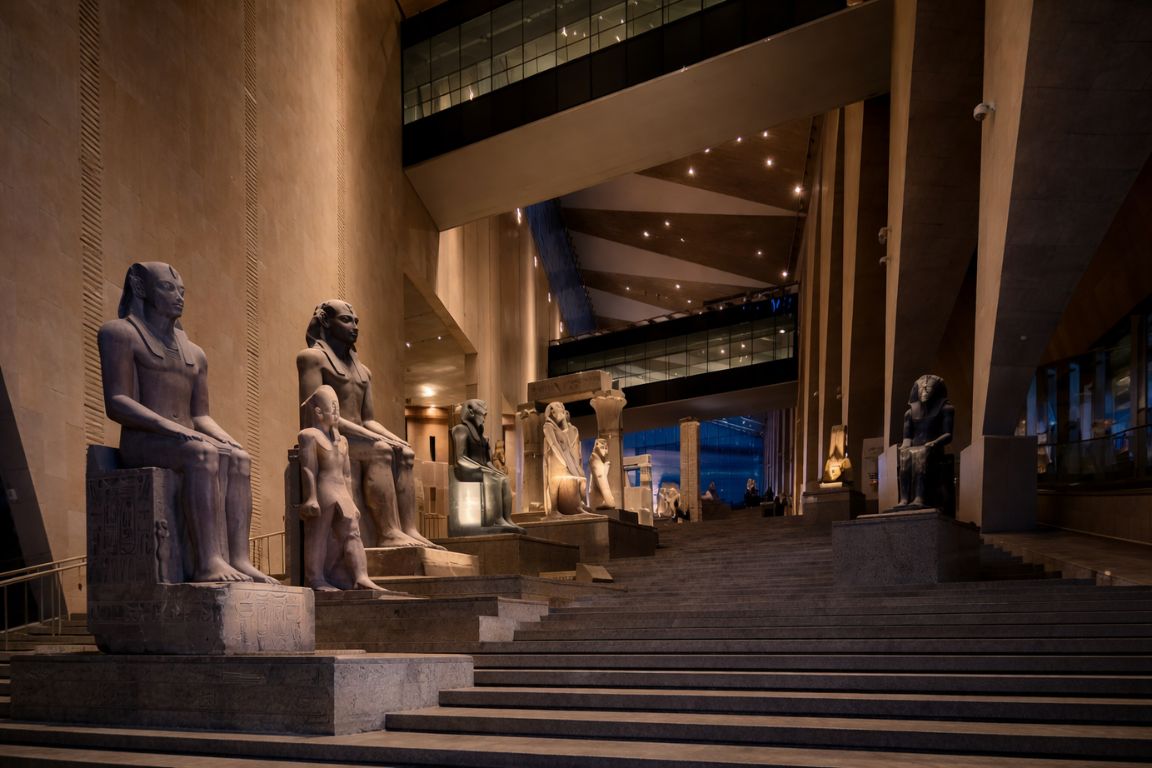 Start at the Giza Plateau by 8 AM. Prioritize Khufu’s interior first if you’re going in (tickets sell out by mid-morning). Leave the plateau by 11:30 AM. Eat lunch near the sites. Enter GEM at 1 PM. Focus on Tutankhamun, then Khufu’s Boats, then the Grand Staircase, then the Main Galleries. Leave by 5 or 6 PM, or stay until 9 PM if it’s a Wednesday or Saturday. This is the sequence I’d recommend to someone I genuinely cared about. Below is the full breakdown.
The Recommended One-Day Itinerary: Pyramids + GEM
| 7:30 AM | Giza Plateau (arrive) | Enter via main gate · collect tickets if not online | Plateau opens at 7 AM officially · arrive early to beat tour buses which arrive at 8:30 AM |
| 7:30-9:00 AM | Great Pyramid of Khufu | Buy interior ticket immediately (daily cap applies) · enter pyramid interior if going · photograph exterior and base scale | Interior is narrow, requires crouching · not suitable for severe claustrophobia · budget 30-40 min inside |
| 9:00-10:00 AM | Khafre and Menkaure Pyramids | Walk south to Khafre · note original limestone casing still visible at apex · continue to Menkaure | Use free Giza Plateau shuttle (Red route) if heat is building |
| 10:00-10:30 AM | Panoramic Viewpoint | Classic three-pyramid frame photograph · best light is still reasonable at this hour in winter | In summer, haze can be heavy in early morning · this time slot is typically clearer |
| 10:30-11:30 AM | Great Sphinx and Valley Temple | Walk east to the Sphinx enclosure · View Dream Stele · enter Valley Temple for granite interior | Sphinx entrance is via eastern approach · allow 30-60 min here |
| 11:30 AM-12:30 PM | Lunch break | Eat near GEM or the plateau · Several options within 10 minutes of both sites | Avoid restaurants offered by guides on commission · ask your hotel for honest recommendations |
| 12:30 PM | Transit to GEM | Walk the pedestrian promenade (~20-25 min) · or take electric shuttle · or 5-min taxi | Walk the promenade at least one direction if you have energy · views of the pyramids throughout |
| 1:00-2:30 PM | GEM – Tutankhamun Galleries | Enter galleries · Death mask · Three nested coffins · Golden Throne · meteorite dagger · audio guide strongly recommended | Photography: still photos on mobile allowed · no cameras, no video in Tutankhamun galleries |
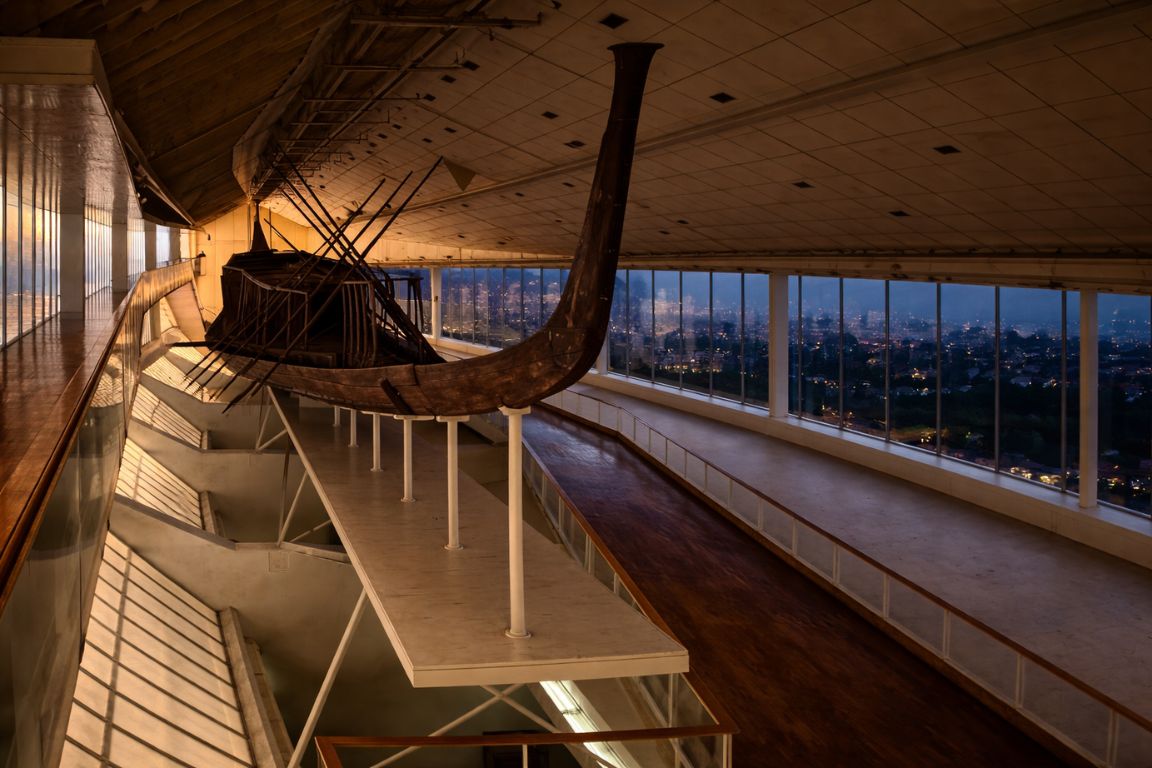
| 2:30-3:15 PM | GEM – Khufu’s Boats Museum | Khufu Boat 1 (43.6m · oldest intact wooden ship on earth) · Khufu Boat 2 live restoration in progress | Boat 2 live reassembly visible to visitors · only such public restoration in the world |
| 3:15-4:00 PM | GEM – Grand Hall and Grand Staircase | Ramses II statue (11m, 83 tons) in Grand Hall · 60+ colossal statues on Grand Staircase across 6 floors | Grand Hall has glass roof · actual pyramid views visible from inside on clear days |
| 4:00-5:30 PM | GEM – Main Exhibition Halls | 12 halls by period: Old Kingdom → New Kingdom → Greco-Roman · Pick 3-4 halls of deepest interest rather than sprinting all 12 | Queen Hetepheres collection · Yuya and Thuya collection (parents of Tiye, grandparents of Tutankhamun) · Heracleion colossi |
| 5:30-6:00 PM | GEM – Esplanade and wrap-up | Walk the outdoor esplanade · pyramid views at golden hour · gift shop if desired · confirm transport | On Wed/Sat: galleries stay open until 9 PM · consider staying if energy permits |
A few things I’d add from experience that don’t show up in standard itineraries:
Don’t let anyone redirect you to a “papyrus shop” or “perfume shop” en route between the sites. This is one of the most common ways the combined day gets derailed. The detour is typically 45 minutes to an hour and is entirely avoidable. If you’re with a guide, be clear upfront that you are not stopping at shops. If you’re in a taxi, confirm the destination address before getting in.
GEM’s esplanade walk from the entrance gate to the museum’s main doors is about 15 minutes. Build this into your entry time. If your GEM ticket slot is 1 PM, you need to be at the gate by 12:45 at the latest.
Also worth knowing: GEM’s interior temperature is maintained at around 73°F regardless of outside conditions. In Egyptian summer (June through August), when the plateau can hit 40°C or higher, GEM becomes genuinely luxurious in a way that feels almost medicinal after a morning in the desert sun.
GEM tickets are timed, online-only, and don’t accommodate walk-ups. If you’re building a combined Pyramids and GEM day, check your museum date once your Cairo travel dates are confirmed. Reserve your GEM entry here.
What Our Travelers Say: GEM vs Pyramids Day Feedback
| Would recommend this sequence to others | 75-90% | 40-60% |
| Felt rushed at either site | 35-50% | 55-75% |
| Said GEM added meaning to the Pyramid visit | 70-85% | 45-65% |
| Said they wished they’d had more time at GEM | 60-80% | 70-90% |
| Would visit both sites again on a return trip | 85-95% | |
| Most common regret | Not arriving at the plateau early enough | Not enough time in Tutankhamun galleries |
Planning your full Giza day and need help confirming GEM entry times around your Pyramids schedule? Start with your GEM ticket booking and work backward from there. The museum slot is the fixed point everything else organizes around.
Frequently Asked Questions
Can you walk between the Grand Egyptian Museum and the Pyramids?
Yes. A new pedestrian promenade opened in late 2025 connecting GEM to the Giza Plateau. It spans approximately 1.3 kilometers with landscaped areas and golden night lighting. Walking takes 20 to 25 minutes. An eco-friendly electric shuttle runs the same route. A short taxi is also around 5 minutes between the two sites.
Do GEM tickets include entry to the Pyramids?
No. GEM (1,450 EGP foreign adult) and Giza Plateau (700 EGP foreign adult general admission) are separate tickets with separate booking systems. Pyramid interior access requires an additional ticket purchased on-site. Book GEM online only via visit-gem.com. Giza Plateau tickets are available at the gate or via egymonuments.com.
Is it worth visiting both GEM and the Pyramids in one day?
Yes, for most visitors with a full day available. The sites are 2 kilometers apart and the combined experience is genuinely greater than either alone. The Pyramids show you the scale. GEM shows you what it meant. The recommended sequence is Pyramids first (morning), then GEM (afternoon). Budget 8 to 9 hours total including transit and a lunch break.
Which site takes longer?
They’re roughly equivalent for a standard first visit: 3 to 4 hours each. GEM can expand almost infinitely for museum-focused travelers. The Pyramids have a natural ceiling determined by heat tolerance and physical stamina. Most visitors find they want more time at GEM than they initially allocated.
What happens at the Pyramids in extreme heat?
GEM’s galleries are climate-controlled year-round at approximately 73°F. The Giza Plateau has no shade and temperatures in summer reach 40°C and above. This makes the morning-Pyramids, afternoon-GEM sequence especially important from June through August. Arriving at the plateau by 7:30 or 8 AM in summer gives you a relatively manageable 2 to 3 hours before the heat becomes oppressive.
Should families with young children visit both in one day?
Families with children under 10 often find the combined day long. A practical split: cover the Pyramids exterior and Sphinx (skip the interior for young children, who are not well-suited to the narrow ascending passages), then transition to GEM with its dedicated children’s museum (ages 6 to 12) in the afternoon. Children under 4 enter GEM free. The children’s museum at GEM has AR experiences and hands-on programming that works well as an energy outlet after a morning outside.
Written by Omar Khalil
Egyptian tour guide since 2013 · Founder, The Grand Egyptian Museum Tickets
Omar has guided over 7,200 travelers through the Grand Egyptian Museum and Cairo’s ancient sites since founding the agency.