How to Get to the Grand Egyptian Museum
The Grand Egyptian Museum sits on the Giza plateau, about 2 km from the pyramids and 30 to 45 minutes west of central Cairo. Here is every practical way to reach it, with realistic times and cost allowances.
Booking choice: Private English-speaking Egyptologist and Cairo/Giza hotel transfers. Admission, lunch and tips are extra. Approximately 3.5 hours. Check Private GEM Egyptologist Visit Dates
Your next choice is how to visit: Get from actual origin to GEM; distinguish Cairo/Giza hotel pickup from airport transfer and combined-site transport.
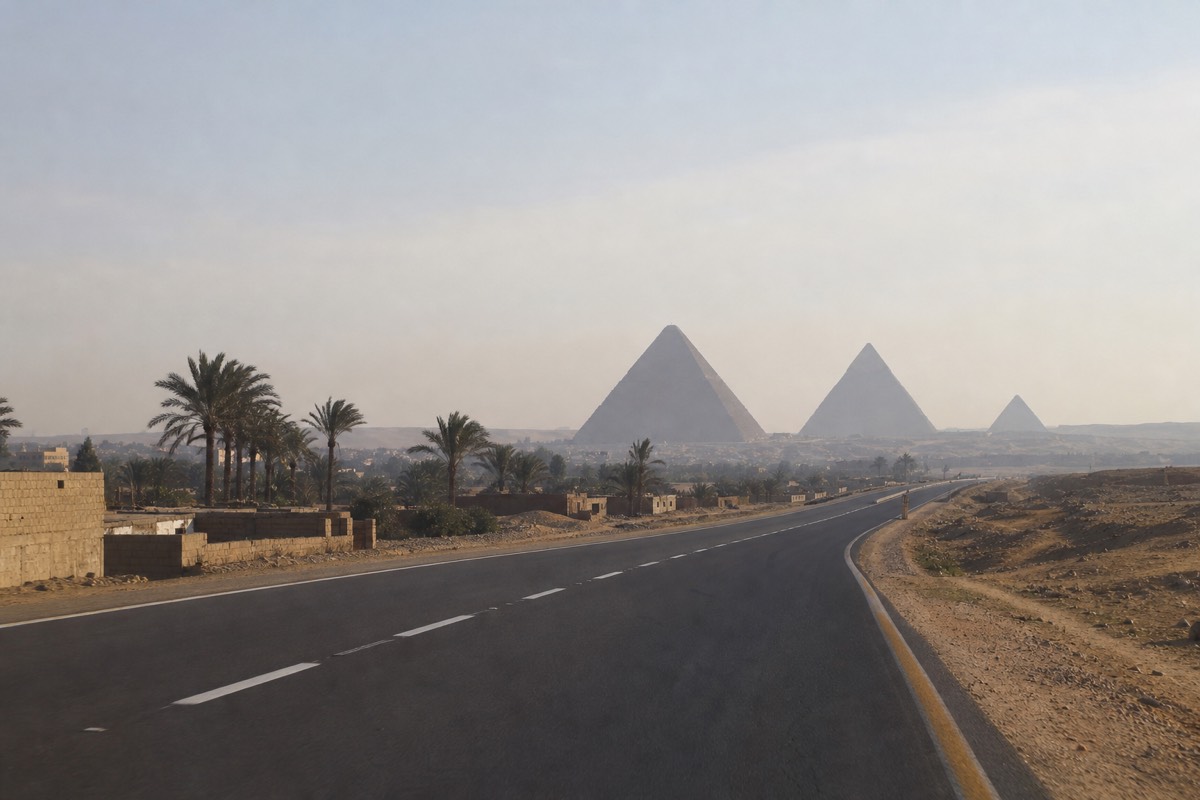
Reaching the museum is simple once you know which side of Cairo you are starting from. The building sits out on the Giza plateau, on the western edge of the metropolitan area, well away from Downtown, Zamalek and the airport. That single fact shapes every journey below. Get your bearings first, then pick the option that matches where you are staying and how much of the logistics you want to hand off. Prices in this guide are planning allowances, not fixed quotes, so confirm the fare in your ride app or with your driver before you set off.
Where is the Grand Egyptian Museum?
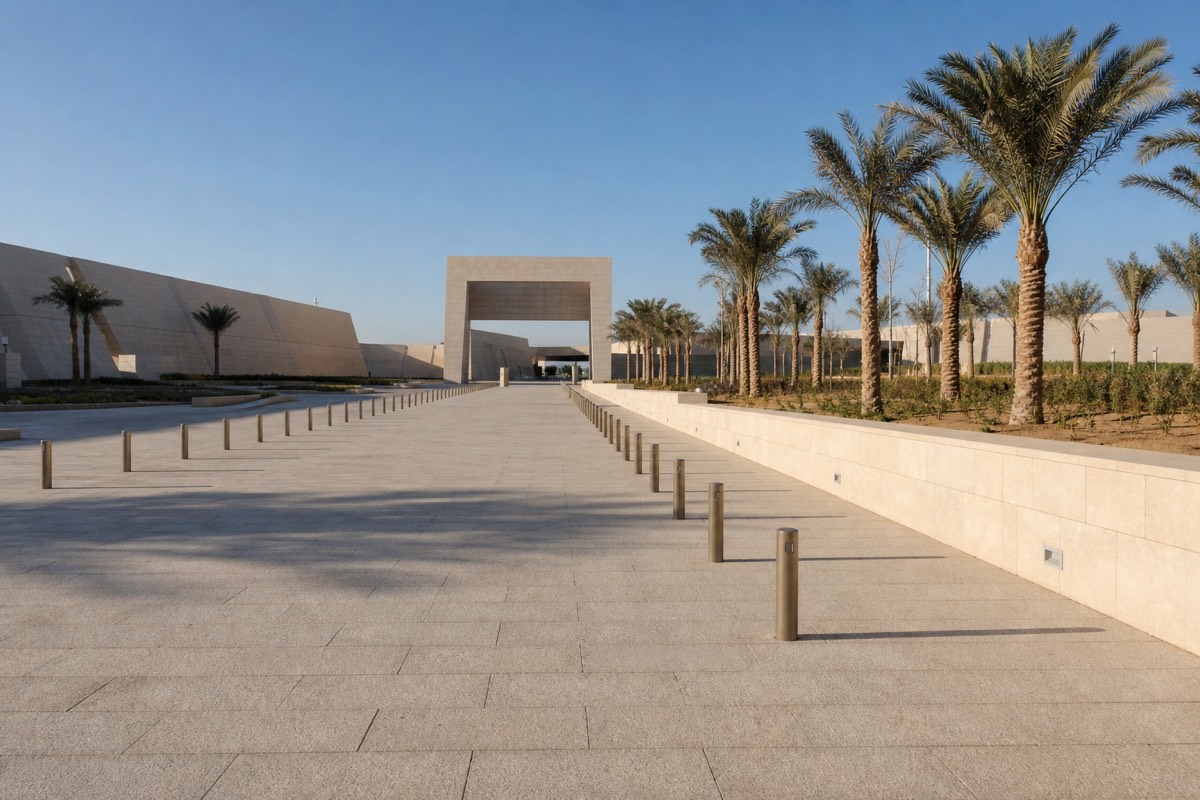
The Grand Egyptian Museum stands on the Giza plateau at Al Remaya Square, off the Alexandria Desert Road, roughly 2 km from the Pyramids of Giza and about 30 to 45 minutes west of central Cairo by car. It shares the same desert plateau as the pyramids and connects to them by a new pedestrian walkway.
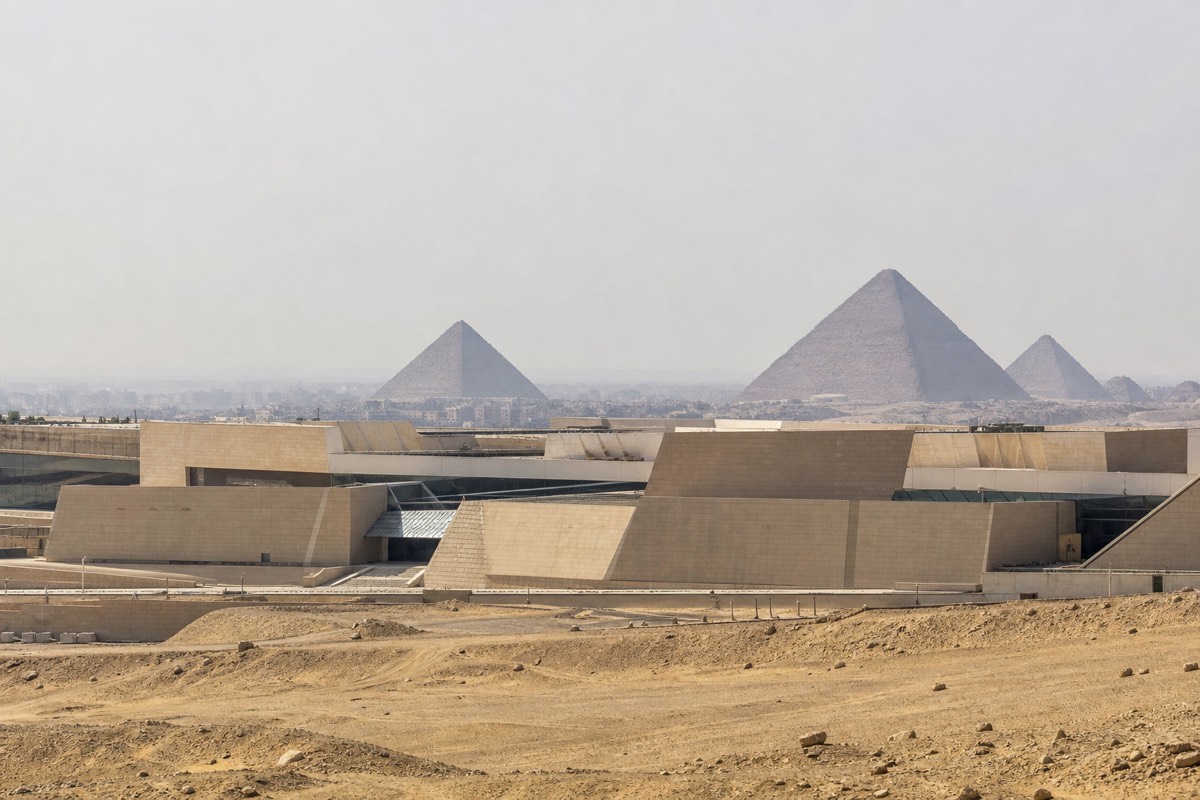
The address most drivers recognise is Al Remaya Square, Alexandria Desert Road, Giza. That places the museum at the far western edge of Greater Cairo, where the city gives way to open desert and the three pyramids rise on the horizon. If your hotel is on the Giza side, near the pyramids or along Alexandria Desert Road, you are already close. If you are in Downtown Cairo, Zamalek, Garden City or Heliopolis, you have the width of the city to cross first.
The plateau itself is protected as a UNESCO World Heritage area, and the museum was deliberately placed within sight of the monuments it interprets. When you tell a driver your destination, say the full name of the museum rather than just "the pyramids", because the two are separate arrival points about 2 km apart with different gates.
| Detail | Information |
|---|---|
| Location | Al Remaya Square, Alexandria Desert Road, Giza |
| Distance from the pyramids | About 2 km, same plateau, pedestrian walkway between them |
| From central Cairo | Roughly 30 to 45 minutes by car, traffic dependent |
| From Cairo Airport | Plan around an hour, sometimes longer across the city |
| Nearest metro | Line 2 to Giza station, then a taxi or ride-app to the plateau |
| What to tell the driver | The full museum name, not simply "the pyramids" |
Because the museum runs on timed entry, your arrival plan matters as much as your route. Booking is handled online at visit-gem.com, and once you hold a slot you want to reach the gate with time to spare rather than sprint from a taxi. If you would rather not stitch the transport together yourself, our team can arrange a visit with hotel pickup that collects you from the door.
One more orientation point saves confusion on the day. The Giza plateau and the museum are neighbours, but they are not the same visit and not the same ticket. People sometimes book a driver to "the pyramids" expecting the museum, or the reverse, and lose half an hour bridging the 2 km between them at the wrong end of the morning. Decide which you are starting with, name it precisely, and the plateau's proximity becomes the convenience it is meant to be rather than a source of mix-ups.
How do you get there from central Cairo?
From central Cairo, the ride-hailing apps Uber and Careem are the most reliable way to reach the museum, taking roughly 30 to 45 minutes depending on traffic and time of day. Metered street taxis work too if you agree the destination and a fair price first. A pre-booked hotel car or a private tour removes the negotiation entirely.
Distance from Downtown, Zamalek or Garden City is around 20 km, but Cairo distance is measured in minutes, not kilometres. Leave before 8 am and the plateau is a clear run. Leave at 9 or 10 am, right when the morning rush and the tour buses overlap, and the same trip can stretch well past 45 minutes. The single biggest lever you control is departure time.
Ride apps are popular here for a reason. The price is calculated in advance, the route is tracked, and there is no haggling at the kerb. Street taxis are cheaper on paper but the white and blue Cairo cabs do not always run the meter for tourists, so settle the fare before you get in and carry small notes. Whichever you pick, ask for the museum's main visitor entrance and repeat the full name, since a driver who assumes you mean the pyramids may drop you at the wrong gate 2 km short.
| From central Cairo | Typical time | Cost allowance (confirm before riding) |
|---|---|---|
| Ride app (Uber / Careem) | 30 to 45 min | App quotes the fare up front; budget a mid-range city crossing |
| Street taxi (metered/agreed) | 30 to 45 min | Agree the price first; carry small notes |
| Hotel-arranged car | 30 to 45 min | Fixed rate set by the hotel, usually the priciest street option |
| Metro to Giza + short taxi | 45 to 60 min | Cheapest overall; two legs and a change |
One practical note for the return trip: ride-app pickups from the plateau can take a few extra minutes to connect because of the size of the complex and the drop-off zones. Drop a pin at the exact exit, and if signal is patchy near Giza, save your booking details offline before you leave your hotel.
If budget is the priority, the metro plus a short taxi is the cheapest way across the city, though it asks for more time and a change. Cairo's Metro Line 2 runs to Giza station, and from there you cover the last stretch to the plateau by taxi or ride app. It is not a door-to-door service, but for solo travellers watching every pound it is hard to beat on cost. The steps below break the journey into its parts so you can judge whether the saving is worth the extra effort on the day.
| Step | What you do | Rough time |
|---|---|---|
| 1. Metro to Giza | Take Line 2 to Giza station | Varies by starting station |
| 2. Exit and find transport | Pick up a taxi or ride app outside the station | A few minutes |
| 3. Ride to the plateau | Short trip west toward Al Remaya Square | 15 to 25 min in traffic |
| 4. Arrive at the museum | Ask for the main visitor entrance | Walk from the drop-off |
The metro itself is inexpensive and avoids surface traffic for the long middle leg, which is its real advantage during rush hour. The weakness is the handoff at Giza, where you still need a taxi or app for the final kilometres and may face the usual kerbside negotiation. For most visitors travelling as a pair or a family, the small saving over a single ride app rarely justifies the extra steps, but for backpackers and slow travellers it is a genuine option worth knowing.
From Cairo Airport?
Cairo International Airport sits on the north-eastern side of the city, so reaching the museum means crossing the entire metropolitan area. Plan around an hour of driving in light traffic and noticeably longer at peak times. A pre-arranged transfer or private car is the smoothest option straight off a flight, when you are least inclined to negotiate a taxi fare.
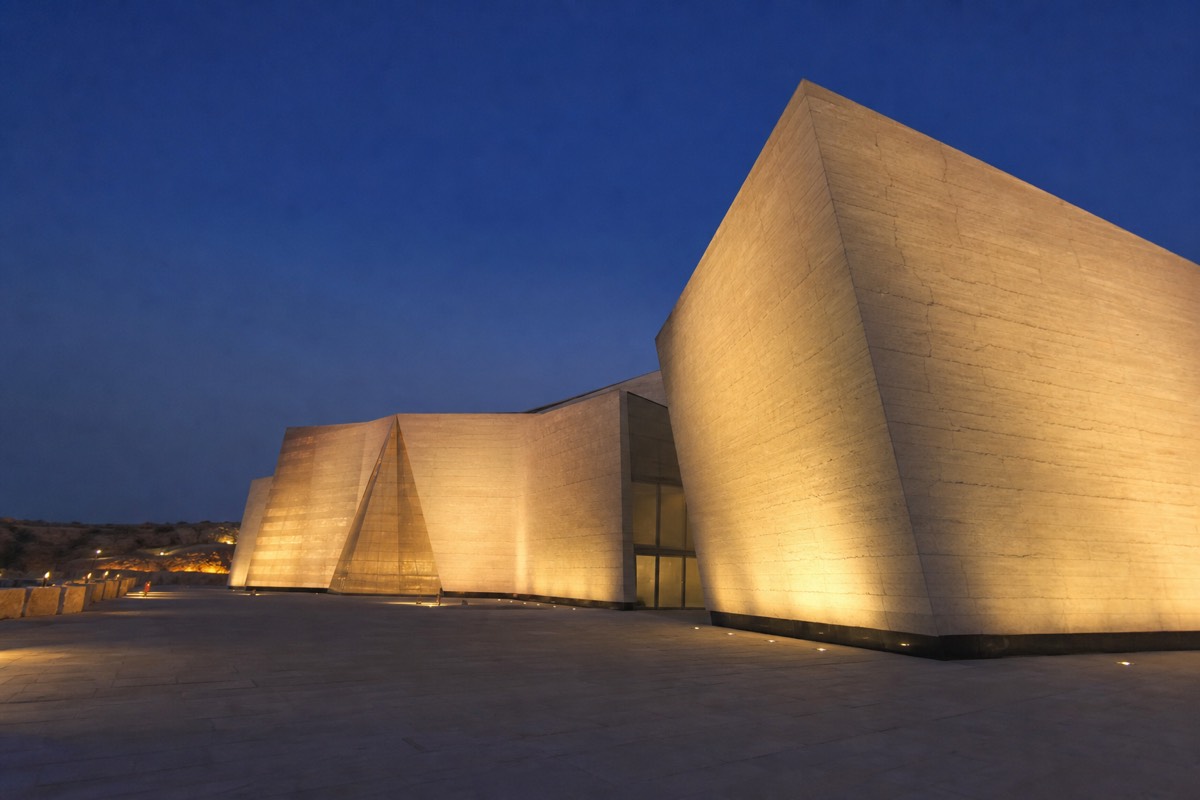
This is the longest of the common journeys because the airport and the plateau sit at opposite corners of Cairo. In the quiet hours, an early morning or late evening, the ring road can deliver you in a little over an hour. In the thick of the day the crossing takes longer, and a flight that lands mid-morning can put you into the worst of the traffic.
Ride apps operate from the airport, though pickup can involve a designated waiting area and a short queue. If you would rather step off the plane and into a named car, book a service that explicitly includes airport collection; a museum tour offering hotel pickup does not establish airport pickup. Travellers arriving late sometimes overnight near the airport or in the city and make the museum a fresh-morning trip instead, which also lines up better with the early 8:30 am entry slot.
The honest advice for a same-day museum visit off an international flight is to leave slack in the plan. Cairo traffic is the wild card on this route more than any other, and a delayed bag or a slow immigration hall can eat the buffer before you even reach the car. If your museum slot is precious, treat a jet-lagged arrival day as the risky option and a rested next-morning visit as the safe one. It is the difference between racing the clock across the city and starting the day already on the plateau.
| From Cairo Airport | Typical time | Notes |
|---|---|---|
| Private transfer / tour pickup | About 60 min, more in traffic | Named driver at arrivals; no kerbside haggling |
| Ride app (Uber / Careem) | About 60 min, more in traffic | Designated pickup zone; app fare shown up front |
| Airport taxi | About 60 min, more in traffic | Agree the fare before loading bags |
Whatever you book, factor the timed entry into the plan. A flight landing at 8 am does not guarantee you can make an 11 am museum slot: immigration, baggage and traffic can use that interval. Allow a larger buffer or visit the next day if the connection leaves little margin. You can see how the slots fall in our guide to the museum's opening hours.
From the Giza pyramids?
The museum sits about 2 km from the Pyramids of Giza on the same plateau, so the journey from the monuments is short: a few minutes by car or ride app, or a manageable walk along the pedestrian route in cooler weather. Many visitors pair the two in a single day, seeing the galleries in the morning and the plateau in the afternoon, or the reverse.
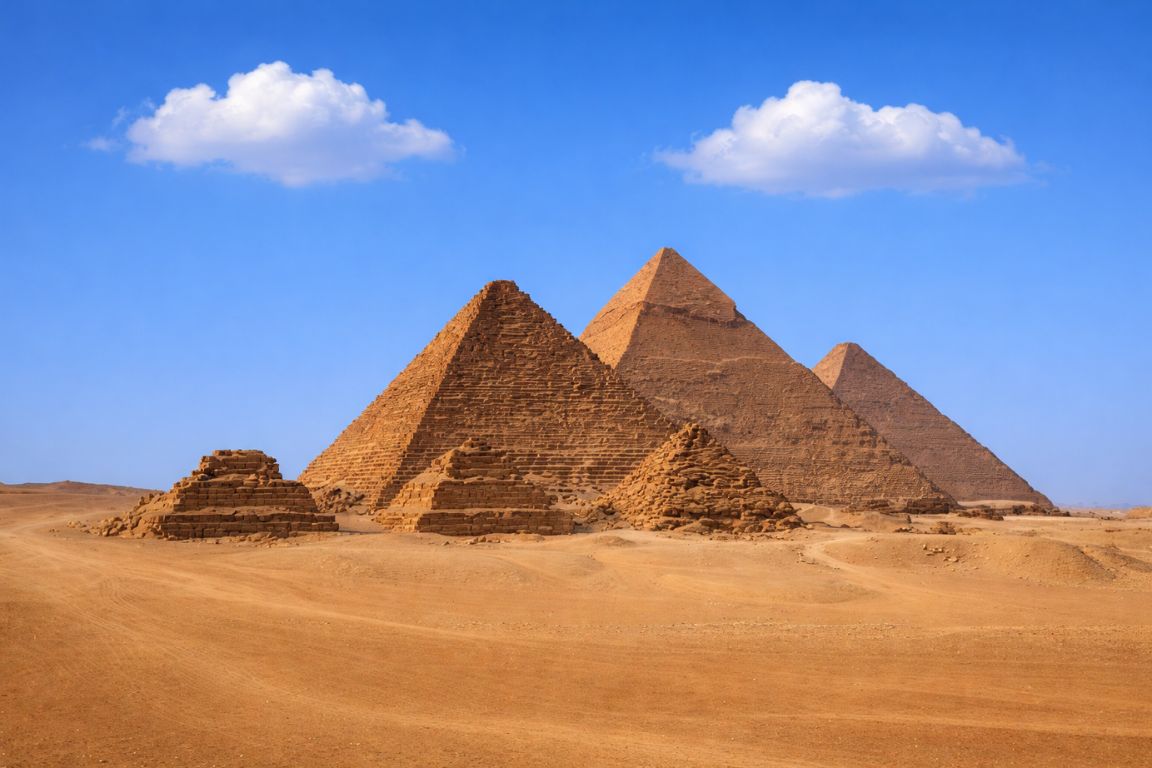
This is the easiest arrival of all. If you are already at the pyramids, the museum is barely a hop away. A short taxi or ride-app trip covers it in minutes, and in the pleasant months from October through April the walkway between the two is a genuine option rather than a slog. In high summer, with the plateau baking, most people take the car for those 2 km rather than walk them in full sun.
The order you do them in matters more than the transport. Air-conditioned galleries in the heat of the day, open desert in the softer light of morning or late afternoon: that is the pairing most travellers find works. If a full combined day appeals, our team runs itineraries that stitch both together, including private Pyramids and GEM tour (choose your inclusions), and you can read the full case for doing it all at once in our guide to how to combine the museum and the Pyramids.
One thing to hold in mind when you plan the hop: the two sites have separate entrances and separate ticketing. The plateau charges its own general admission of around 700 EGP, roughly 14 US dollars, with the interior of the Great Pyramid a further extra of about 1,500 EGP that has a daily cap and often sells out by mid-morning. The museum is a wholly separate booking made at visit-gem.com. So while the drive between them is trivial, the paperwork is two tickets, not one, unless a combined tour bundles both for you. Building that into your budget and your timing avoids a scramble at the second gate.
| From the pyramids | Typical time | Best for |
|---|---|---|
| Taxi / ride app | A few minutes | Summer, midday heat, tired legs |
| Walk via the pedestrian route | Around 20 to 30 min | Cool months, early morning, the view |
| Private car on a combined tour | A few minutes | A planned single day across both sites |
Taxi, Uber, or a hotel-pickup tour: which is best?
For independent travellers who want the lowest fuss, a ride app is usually the best single choice: fixed price, tracked route, no bargaining. A pre-booked hotel car suits early flights and non-app users. A hotel-pickup tour is the strongest option when you also want tickets, help with the entry booking and someone handling the visit logistics for you.
There is no universally correct answer, only the one that fits your trip. The trade-off is between cost, control and convenience. A street taxi is cheapest and most flexible but asks the most of you at the kerb. A ride app removes the haggling for a small premium. A private car or a pickup tour costs more and gives back the most: no negotiation, no wrong-gate confusion, and in the case of a tour, help arranging the museum entry included in your selected booking.
That last point is easy to underestimate. The museum runs timed entry and does not sell tickets at the gate, so arriving without a pre-booked slot means you cannot enter. A pickup tour bundles the entry with the transport, which is why travellers who dislike admin often choose it. If you would rather keep costs down and are comfortable booking your own slot at visit-gem.com, a ride app to the door works perfectly well.
| Option | Cost allowance | Pros | Watch for |
|---|---|---|---|
| Ride app (Uber / Careem) | Low to mid | Fixed fare, tracked, no haggling | Return pickup can lag near the plateau |
| Street taxi | Low | Cheapest, everywhere | Agree the fare first; meter not always used |
| Hotel car | Mid to high | Reliable, named driver | Priciest street option |
| Hotel-pickup tour ($60 allowance) | Higher, all-in | Door pickup, ticket and slot handled | Fixed schedule, book ahead |
| Private tour ($44 allowance) | Higher, all-in | Own pace, own vehicle, pyramids too | Best value shared across a group |
Those tour prices are planning allowances drawn from current listings; the live rate, dates and any free-cancellation window sit on the operator's own page. Whatever you choose for the ride, decide your entry slot first and let the transport follow from it.
A useful way to decide is to weigh how many of you are travelling and how much you value your morning. A private tour spreads its cost across everyone in the vehicle, so for a family or a group of friends the per-head figure can undercut several separate ride-app fares while adding a guide and a fixed pyramid pairing. A solo traveller or a couple who are happy to self-drive the logistics will usually spend less with a ride app and a self-booked slot. Neither is wrong. The pickup and private options simply convert money into removed friction, and the more moving parts your day has, an early flight, a tight slot, a plan to see the pyramids as well, the more that friction is worth removing.
How long does the journey take and what does it cost?
Journey time runs from a few minutes if you start at the pyramids to around 30 to 45 minutes from central Cairo and about an hour or more from the airport. Costs scale with distance and with how much you outsource: a ride app across the city is modest, a private car or pickup tour is higher but bundles more. Treat every figure here as an allowance and confirm before you travel.
The honest version of the cost question is that Cairo fares move with fuel prices, exchange rates and demand, so a precise number today can be stale next month. What stays reliable is the shape of it. The pyramids-to-museum hop is the cheapest trip you will take. A city crossing by ride app is a mid-range fare the app shows you before you confirm. The airport run is the priciest street journey simply because it is the longest. Private transport and pickup add convenience, but the name alone does not establish whether museum admission is included.
Two grounded reference points help you sanity-check spending on the day. Meals inside the museum's cafes and restaurants run roughly 8 to 15 US dollars a head, and if you add the separate Giza plateau, general admission there is around 700 EGP, about 14 dollars, with the interior of the Great Pyramid a further extra that often sells out by mid-morning. Museum admission itself is booked at visit-gem.com and is a separate line from your transport.
| Origin | Time allowance | Ride cost shape | Timing tip |
|---|---|---|---|
| Giza pyramids | A few minutes | Lowest | Walkable in cool months |
| Giza-side hotels | 10 to 25 min | Low | Closest base for an 8:30 slot |
| Central Cairo | 30 to 45 min | Mid | Leave before 8 am to beat traffic |
| Cairo Airport | About 60 min or more | Highest street fare | Pair with a late-morning slot |
Once the ride is sorted, the rest of the day is about pacing. Give yourself enough hours inside for the scale of the place, wear something that copes with an air-conditioned interior and a hot approach as covered in our note on what to wear, and if this is your first visit, our overview of how to plan your visit pulls the practical pieces together. Arriving is the easy part. The plateau does the rest.