Grand Egyptian Museum and Pyramids in One Day
The Grand Egyptian Museum and the Pyramids of Giza sit about 2 km apart on the same plateau. Doing both in one day is realistic and rewarding, as long as you get the order and the timing right. Here is the plan.
Booking choice: Private Cairo/Giza hotel transfers; 6–8 hours. Select a guide package. Museum and plateau tickets are included only with ticket-inclusive options; pyramid interiors cost extra. Check Private Pyramids And GEM Day Dates
Your next choice is how to visit: Arrange a feasible private day at Giza and GEM with transport between the sites.
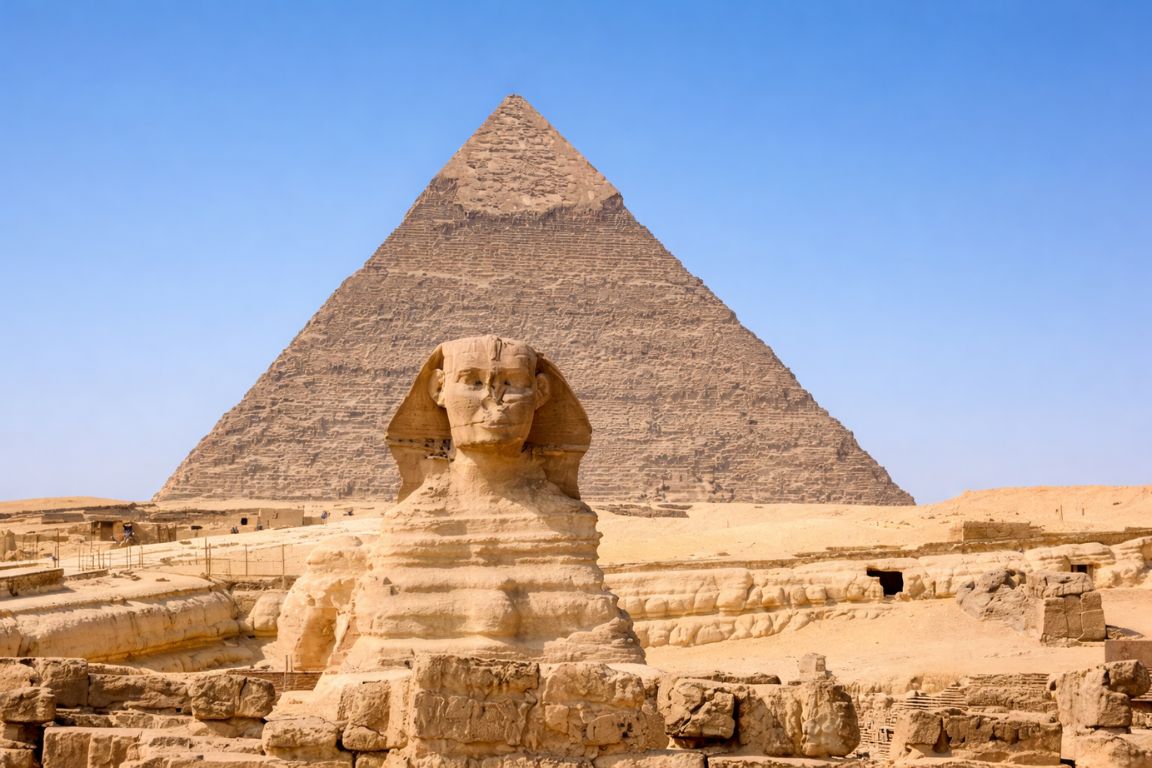
The two greatest sights in Giza are close enough to walk between, which is exactly why so many travelers try to do both in a single day and exactly why so many get the sequence wrong. Start in the wrong place and you spend the hottest hours in the open desert and the tired hours reading gallery labels. Start in the right place and the day flows. This guide gives you the honest feasibility, the best order, a realistic hour-by-hour timeline, the transport options between the sites, and what it all costs.
Can you do the Grand Egyptian Museum and the pyramids in one day?
Yes. The Grand Egyptian Museum sits about 2 km from the Pyramids of Giza on the same plateau, connected by a new pedestrian walkway, so both fit comfortably into one well-planned day. Budget roughly 8 to 9 hours including a lunch break and the short transfer. The distance is never the problem. Poor sequencing is what wrecks a combined day.
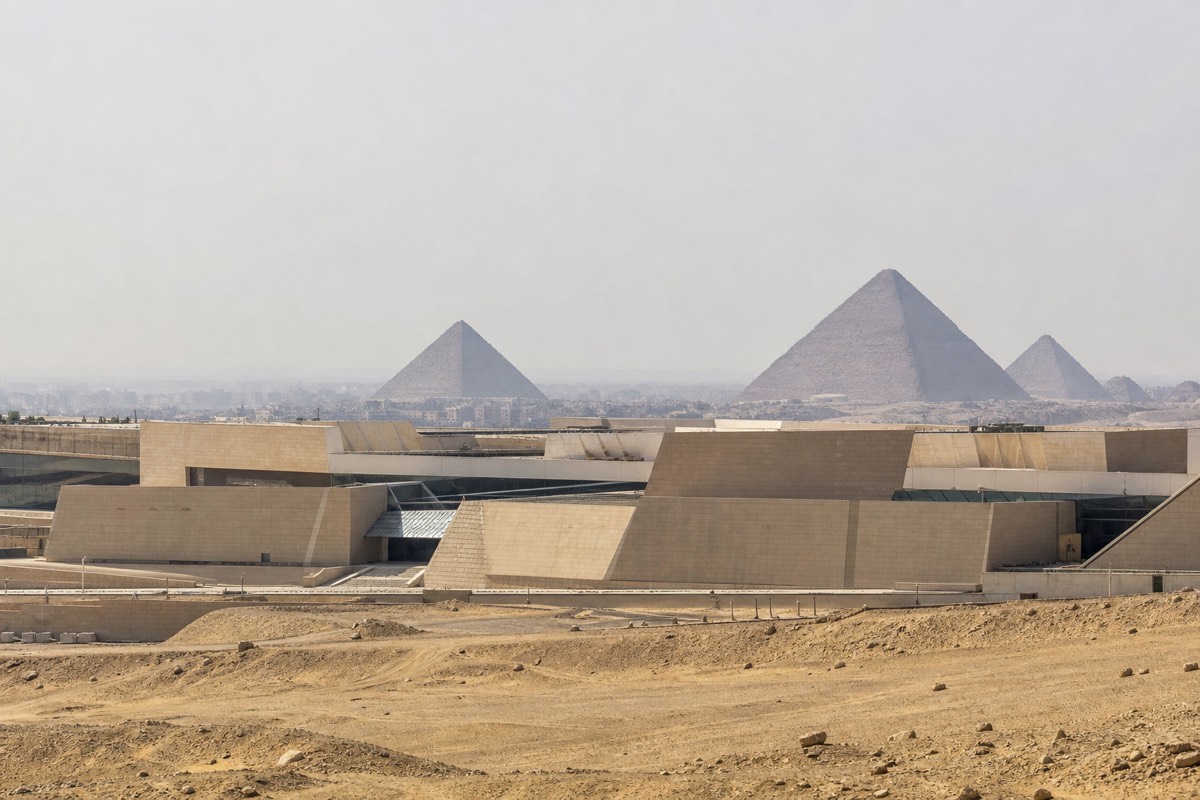
Because the sites are so close, the logistics are genuinely easy compared with pairing two attractions across a city. You are not fighting Cairo traffic between them; you are covering 2 km. That proximity is the whole reason GEM was built where it was, to be an extension of the plateau experience rather than a separate trip. The pyramids show you what ancient Egypt built. The museum shows you what came out of those tombs and why it mattered.
What makes or breaks the day is honesty about time and energy. Each site deserves several hours, the desert is punishing at midday, and GEM's timed-entry tickets are online-only with no gate sales, so the museum slot is the fixed point everything else has to fit around. If you would rather not juggle two ticketing systems and a transfer, a combined tour handles it in one booking. For the wider case on how these two sites complement each other, our guide on GEM versus the Pyramids goes deeper, and our blog on whether you can visit both in one day answers the quick version.
There is a case for slowing down, too. If your Cairo schedule has room, splitting the pyramids and the museum across two mornings lets you give each the unhurried time it deserves, and it spares you the midday crunch entirely. The one-day plan is for travelers on a tight itinerary, and it works well, but it is a full day by design. Go in expecting to sample GEM's highlights rather than read every label, and you will finish satisfied rather than frazzled. Both the plateau and the museum are UNESCO-caliber experiences in their own right, and the Giza pyramids themselves form part of a UNESCO World Heritage site, so there is no shame in deciding they each merit their own day.
| Question | Short answer |
|---|---|
| Distance apart | About 2 km, same plateau |
| Connected by | A new pedestrian walkway, plus shuttle and taxi |
| Total time for both | Roughly 8 to 9 hours with lunch |
| Hardest part | Getting the order right, not the distance |
| Fixed point | GEM's timed, online-only entry slot |
| Realistic for most visitors? | Yes, with an early start |
What is the best order (pyramids first or museum first)?
For most people, pyramids first, museum second. Start at the Giza plateau early, while the desert is cool and the light is good for photos, then move to the air-conditioned museum for the hot afternoon hours. The main exception is a Wednesday or Saturday, when GEM's extended evening hours let serious museum-goers flip the order and end with a quieter late gallery visit.
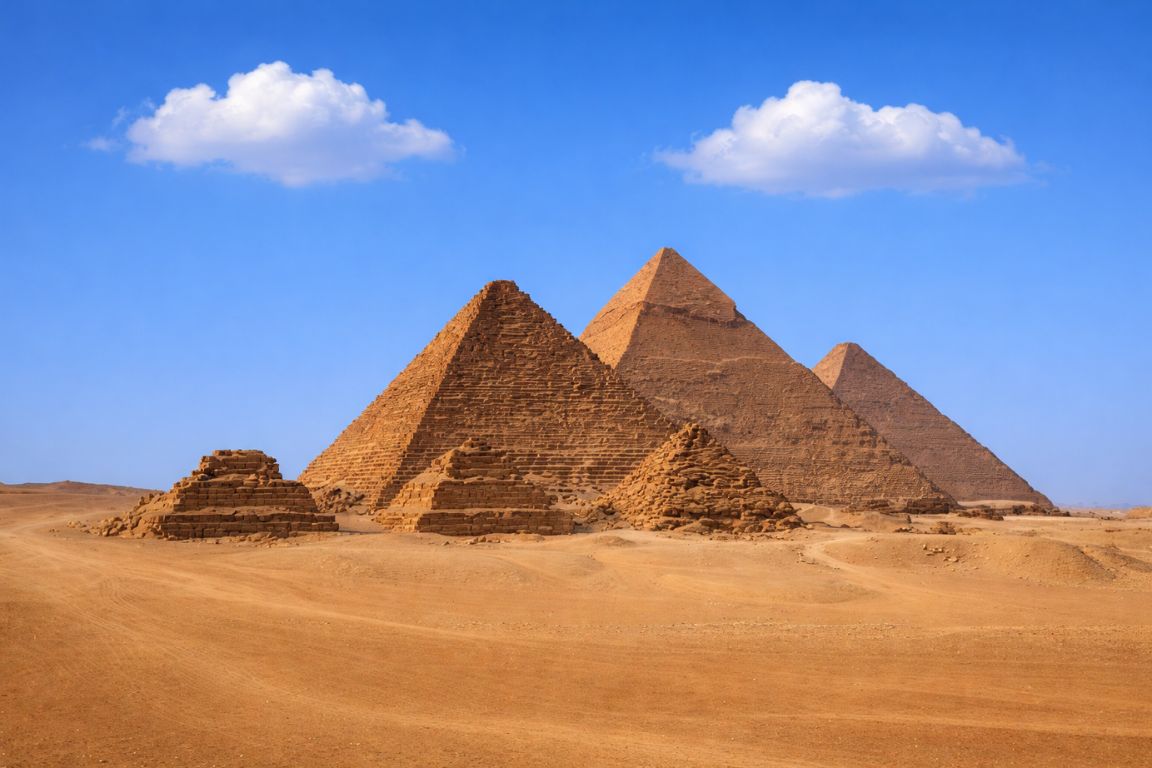
The logic is about heat and stamina. The pyramids are fully outdoors with no shade, and midday in peak season is brutal, so you want the plateau in the cool morning. By early afternoon your feet are tired and the sun is at its worst, which is precisely when GEM's climate-controlled galleries are the more comfortable place to be. Doing it in reverse, museum in the morning and pyramids at midday, is the classic mistake that leaves people wilting in the desert at the worst possible hour.
There is a real counter-case, though. On Wednesdays and Saturdays GEM stays open late, so a museum-focused traveler can do the plateau in the morning, break for a long lunch, and then take a relaxed late-afternoon and evening run through the galleries when the crowds have thinned. Which order suits you depends on your priorities, but for a standard day the pyramids-first sequence is the safer default.
There is also a photography angle to the order. The pyramids reward early light, when the sun is low, the desert glare is softer, and the plateau is not yet packed with tour groups arriving on the morning coaches. By late morning the light flattens and the crowds thicken. GEM, by contrast, is comfortable to photograph at any hour thanks to its glass and its interior lighting, though the facade is at its best in the morning or toward dusk. Putting the pyramids first therefore serves both your comfort and your camera, which is why it is the default we recommend to most first-time visitors.
| Order | Pros | Cons |
|---|---|---|
| Pyramids first, museum second | Cool morning in the desert, good light, air-conditioned afternoon, beats the plateau crowds | Museum visit falls in the busiest gallery hours unless you start very early |
| Museum first, pyramids second | Fresh energy for the galleries, context before the monuments | Pyramids land at peak midday heat and peak crowds, hardest on the body |
| Museum first on Wed or Sat evening | Quiet late galleries, extended hours, relaxed pace | Only works two days a week, long day overall |
A realistic one-day timeline
Arrive at the Giza plateau by 8 AM, spend the cool morning on the pyramids and the Sphinx, break for lunch around noon, then cross the roughly 2 km to GEM for a 1 PM entry slot and spend the afternoon in the galleries. This sequence gives you three to four solid hours at each site without running, and it puts the air-conditioning where the heat is worst.
The timeline below is the version we would give someone we wanted to have a great day. It assumes a pyramids-first order on a standard day. If you are going inside the Great Pyramid, buy that interior ticket the moment you arrive at the plateau, because the daily cap often sells out by mid-morning. Treat the lunch break as non-negotiable; the combined day is long, and pushing through hungry is how people burn out before the Tutankhamun galleries.
One firm warning from experience: do not let a driver or a guide detour you to a papyrus or perfume shop between the sites. That single detour can eat an hour and is the most common way a well-planned day slips. If you want the whole thing handled without the timing math, a private Pyramids and GEM tour (choose your inclusions) can coordinate both visits; confirm the booked route, transfers, admission and meal inclusions for your selected option.
| Time | Where | What to do |
|---|---|---|
| 7:45 to 8:00 AM | Giza plateau | Arrive early, enter before the tour buses, buy a Great Pyramid interior ticket if you want one |
| 8:00 to 9:30 AM | Great Pyramid area | Walk the base of Khufu, go inside if you have the ticket, take in the scale |
| 9:30 to 10:30 AM | Khafre, Menkaure, panorama | Continue to the other pyramids and the panoramic viewpoint for the three-in-one shot |
| 10:30 to 11:30 AM | The Sphinx and Valley Temple | Walk to the Sphinx enclosure and the granite Valley Temple |
| 11:30 AM to 12:45 PM | Lunch | Eat near the plateau or by GEM, rest before the museum |
| 12:45 to 1:00 PM | Transfer to GEM | Walk the pedestrian walkway, take the shuttle, or a 5-minute taxi |
| 1:00 to 2:30 PM | GEM galleries | Grand Hall, Grand Staircase, then the Tutankhamun galleries |
| 2:30 to 3:30 PM | GEM | Khufu Solar Boat and one or two main galleries |
| 3:30 to 4:30 PM | GEM | Remaining highlights, esplanade, pyramid views from the grounds |
Two practical notes. GEM's own esplanade from the gate to the doors takes a walk of its own, so be at the gate a little before your slot time. And if it is a Wednesday or Saturday, you can stretch the afternoon much later, since the galleries stay open into the evening. Buying Grand Egyptian Museum tickets for the earliest slot you can manage gives you the most flexibility to linger later.
How much time does each site need?
Plan on 3 to 4 hours at the pyramids for the exterior of all three, the Sphinx, and the panorama, plus 45 minutes more if you go inside the Great Pyramid. GEM needs 3 hours at a bare minimum for the headline stops, and 4 or more to feel you have seen it rather than sprinted through. In a single combined day, three to four hours at each is the realistic target.
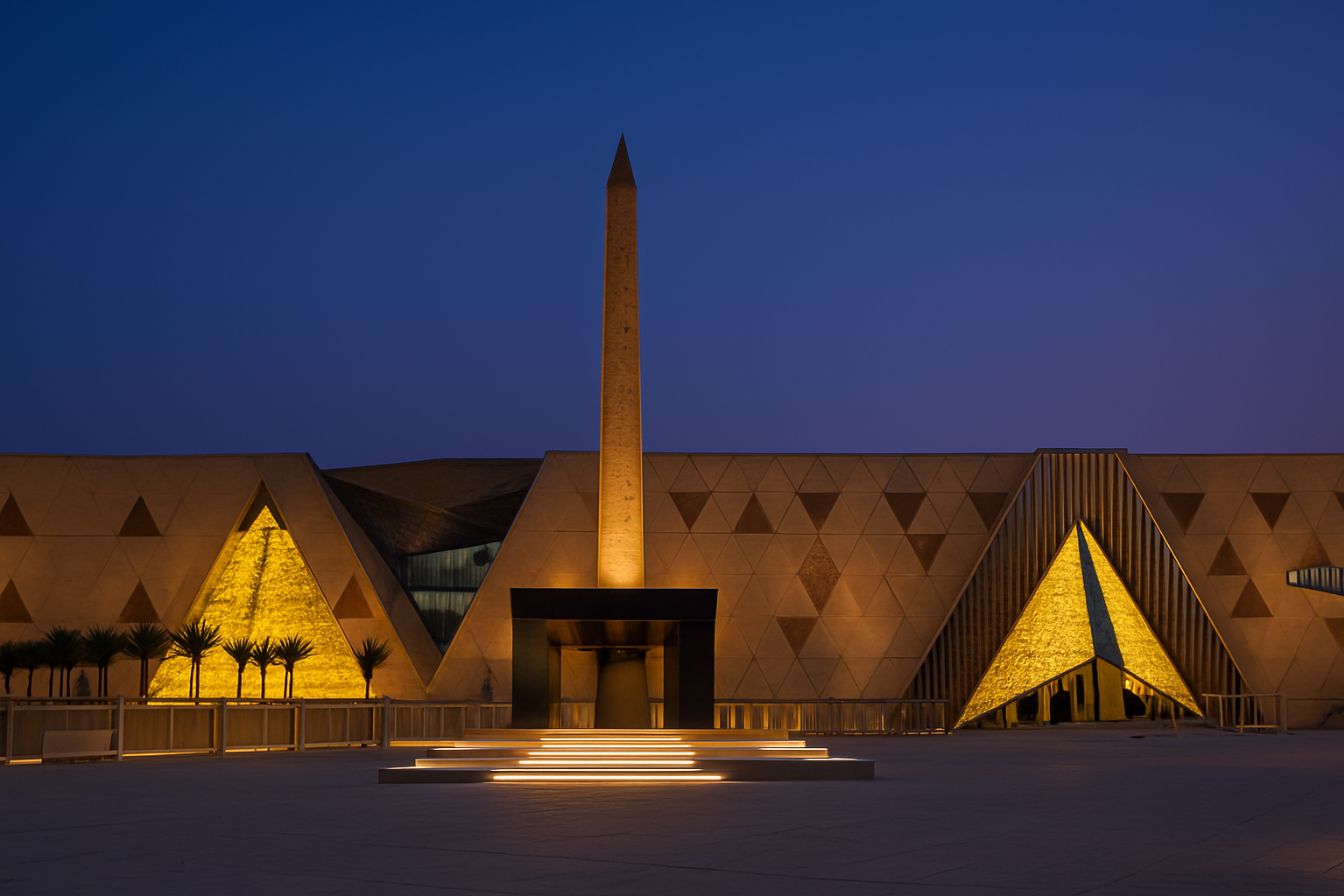
The plateau is bigger than photos suggest, and the distances between the pyramids, the viewpoint, and the Sphinx add up on foot in the sun. Three hours covers it at a steady pace without the interior; going inside Khufu adds time and real physical effort, since the ascending passage is narrow and demands crouching. Anyone with claustrophobia should think twice about the interior and spend the time on the exterior and the Sphinx instead.
GEM has the opposite challenge. It is so rich that everything looks worth reading, and travelers routinely lose 40 minutes in the first Tutankhamun rooms alone. The official guided tour runs about 90 minutes to two hours, which is the floor for the headlines, not the ceiling for a proper look. On a combined day you are sampling GEM's best rather than exhausting it, and that is a fair trade for seeing both wonders in one go. If GEM alone is your focus, plan for a longer visit than a combined day allows.
A useful way to protect the day is to decide your GEM priorities before you arrive. In three to four hours you can comfortably take in the Grand Hall with the Ramesses II colossus, the Grand Staircase and its summit view, the Tutankhamun galleries, and the Khufu Solar Boat, then pick one or two of the main galleries that most interest you. Trying to walk all twelve galleries on a combined day is how people end up rushing the very things they came to see. Choose your headline stops, move steadily, and leave the rest for a return trip if the museum grabs you, as it tends to.
| Site | Quick visit | Proper visit | Add-on |
|---|---|---|---|
| Pyramids and Sphinx (exterior) | 2.5 to 3 hours | 3 to 4 hours | Great Pyramid interior, about 45 min extra |
| Grand Egyptian Museum | 3 hours (highlights) | 4 to 6 hours | Solar Boat hall, about 45 min extra |
| Combined one-day target | 6 to 7 hours total | 8 to 9 hours total | Lunch and transfer included |
How do you get between the museum and the pyramids?
The two sites are about 2 km apart and connected three ways: a landscaped pedestrian walkway you can stroll in roughly 20 to 25 minutes, an electric shuttle running the same route, or a short taxi of about 5 minutes. All three are easy. The walkway is the most scenic option, with pyramid views most of the way, so walk at least one direction if you have the energy.
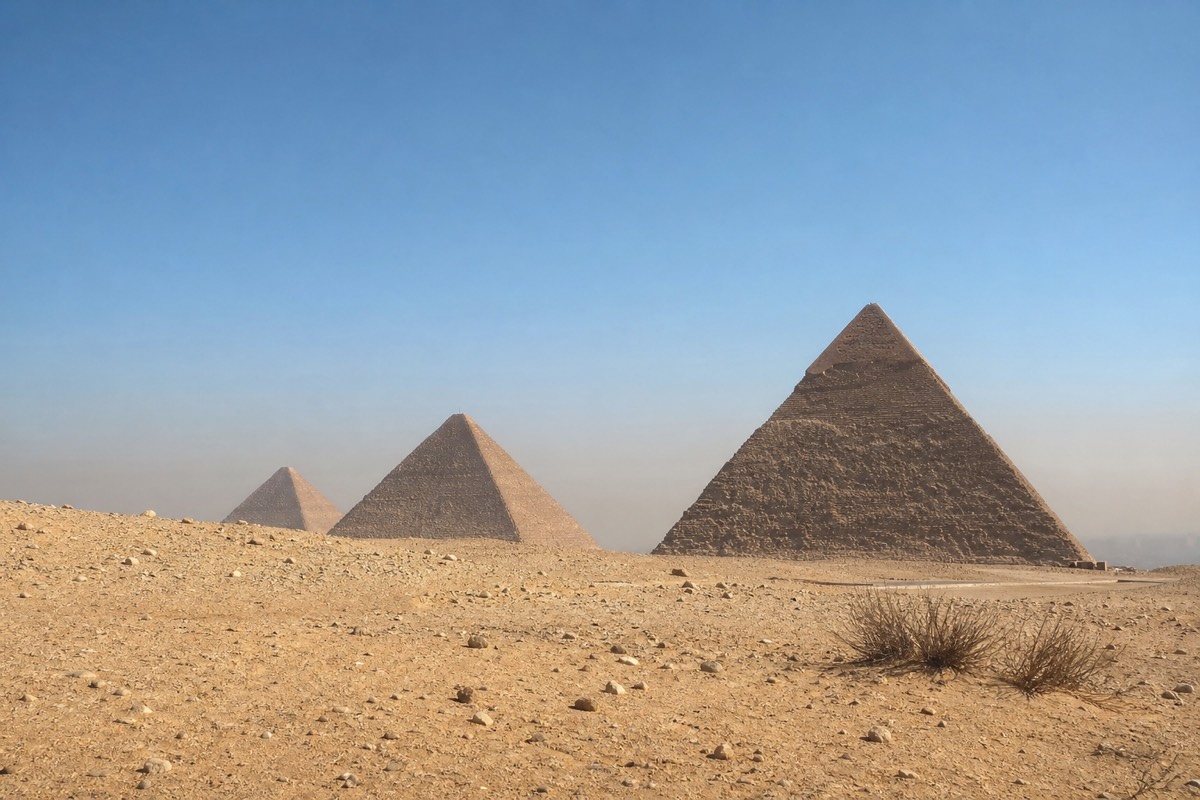
This is the part travelers worry about most and need to worry about least. Because GEM and the plateau share the same ground, moving between them is trivial next to a normal city transfer. The pedestrian walkway opened alongside the museum and is designed to carry both walkers and the electric shuttle, so you can mix and match, walk over and shuttle back, or the reverse.
A taxi is the fastest at around 5 minutes, useful if the heat is high or the day is running late. But for most people in reasonable weather, the walk is genuinely part of the experience rather than a chore, since the pyramids stay in view. If you are coming to the whole area from central Cairo or the airport first, our guide on getting to the museum covers those longer legs before you ever reach the plateau.
One small logistics point worth planning for: the entrances are not the same gate. The plateau has its own access points, and GEM has a separate entrance and a long internal esplanade from the gate to the museum doors. So the 2 km figure is the distance between the sites, not the full distance from where you stand at the Sphinx to where you stand in the Grand Hall. Add a little buffer for that final approach on each end, and you avoid the small panic of a timed slot ticking down while you are still walking the esplanade.
| Option | Time | Best for |
|---|---|---|
| Pedestrian walkway | 20 to 25 min | The scenic choice, pyramid views throughout |
| Electric shuttle | A few minutes | Skipping the walk in the heat |
| Taxi | About 5 min | Fastest, good late in the day |
| Private tour vehicle | Door to door | No planning, transfer built into the day |
What does it cost, and is a tour worth it?
Doing it yourself, budget roughly EGP 1,450 (about $30) for GEM admission and around EGP 700 (about $14) for Giza plateau general admission, plus about EGP 1,500 more if you go inside the Great Pyramid, and a little for the transfer and lunch. A guided combined tour coordinates the visits and transport; tickets and meals depend on the option booked, so compare the complete price.
The independent route is cheaper on paper and gives you full control of the pace, but it means managing GEM's online-only timed booking, the plateau tickets, the interior cap, the transfer, and lunch yourself, all in a language and setting that is new to most visitors. For confident travelers that is no obstacle. For a first trip, the friction adds up. Note that both sites price the pyramid interior as an extra, and it can cost more than the museum admission itself, so decide in advance whether it is on your list. Prices shift, so treat these as planning allowances and confirm the live figures when you book. Our full breakdown of GEM ticket prices keeps the museum side current.
A tour earns its price mainly through what it removes: the guesswork, the two ticketing systems, the transfer logistics, and the work of coordinating the route. It also puts an Egyptologist beside you in the Tutankhamun galleries, which changes a walk past gold objects into an actual story. A private Giza and GEM tour gives you control of the pace with the logistics handled, while the group option with lunch is the value pick. Whichever way you go, book GEM's timed slot early, because it is the one thing that cannot be arranged at the door.
Weigh a few extra items that quietly shape the real cost. Getting to Giza from central Cairo, whether by taxi or a ride app, adds to the day for independent visitors, and it is often bundled into a tour price already. Lunch near the sites is inexpensive, roughly $8 to $15 a person, and worth building in rather than skipping, since the day is long. If you value your holiday time more than the difference in price, the case for a guided day gets stronger; if you enjoy the logistics and want to set your own rhythm, going independent keeps more money in your pocket. Neither is wrong, and both can produce a superb day at two of the greatest sights on earth.
Whatever you decide, treat the museum booking as step one. The plateau tickets, the transfer, the meal, and even the interior pyramid ticket all have flexibility on the day. The GEM slot does not. Fix it first, then arrange the rest of the day around that single non-negotiable point, and the combined visit falls into place.
| Cost item | Approx. amount | Note |
|---|---|---|
| GEM foreign adult admission | Around EGP 1,450 (about $30) | Online only, check the live listing |
| Giza plateau general admission | Around EGP 700 (about $14) | Separate ticket and system |
| Great Pyramid interior (optional) | Around EGP 1,500 (about $31) | Daily cap, often sold out by mid-morning |
| Transfer between sites | Low, or free on foot | Walkway, shuttle, or short taxi |
| Lunch | Around $8 to $15 | Near either site |
| Guided combined tour | Bundled single price | Tickets, transport, often lunch included |
The bottom line is that this is one of the most doable and most rewarding one-day pairings in all of Egypt. Get to the plateau early, keep the museum slot as your fixed anchor, walk the connection at least once, and you leave Giza having seen both what ancient Egypt built and what it buried, in the order that makes each one land hardest. Few other places let you stand inside a 4,500-year-old wonder in the morning and study the treasures pulled from its tombs the same afternoon, and doing it in a single well-run day is the reward for planning it properly rather than leaving it to chance.