Can You Visit the Grand Egyptian Museum and the Pyramids in One Day?
Yes. The two sites sit about 2 km apart on the same plateau, and a full day covers both without rushing either.
Booking choice: Private Cairo/Giza hotel transfers; 6–8 hours. Select a guide package. Museum and plateau tickets are included only with ticket-inclusive options; pyramid interiors cost extra. Check Private Pyramids And GEM Day Dates
Your next choice is how to visit: Combine Giza and GEM in one guided day with coordinated transport.
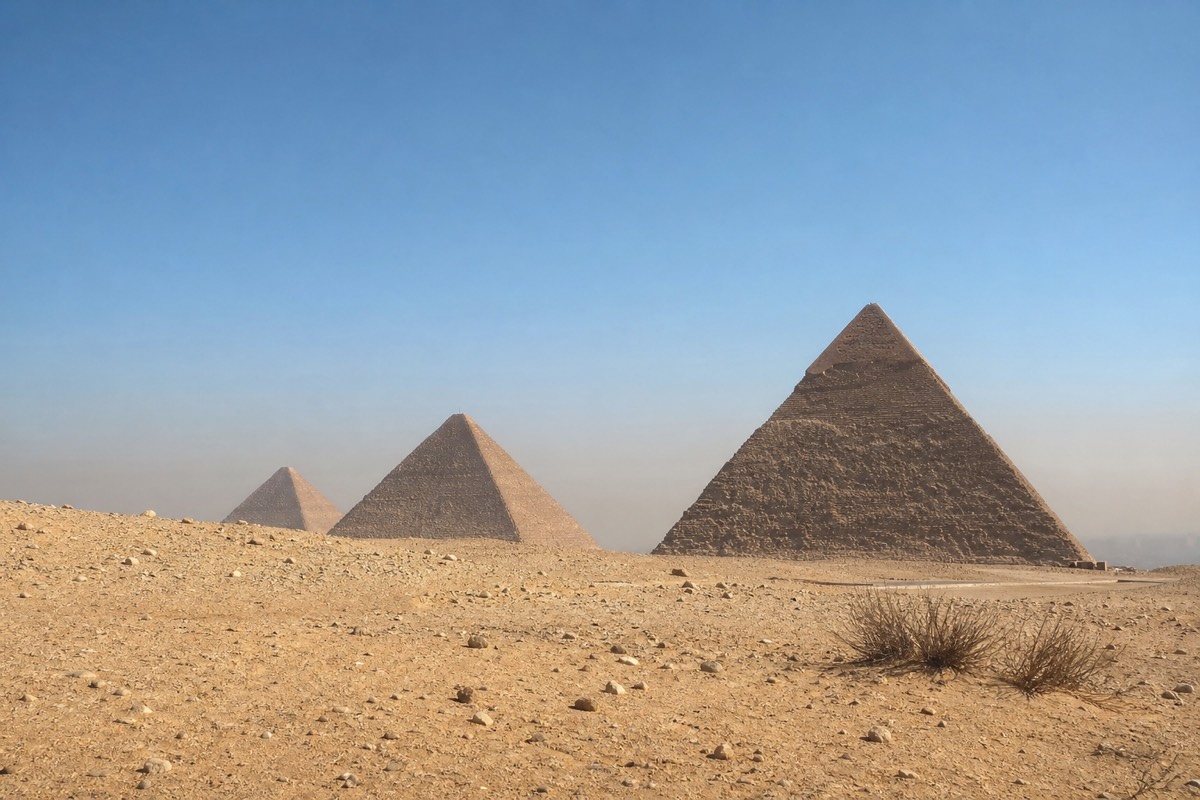
Travelers often frame this as museum versus pyramids, as if you have to pick one. You do not. The distance is short, the two experiences complement each other, and the only real skill is sequencing. Here is how a one-day plan holds together.
Can you visit the Grand Egyptian Museum and the pyramids in one day?
Yes. The Grand Egyptian Museum sits about 2 km from the Pyramids of Giza on the same plateau, connected by a new pedestrian walkway, so both fit comfortably into one full day. A well-sequenced day starting at the plateau early and reaching the museum in the afternoon gives you three to four solid hours at each site.
The short distance is the whole reason this works. You are not crossing Cairo between stops. You are moving a couple of kilometres within one archaeological zone. What derails people is rarely the geography and almost always the order they choose, which we get to next.
The two also complement each other. The pyramids show you what ancient Egypt built at monumental scale. The museum shows you who built it and what filled those burial chambers, from the Tutankhamun treasures to the colossal Ramesses II statue. Many visitors tell us the pyramids meant more after the museum, not before, because the objects give the stones their context.
Booking is the one thing to lock early. Grand Egyptian Museum tickets are timed-entry and online only, so the museum slot becomes the fixed point your whole day organises around. We walk through the sequencing in detail in our guide to combine the museum and the Pyramids.
What is the best order to visit them?
Start at the pyramids in the morning, then move to the museum after lunch. The plateau is outdoor with no shade, so the cooler early hours are best spent there, while the climate-controlled galleries are ideal for the hotter afternoon. Arriving at the pyramids early also beats the heaviest crowds and the midday sun.
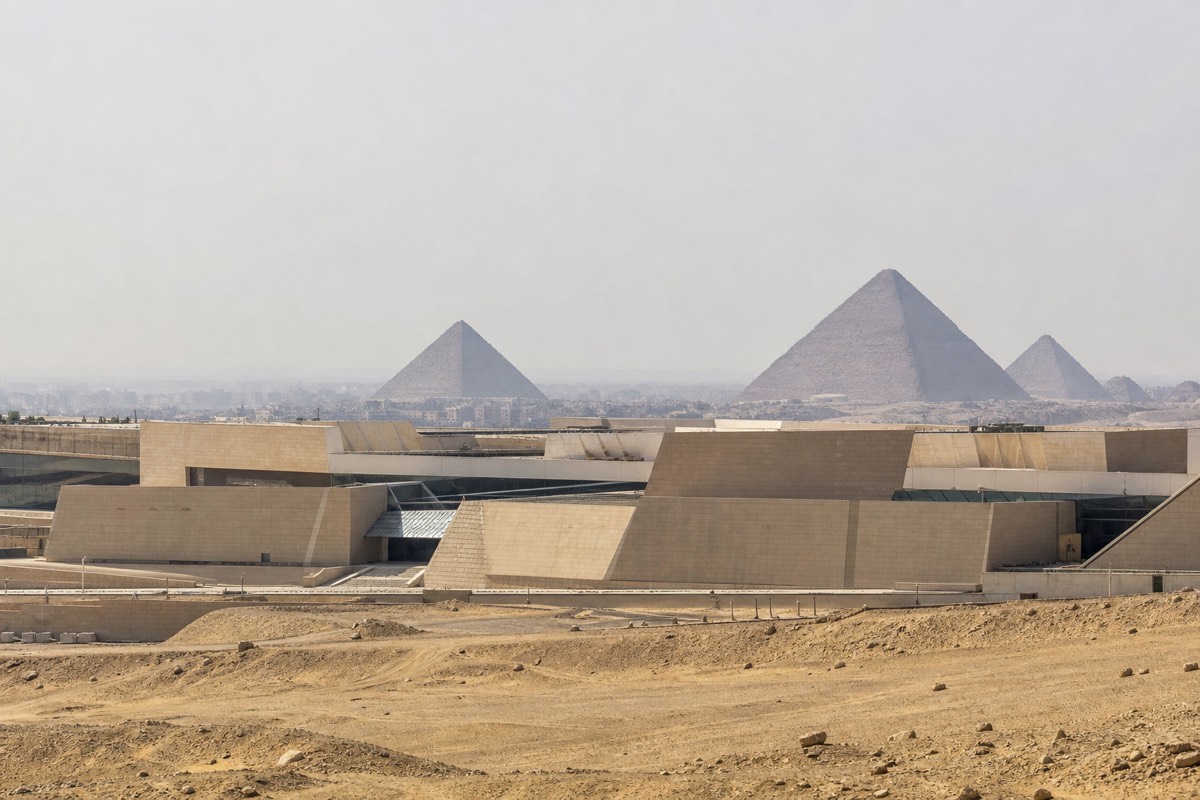
The backwards version, museum first then pyramids at midday, is the one we see go wrong. It delivers you to open desert exactly when it is hottest and busiest. Reverse it and everything eases: morning light for pyramid photographs, then cool galleries when your feet are tired. Our side-by-side on GEM versus the Pyramids lays out why the sequence matters so much.
How much time does each site need?
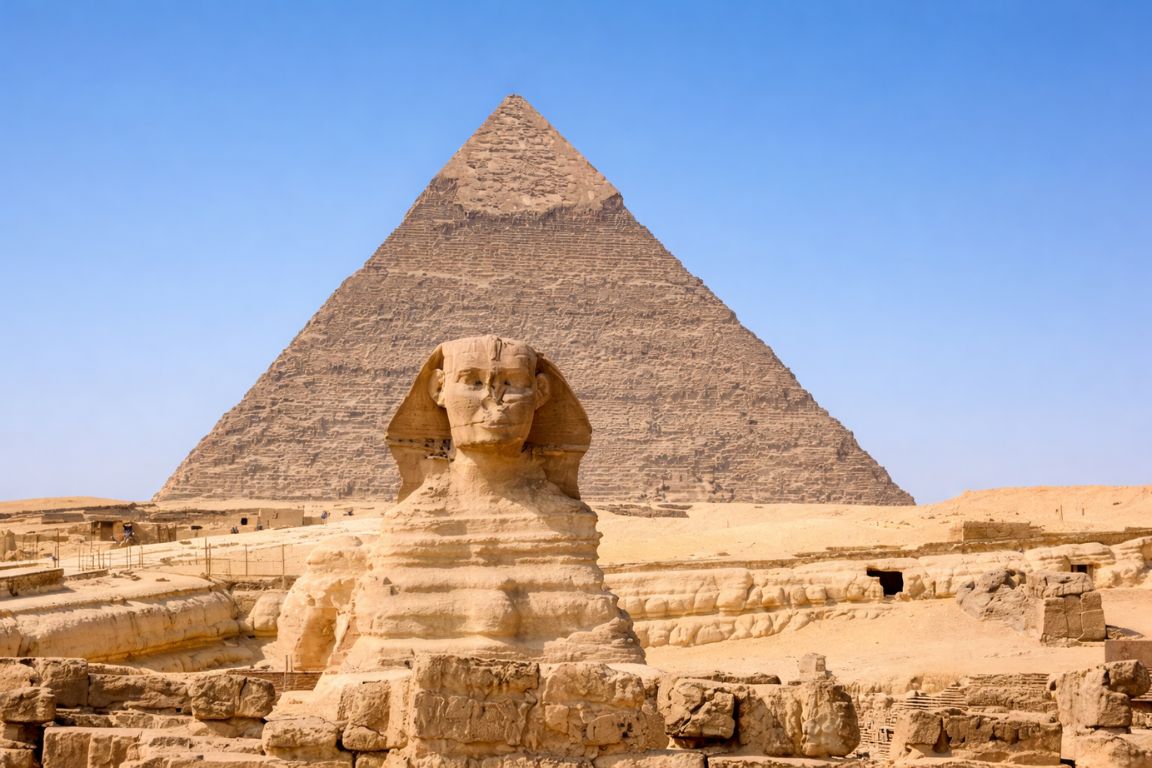
Budget three to four hours at the pyramids for the exterior of the three pyramids, the Sphinx and a panoramic viewpoint, adding time if you go inside a pyramid. For the museum, three hours is a highlights minimum and four to six is realistic for a first visit. A combined day runs roughly eight to nine hours with transit and lunch.
| Site | Time to allow | Notes |
|---|---|---|
| Pyramids of Giza | 3 to 4 hours | Add time for a pyramid interior (separate on-site ticket) |
| Grand Egyptian Museum | 3 to 6 hours | Tutankhamun halls alone want about 2 hours |
| Transit and lunch | 1 to 2 hours | Short walk or shuttle between the two |
Adjust those numbers to who you are. A museum lover can lose five or six hours at GEM alone and will want to trim the plateau to the exterior and Sphinx. A family with young children usually does better with the pyramids' exterior plus a shorter museum visit, since the galleries reward patience more than energy. The pyramids have a natural ceiling set by heat and stamina; the museum can expand almost without limit, so it is the side to protect time for if you are torn.
How do you get between the museum and the pyramids?
The two sites are about 2 km apart on the same plateau, linked by a new pedestrian walkway. You can walk it in roughly 20 to 25 minutes, take a short shuttle or a brief taxi ride. Because the distance is so small, the transfer is a minor part of the day rather than a logistical hurdle.
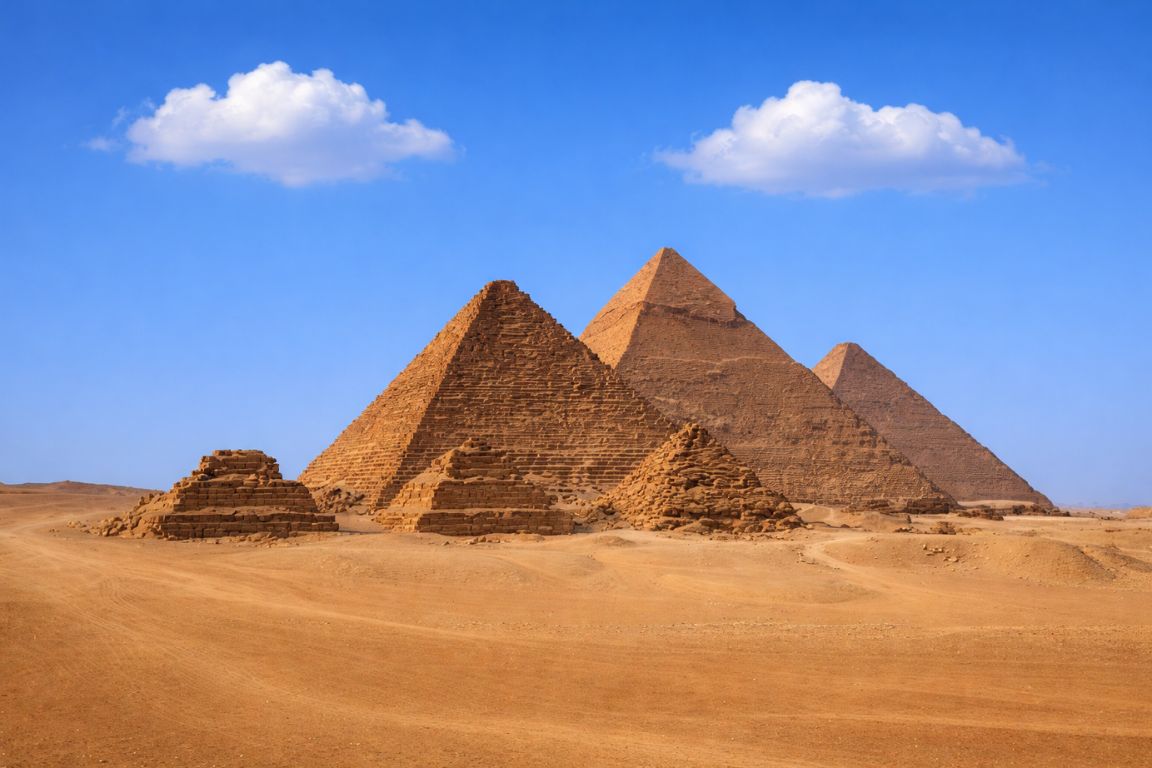
Walking the connection is genuinely pleasant when the weather allows, with pyramid views along the way. In peak heat, a shuttle or quick taxi does the same job in a few minutes. Either way, the move between sites is the easy part of the plan.
One practical warning for the transfer: if you take a taxi, agree the destination clearly and skip any offered detour to a papyrus or perfume shop. That kind of stop is a common way a combined day quietly loses an hour. With a walkway this short and shuttles running the same route, you never need the detour, and cutting it out is often the difference between a relaxed afternoon at the museum and a rushed one.
Is a combined tour worth it?
A combined tour is worth it if you would rather not juggle timed museum entry, plateau tickets and the midday transfer yourself. A guided day handles the sequence, the entry and often lunch in one booking, which removes exactly the friction that makes people rush. Independent visitors can still do both well with an early start and a pre-booked slot.
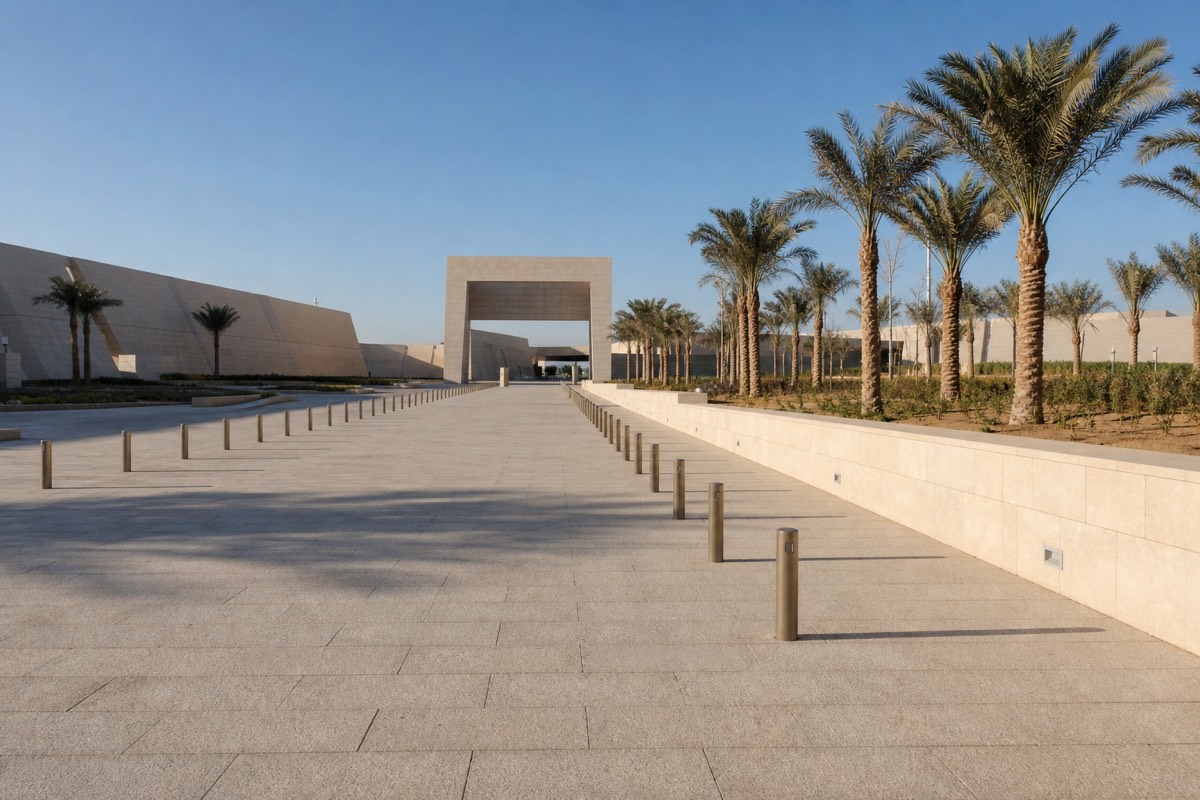
There is also a ticketing reason a combined booking can pay off. The museum runs on timed online entry with no walk-up sales, while pyramid interior access is a separate on-site ticket with a daily cap that can sell out by mid-morning. Coordinating those two systems yourself is doable, but it is exactly the kind of admin a guided day takes off your plate, along with the midday transfer.