Do You Still Need to Visit the Egyptian Museum in Tahrir?
The Tutankhamun treasures have left Tahrir for Giza, yet the old museum is far from empty. Here is an honest read on whether it still earns a place on your Cairo plan.
Booking choice: Private hotel transfers and English-speaking guide, approximately 5 hours. Visits Tahrir and NMEC, not GEM. Confirm admission inclusions for your selected option; meals cost extra. Check Tahrir And NMEC Private Museum Day Dates
Your next choice is how to visit: Explore the remaining Tahrir collection paired with NMEC in a five-hour guided day, with GEM on a separate date.
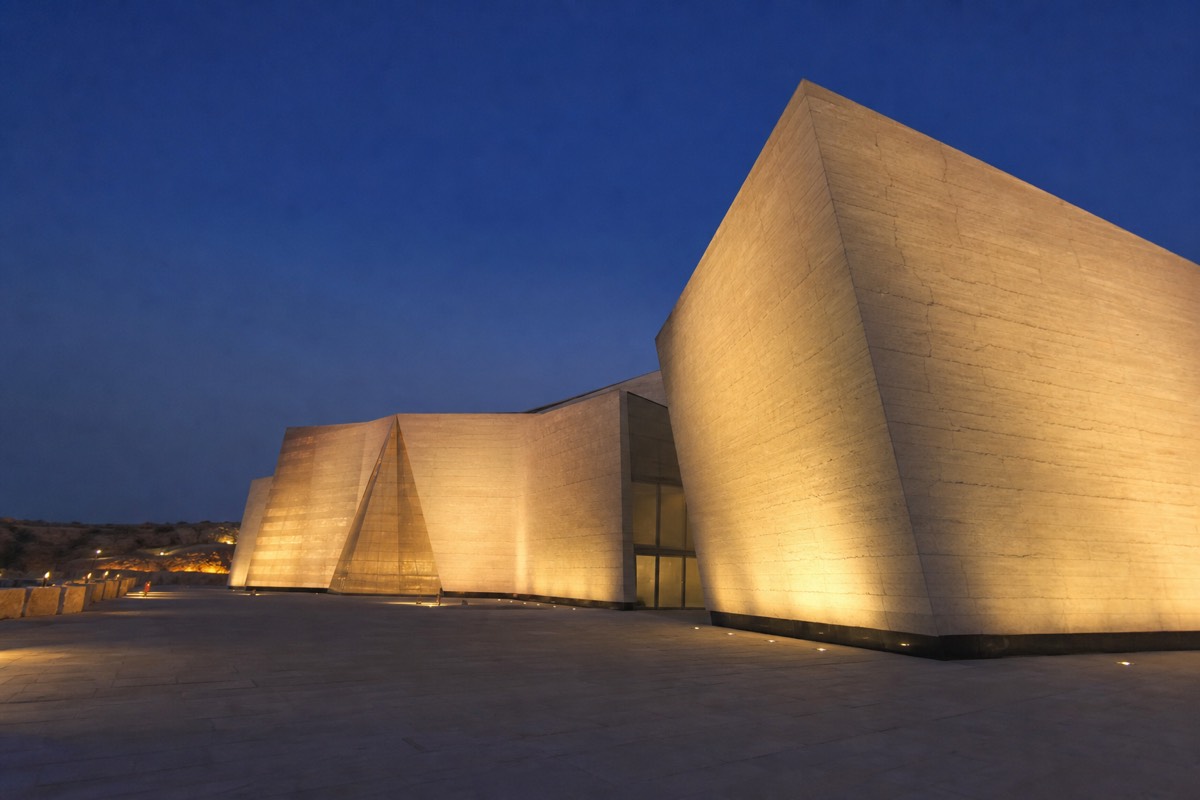
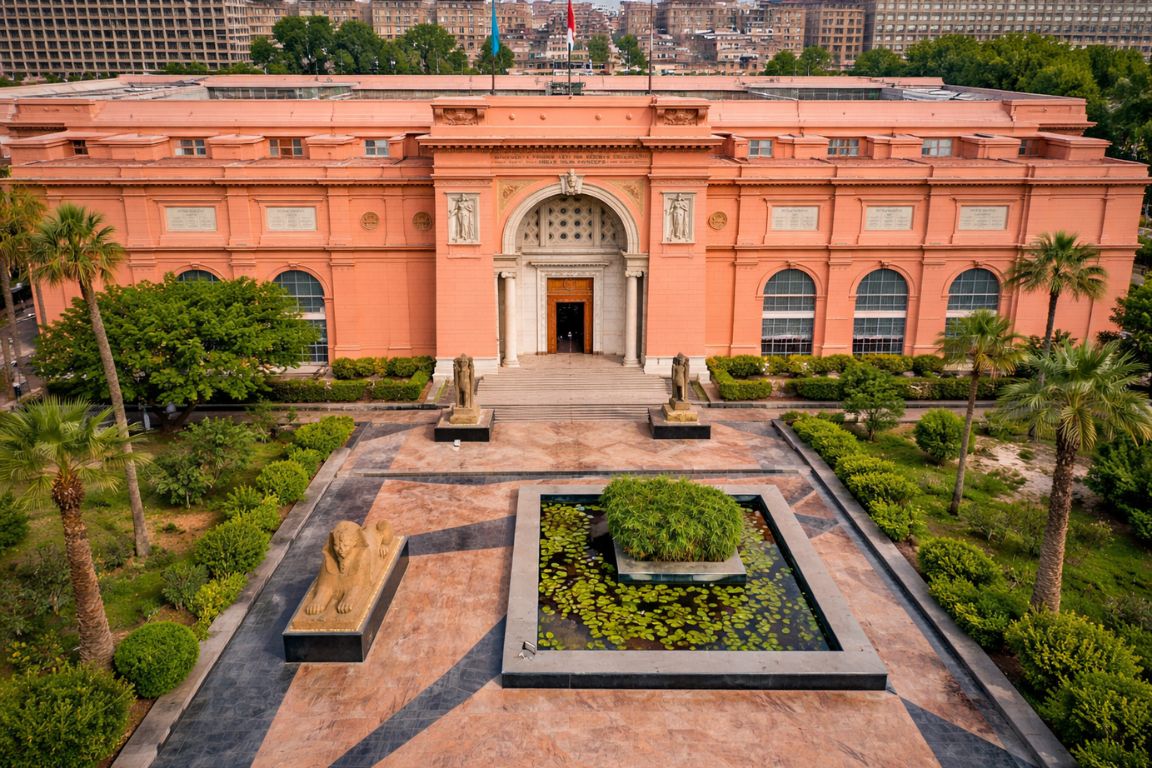
Once the Tutankhamun galleries opened at the new museum in Giza, a lot of travelers assumed the century-old Egyptian Museum in Tahrir Square had been hollowed out. The reality is more balanced. One famous collection moved. Most of the building stayed exactly where it was.
Do you still need to visit the Egyptian Museum in Tahrir?
Yes, for some travelers. The Tahrir museum lost its Tutankhamun collection to the newer museum, but it still holds tens of thousands of pieces you will not see anywhere else, from the Narmer Palette to the Yuya and Thuya tomb finds. If your Cairo days are few, the newer museum comes first. With three days or more, both earn a slot.
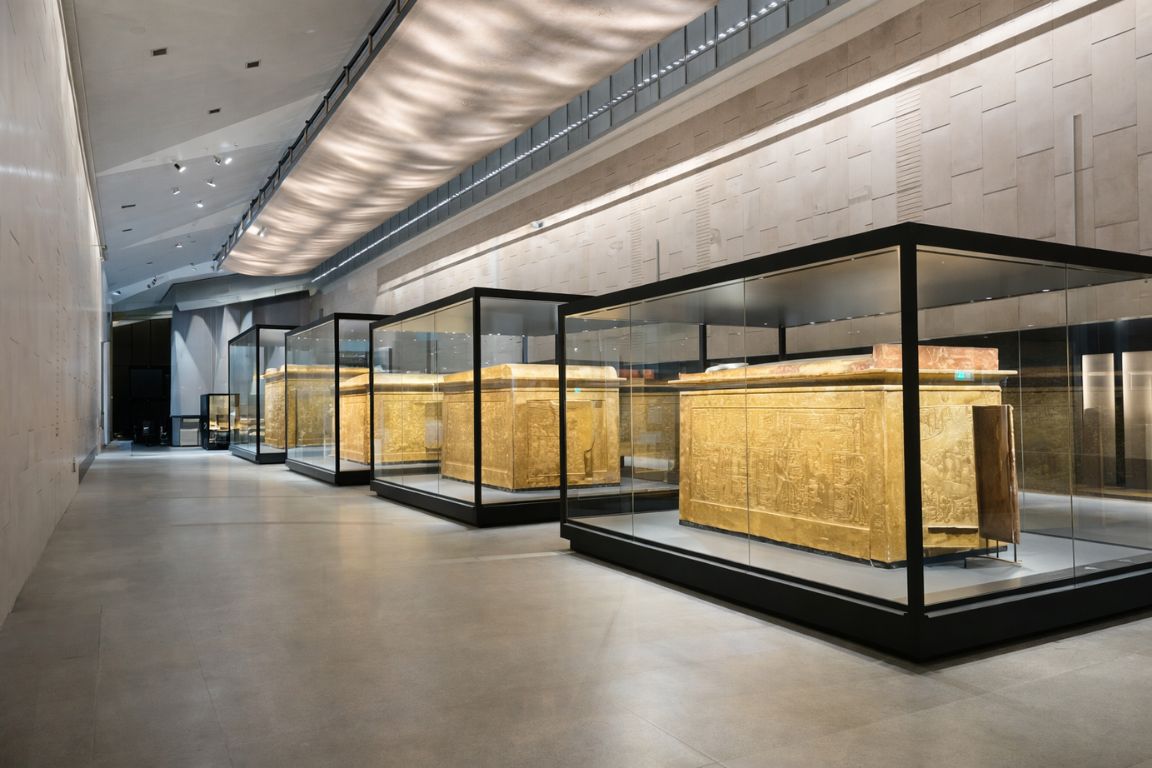
The short version: this is not an either-or for everyone. It depends on how long you have and how deep your interest in ancient Egypt runs. A first-timer with two packed days should put the Giza museum ahead of Tahrir without much debate. A repeat visitor, or anyone with a genuine appetite for the full sweep of the collection, will find Tahrir still delivers something the modern galleries do not.
That something is density. Tahrir opened in 1902 and spent 120 years accumulating more than 120,000 items in cramped, low-climate-control rooms. Walking it feels like stepping into an older idea of what a museum is. The new building is spacious and chronological by design; Tahrir is crowded, layered and a little chaotic, and for a certain traveler that is the appeal.
What moved from Tahrir to the Grand Egyptian Museum?
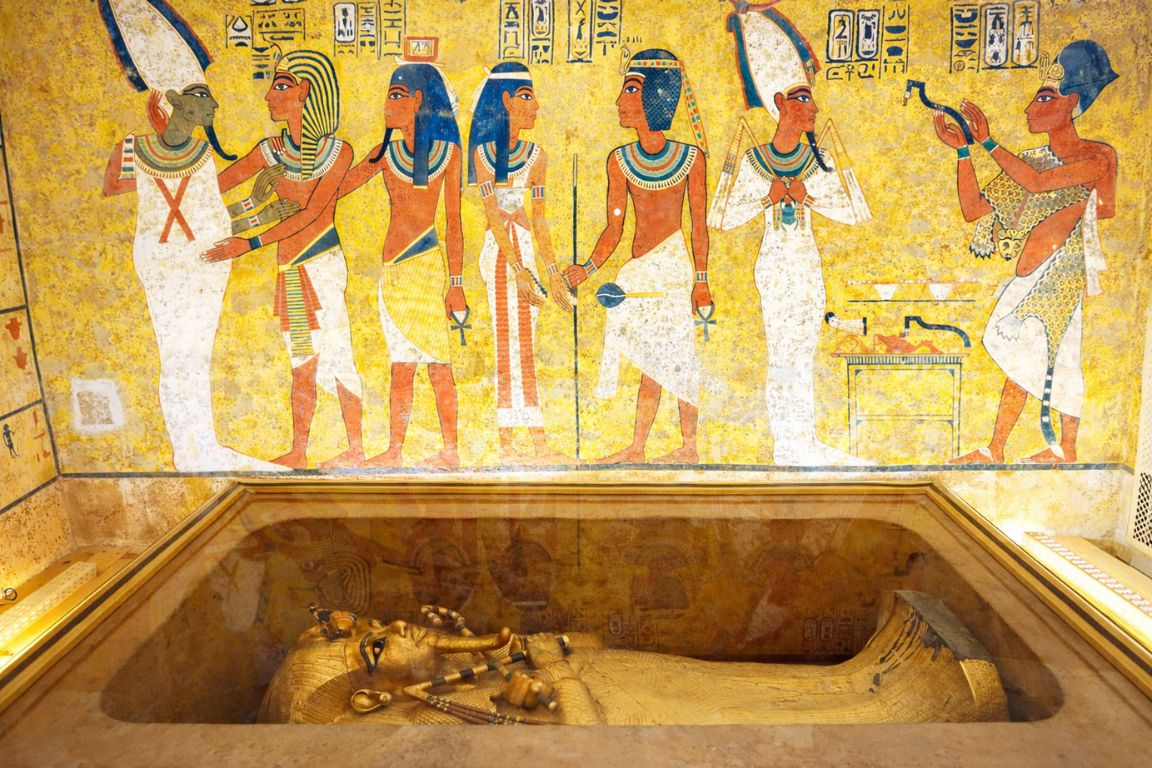
The headline departure is Tutankhamun. The complete 5,398-object tomb assemblage, including the golden death mask, the solid gold coffin and the Golden Throne, is now displayed together for the first time at the Giza museum, not at Tahrir. The colossal Ramesses II statue that once stood in central Cairo also sits in the new Grand Hall.
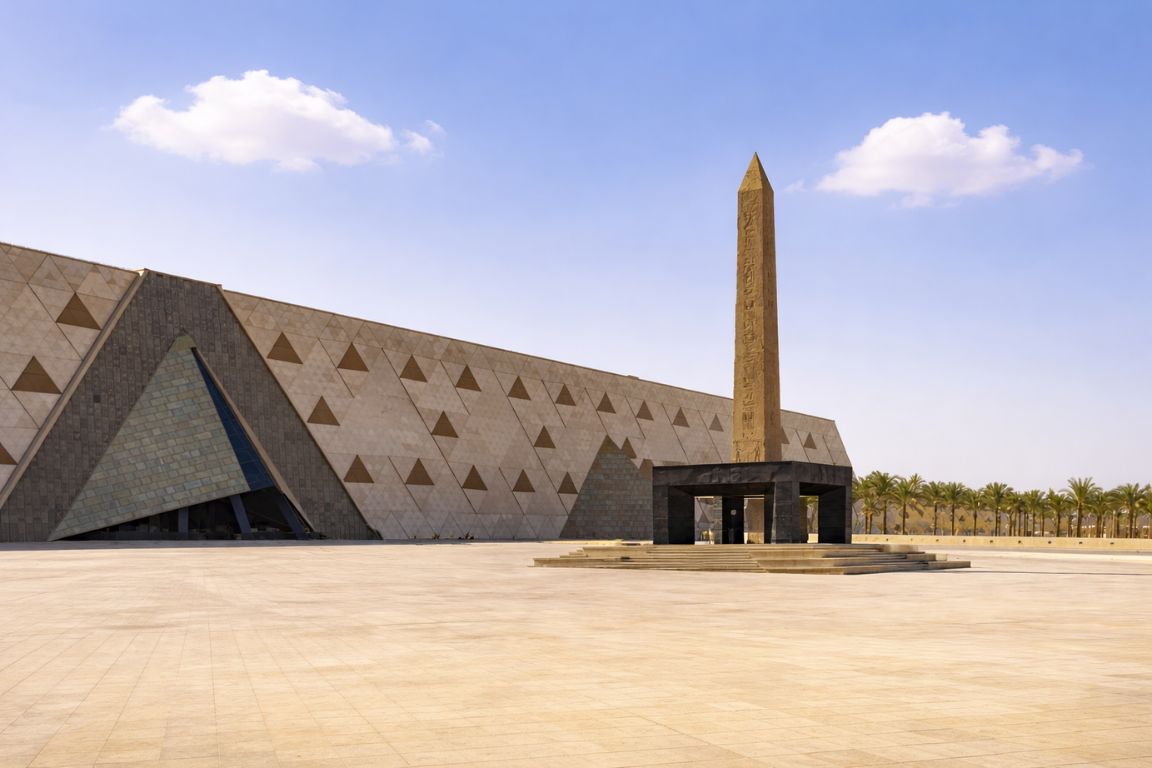
This is the single fact most likely to catch people out. If your reason for a Cairo museum visit is the boy king’s treasures, you want GEM. The Tahrir museum no longer answers the question “where is King Tut.”
One more clarification that trips up a lot of itineraries: the royal mummies are at neither building. During the 2021 Pharaohs' Golden Parade they moved to the National Museum of Egyptian Civilization in Fustat. If seeing the mummified pharaohs matters to you, that is a separate stop, and our guide on the National Museum of Egyptian Civilization lays out how it fits alongside a Giza museum day.
What is still worth seeing at the Tahrir museum?
Plenty. The Narmer Palette, one of the earliest known hieroglyphic inscriptions and a founding object of Egyptian history, stays at Tahrir. So do the Yuya and Thuya tomb collection, the Tanis royal treasures, the small ivory Khufu statuette and thousands of everyday objects that never make the guidebooks. These pieces are not being moved.
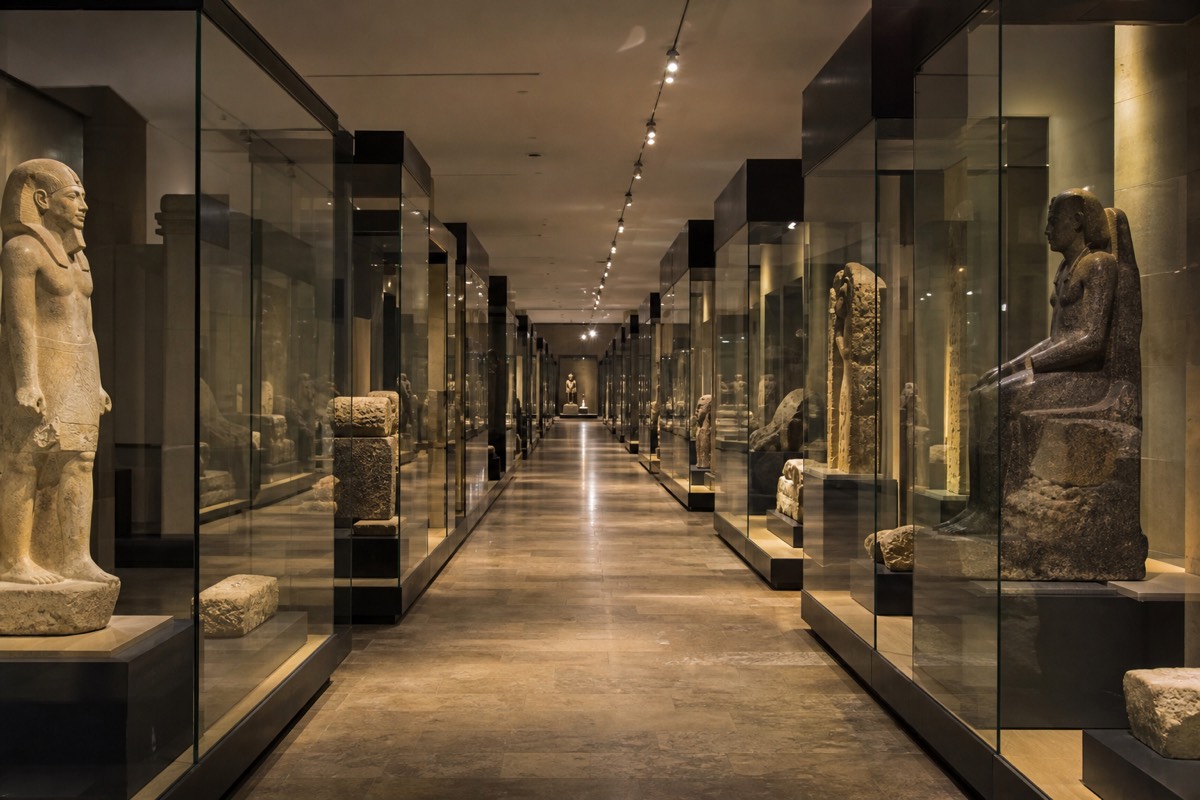
The Yuya and Thuya find is a good example of why the old museum keeps its pull. This intact tomb predates Tutankhamun and holds gilded coffins, funerary furniture and jewelry that many visitors rank above the more famous treasures once they see them in person. The Tanis silver, sometimes called the other great royal cache, gets a fraction of the attention Tutankhamun does and rewards anyone who lingers.
| Factor | Giza museum (GEM) | Egyptian Museum, Tahrir |
|---|---|---|
| Tutankhamun collection | Complete, all 5,398 objects | Moved to Giza |
| Signature pieces still on site | Ramesses II, Khufu Solar Boat | Narmer Palette, Yuya and Thuya, Tanis gold |
| Atmosphere | Modern, spacious, chronological | Dense, historic, layered |
| Booking | Online in advance, timed entry | Walk-in generally possible |
| Best paired with | The Pyramids of Giza | Islamic and Coptic Cairo |
Can you visit both in one trip?
Comfortably, if you give each its own block of time. The two museums sit on opposite sides of Cairo, roughly an hour apart in traffic, so pairing them in a single day means a lot of driving and two doses of museum fatigue. Most travelers who do both split them across separate days and slot Tahrir alongside downtown or Coptic Cairo sightseeing.
A common and workable shape: the Giza museum and the Pyramids on one day, then Tahrir on another day folded into a walk through central Cairo, the Khan el-Khalili bazaar and the Coptic quarter. A three-day private circuit that covers the Pyramids, Coptic sites and the new museum is one way to see the range without stitching the logistics yourself, and you can read how the whole plan comes together when you plan your visit.
What almost never works is bolting the old museum onto an already full Pyramids-plus-new-museum day. Two destinations that each deserve three to four hours will both suffer if you try to force a third in between.
Which should you choose if you only have time for one?
For a first visit to Egypt, choose the Grand Egyptian Museum. It holds the complete Tutankhamun collection, sits two kilometres from the Pyramids so you can pair them, and tells 5,000 years of history in a single air-conditioned building. Tahrir is the better pick only if you have seen the Giza museum already or you specifically want its denser, more old-world collection.
The tie-breaker is usually the Pyramids. Because the new museum is right beside the Giza plateau, one day can cover both the world's largest single-civilisation museum and the last standing ancient wonder. Tahrir cannot offer that adjacency. It is a central-Cairo experience, wonderful on its own terms, but it does not slot into a plateau day.
If budget is the deciding factor, note the gap: foreign adult admission to the new museum runs about EGP 1,450 (roughly $30 USD), while Tahrir has long sat far lower. For most travelers, though, the decision is about time and interest, not the ticket price.