Does the Grand Egyptian Museum Have Mummies?
The royal mummies are not at GEM. They are displayed at the National Museum of Egyptian Civilization across Cairo.
Booking choice: Private English-speaking Egyptologist and hotel transfers, 2–3 hours. NMEC admission and lunch cost extra. This visits NMEC, not GEM. Check Royal Mummies At NMEC: Private Visit Dates
Your next choice is how to visit: See royal mummies at NMEC; choose GEM separately for tomb treasures.
This is a distinction a lot of visitors get wrong, and it changes which museum to book for what. The mummies and the treasures live in two different buildings, in two different parts of Cairo, so booking the wrong one for the exhibit you have in mind is an easy and disappointing mistake. Here is exactly where each one is and why it matters for your plan.
Does the Grand Egyptian Museum have mummies?
No, the Grand Egyptian Museum does not display the royal mummies. Those are held at the National Museum of Egyptian Civilization (NMEC) elsewhere in Cairo, where they were moved during the 2021 Pharaohs' Golden Parade. GEM is the home of King Tutankhamun's treasures, the objects from his tomb, but not the preserved bodies of the pharaohs.
The mix-up is common because both museums are new, both are major, and both are tied to the same story of ancient Egypt. But they were designed to hold different things. If your reason for visiting is specifically to stand in front of the royal mummies, GEM is not the building for that.
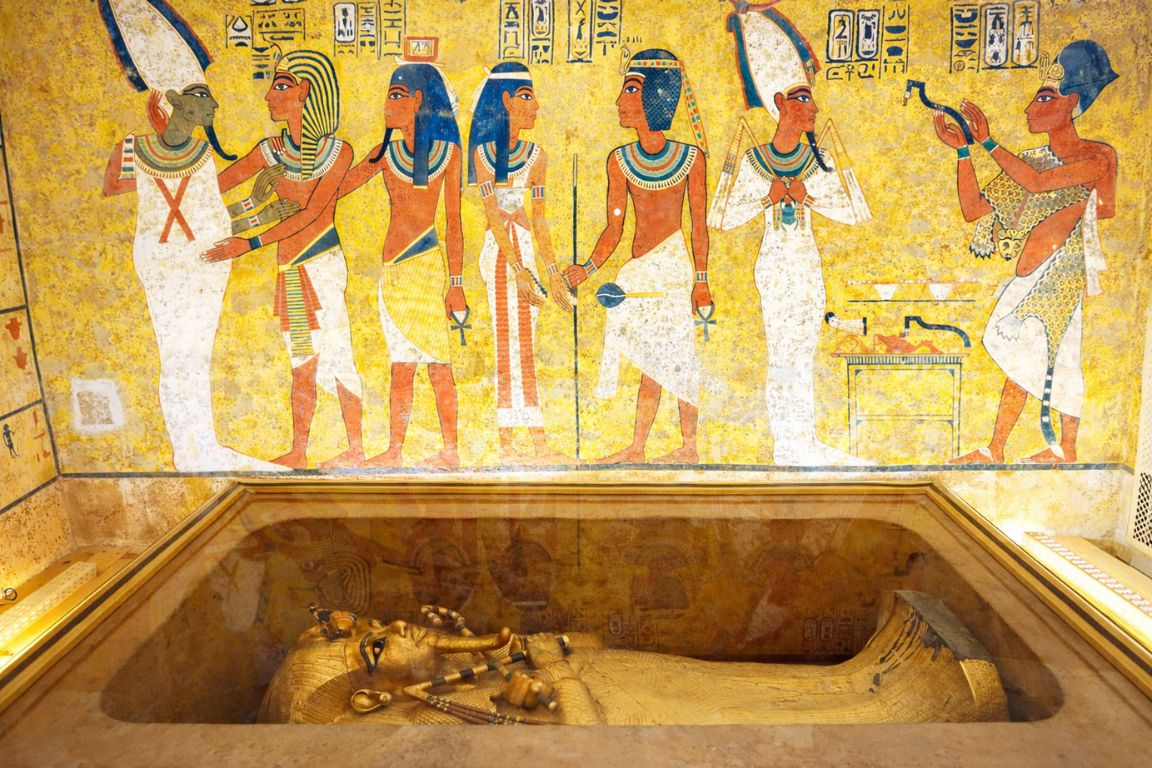
There is a subtler version of the question worth answering directly. GEM is full of funerary material: coffins, canopic jars, gilded shrines and the whole apparatus that surrounded a royal burial, all part of the Tutankhamun display. So the museum does show you how the ancient Egyptians prepared their dead. What it does not show is the preserved kings and queens themselves. Those are the specific objects that live at the other museum.
We compare the two directly in our guide to GEM and the National Museum of Egyptian Civilization.
Where are the royal mummies now?
The royal mummies are at the National Museum of Egyptian Civilization in Cairo. They were transferred there in 2021 in the televised Pharaohs' Golden Parade, when a procession carried the pharaohs across the city to their new home. That museum is where you go to see the preserved kings and queens of ancient Egypt.
So the two headline experiences are split by design. Royal mummies at the National Museum of Egyptian Civilization, tomb treasures at GEM. Knowing that before you book saves the disappointment of arriving at one museum expecting the other's star exhibit.
The two museums also sit in different parts of the city. GEM is out by the Giza plateau, while the National Museum of Egyptian Civilization is elsewhere in Cairo, so seeing the mummies is a separate trip rather than another wing of the same building. That distance is the main reason to decide in advance which one your day is really about, especially on a short visit. Trying to reach both in one afternoon usually means rushing the second, and neither collection rewards a hurried walk-through.
What does GEM have instead of the royal mummies?
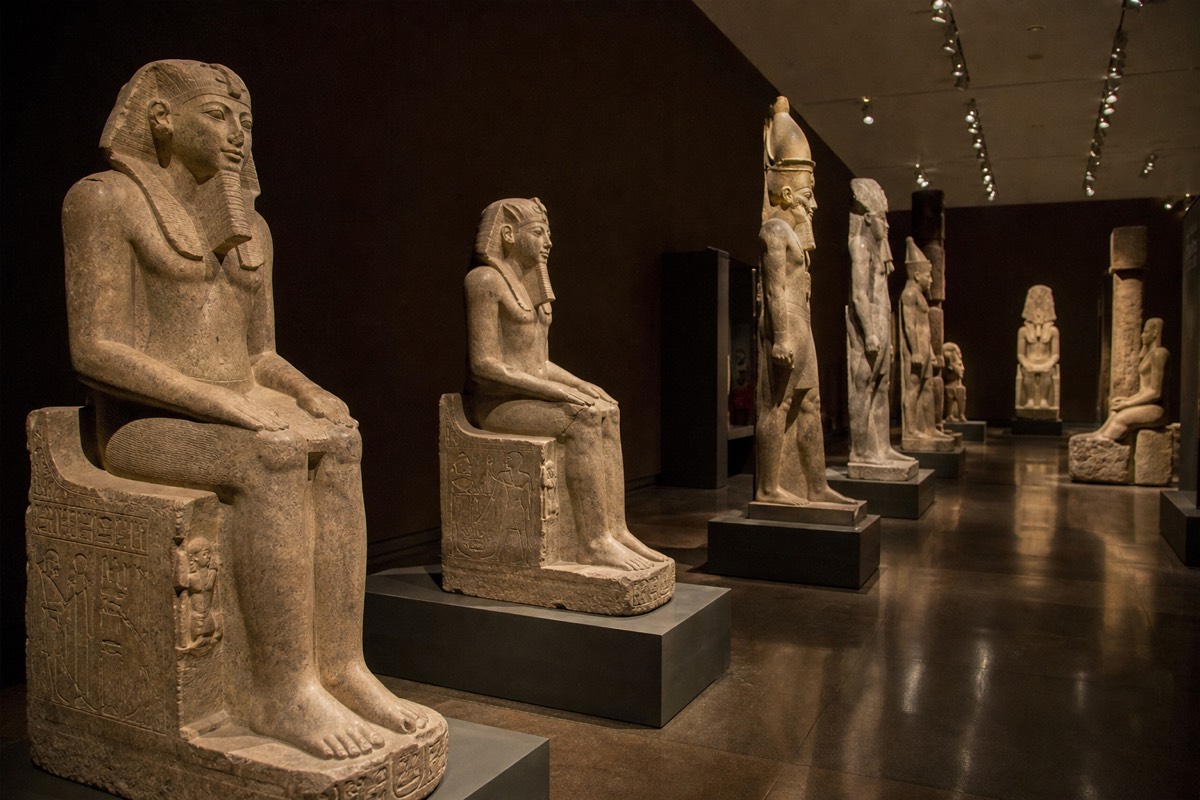
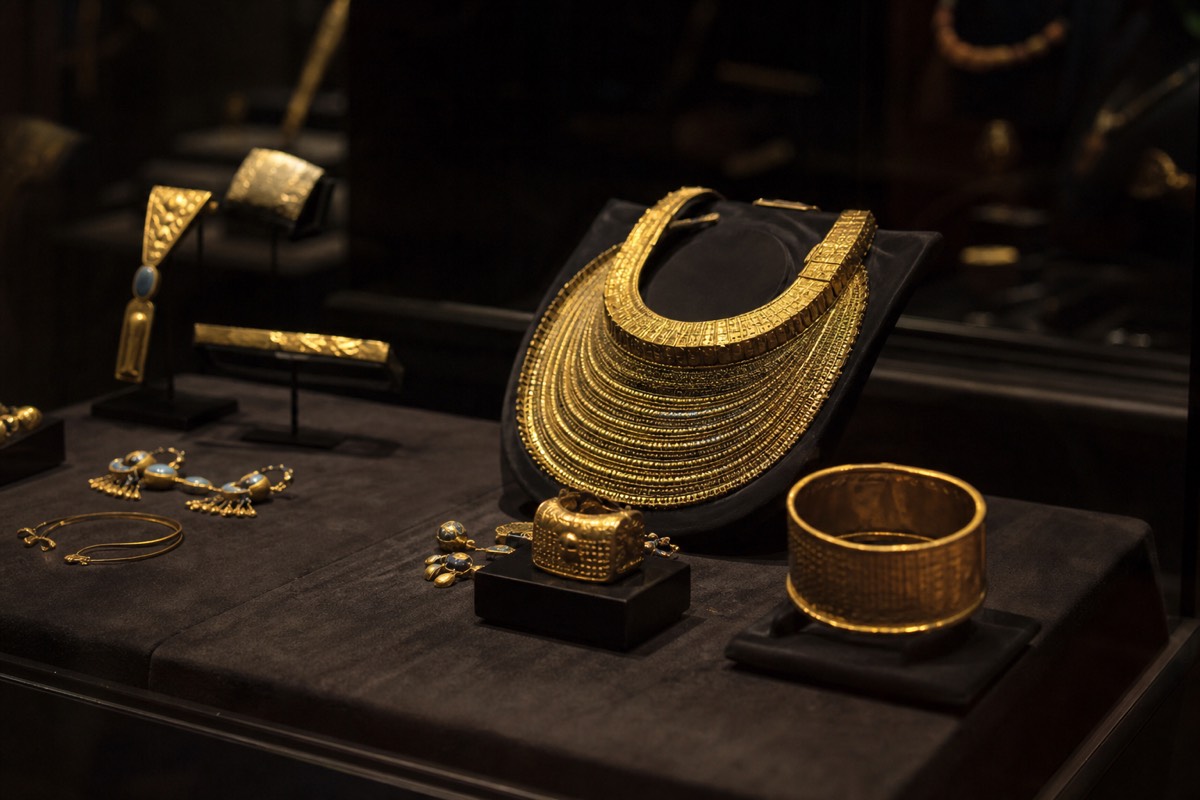
GEM holds over 100,000 artifacts spanning much of ancient Egyptian history, headlined by the complete Tutankhamun collection: the golden death mask, the solid gold coffin, the Golden Throne and the meteorite-iron dagger. It also has the colossal Ramesses II statue, the Grand Staircase colossi and Khufu's Solar Boat. It is objects and monuments, not preserved bodies.
| Museum | Star exhibit |
|---|---|
| Grand Egyptian Museum (GEM) | Tutankhamun's complete tomb treasures, Ramesses II, Solar Boat |
| National Museum of Egyptian Civilization (NMEC) | The royal mummies of the pharaohs |
Beyond Tutankhamun, the museum runs to more than 100,000 artifacts across 12 main galleries spanning much of ancient Egyptian history, in a complex of over 500,000 square metres designed by Heneghan Peng Architects. The Grand Hall is anchored by the 11-metre, 83-tonne Ramesses II statue, moved there from central Cairo in 2006, and the Grand Staircase is lined with more than 60 colossal pharaoh statues. There is no shortage of the monumental. It is simply a different kind of exhibit than a preserved body.
For a closer look at the tomb objects specifically, we cover the complete Tutankhamun collection in its own guide.
Should you visit both museums?
If you have the time, yes. GEM and the National Museum of Egyptian Civilization tell two halves of the same story: the treasures and monuments at one, the royal mummies at the other. They are separate buildings in different parts of Cairo, so plan them as two distinct visits rather than a single stop, ideally across two days.
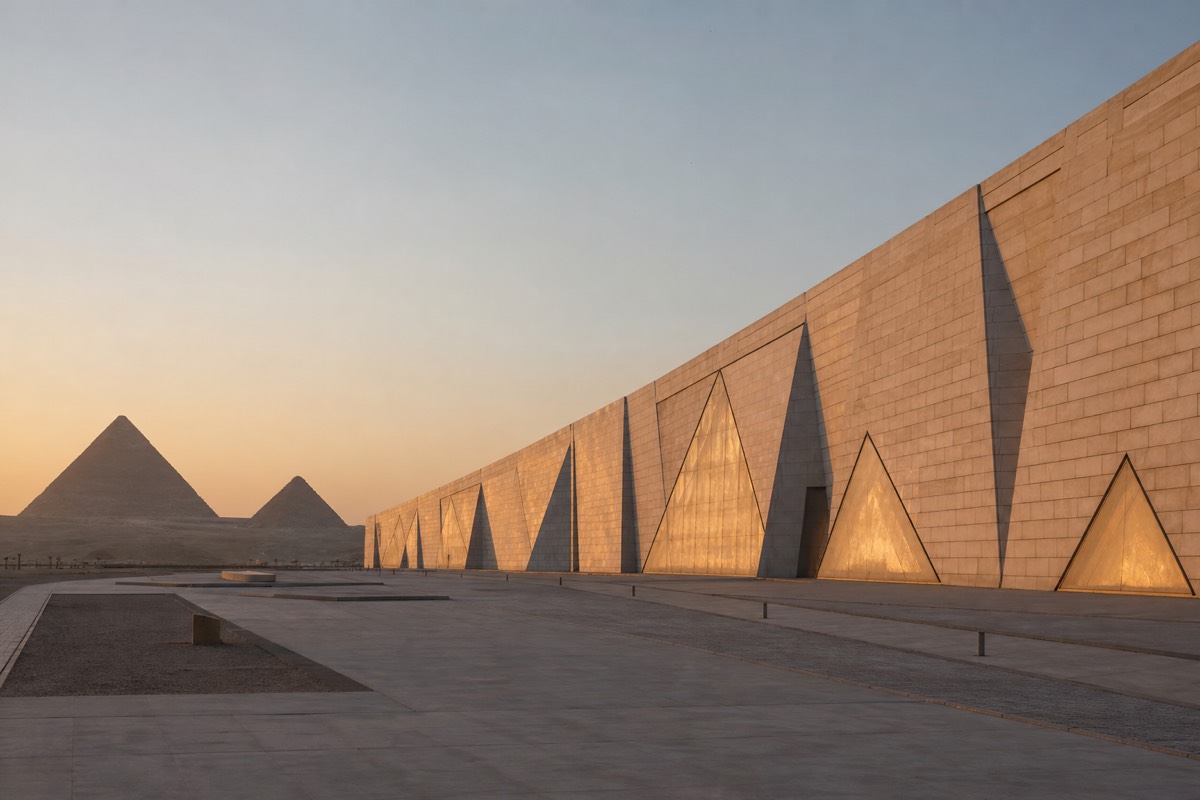
Serious first-timers often want both. Giving each museum its own block of time lets you see the royal mummies and the tomb treasures without confusing their locations.
If your trip is short, a good rule is to prioritise by what pulls you most. If it is the gold, the Tutankhamun treasures and the sheer scale of GEM, start there. If it is standing face to face with the pharaohs themselves, the National Museum of Egyptian Civilization is the one to protect time for. With a few days in Cairo, you do not have to choose at all.
There is a natural pairing for a longer stay. GEM sits by the Giza pyramids, so it slots into a plateau day, while a mummies visit at the other museum fits a day spent in the older parts of Cairo. Separate bookings for a Giza day and an NMEC visit can spread the walking sensibly. Do not assume a multi-day Cairo package includes both museums unless its itinerary names each one.
Whichever you lead with, book the GEM side ahead of time. Entry is timed and online only, so the museum slot is the fixed point to build around, the same as it is for any Giza day. Once that is locked, the mummies visit and the pyramids arrange themselves around it without much friction.