Khufu's Solar Boat at the Grand Egyptian Museum
The oldest intact ship on earth sits in its own hall inside the GEM complex, no separate ticket needed. Here is what Khufu's Solar Boat is, how it was found and rebuilt, and how to fit it into your visit.
Booking choice: Private English-speaking Egyptologist and Cairo/Giza hotel transfers. Admission, lunch and tips are extra. Approximately 3.5 hours. Check Private GEM Egyptologist Visit Dates
Your next choice is how to visit: Visit the actual Solar Boat collection with admission verified to include it; distinguish a general private tour from guaranteed boat interpretation.
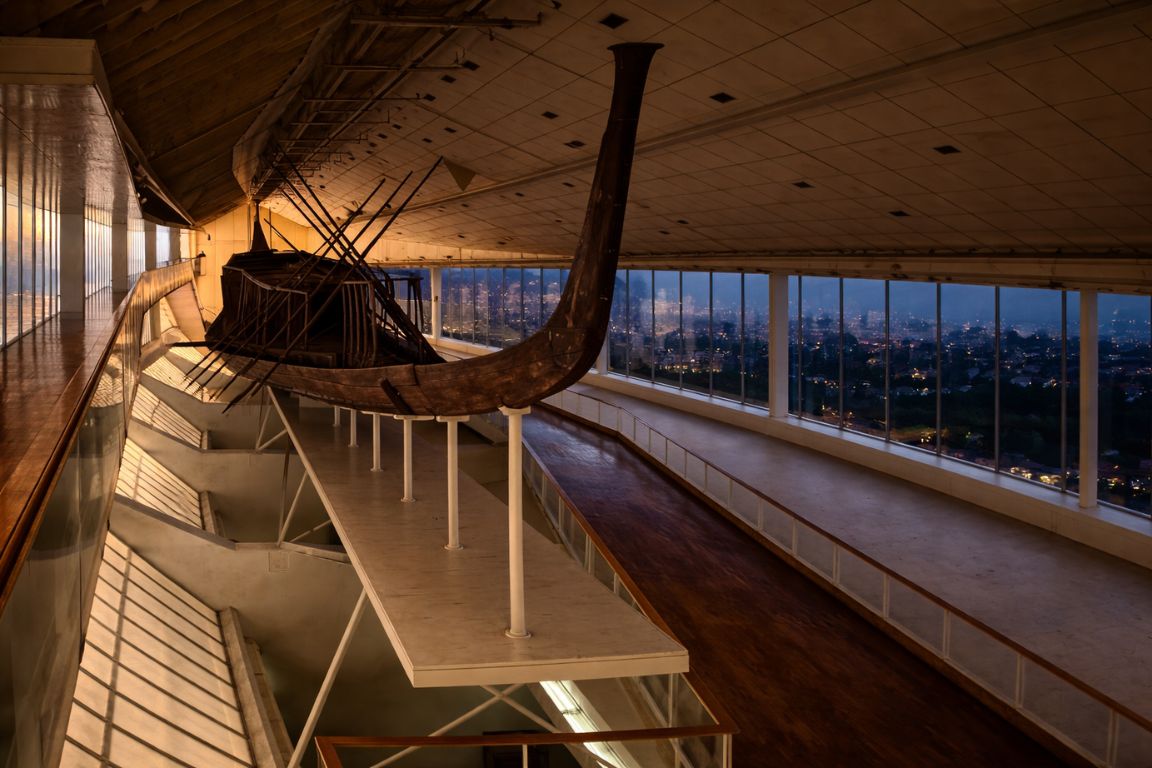
Most visitors come to the GEM for the golden mask and leave talking about a boat. Khufu's Solar Boat is a 4,500-year-old cedar vessel, built without a single metal nail, that was buried in pieces beside the Great Pyramid and pieced back together over fourteen years. It now hangs in its own hall inside the museum complex, and a second boat from the same pit is being reassembled in front of visitors right now. This guide covers what it is, why it sits at the museum, whether you need a separate ticket, and how much time to give it.
What is Khufu's Solar Boat and why is it at the museum?
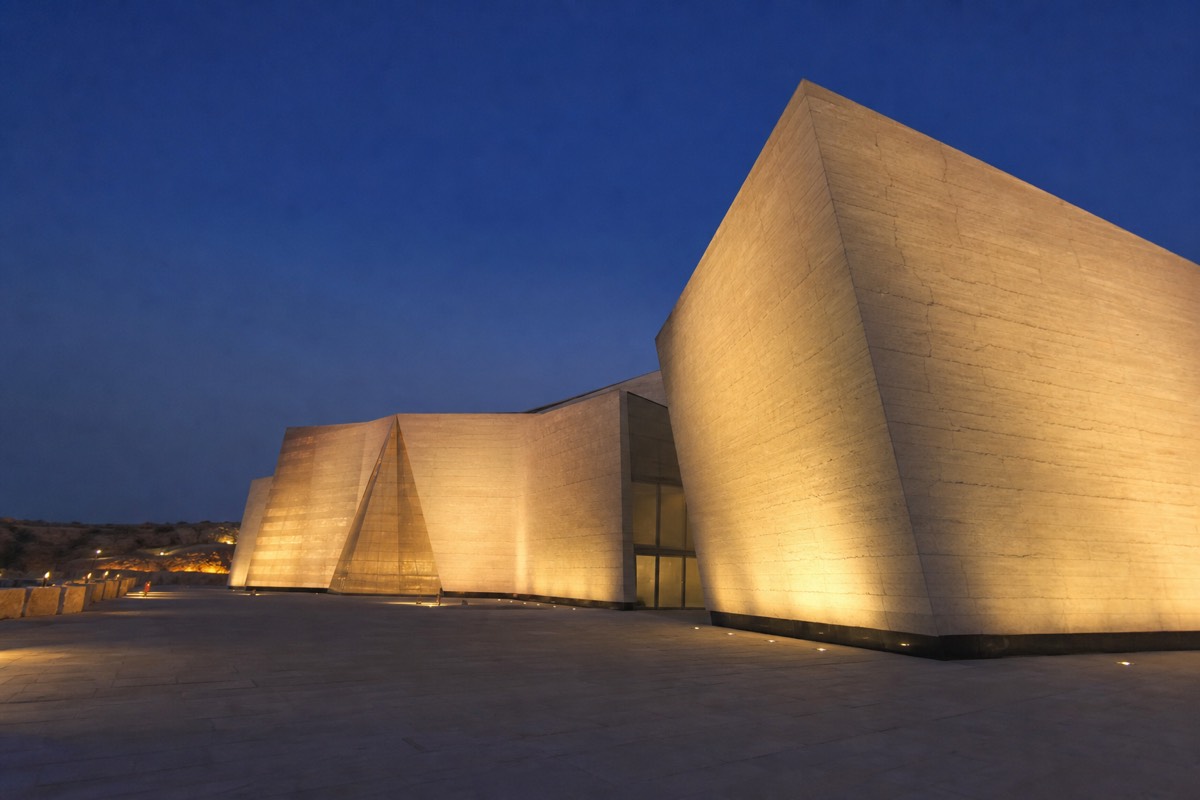
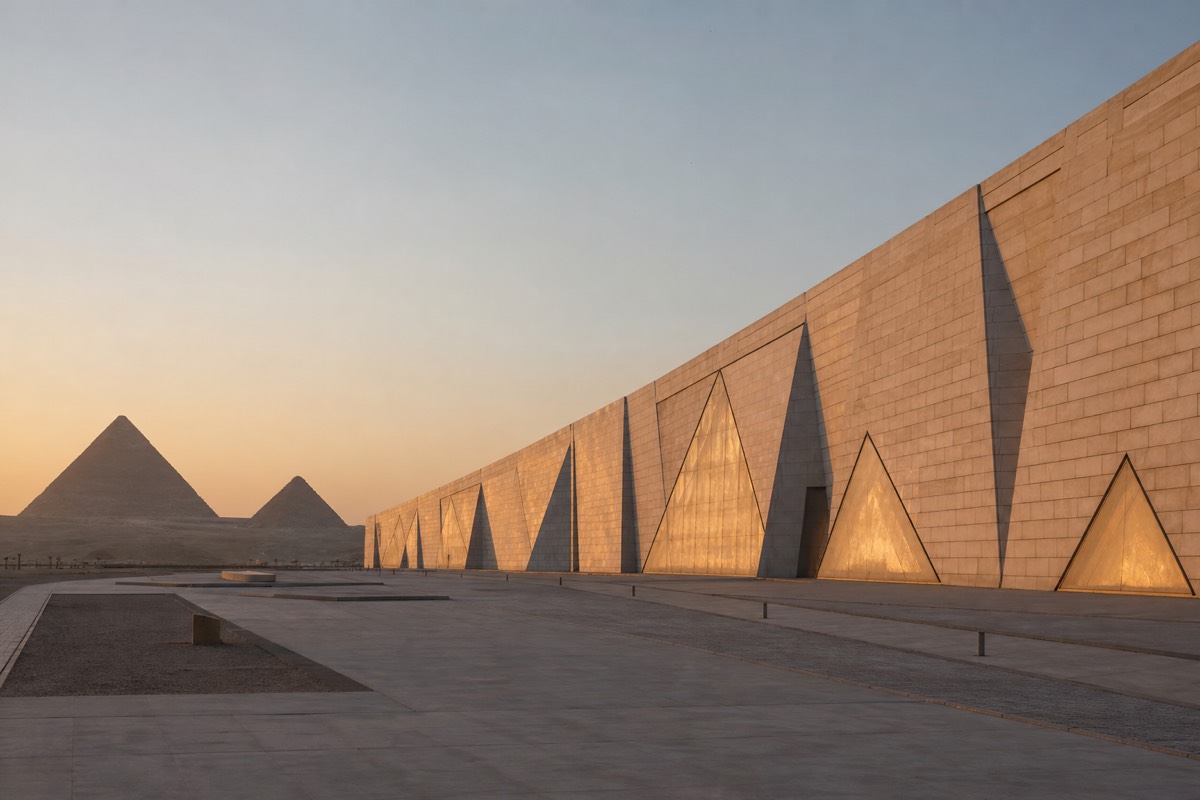
Khufu's Solar Boat is a full-size cedar ship, about 43 metres long, built around 2500 BCE and buried in a sealed pit beside the Great Pyramid of Giza. It is the oldest intact vessel ever found. It sits in its own hall within the Grand Egyptian Museum complex, the Khufu Boats Museum, rather than at the pyramid, because the museum was purpose-built to display and conserve Egypt's greatest treasures under one roof about 2 km from where the boat was found.
The boat is often called a solar barque. The most widely held interpretation is that it was a ritual vessel, built to carry the dead king's soul across the sky alongside the sun god Ra, which is where the name comes from. Whether it ever actually touched water is genuinely debated among Egyptologists, and the museum presents both readings rather than forcing one, which makes the display more honest than most.
Moving it into the museum complex put it beside the rest of Egypt's headline collection, in a climate-controlled hall built to protect fragile organic material. The cedar is thousands of years old and needs conditions the open desert could never provide. Standing next to it, roughly two kilometres from the pyramid it was buried beside, is a different experience from seeing it in an isolated pavilion. It now sits in context, part of a single story the museum tells across its galleries.
The word "solar" is doing a lot of work in the name, and it is worth unpacking. Ancient Egyptian belief held that the sun god Ra crossed the sky each day in a boat and travelled the underworld each night in another. A king who had died and joined the gods would need such a vessel to make the same journey. Whether this particular ship was symbolic, functional, or both, it was placed at the foot of the Great Pyramid as part of the equipment a pharaoh took into eternity. That is the frame the museum invites you to see it through, and it changes a pile of ancient timber into something closer to a spacecraft for the afterlife.
There is also a scale point that photographs never convey. At about 43 metres, this is not a model or a ceremonial miniature. It is a full-size ship, longer than many modern yachts, built four and a half thousand years ago by people working with copper tools and rope. Seeing it suspended above you, able to walk its length, is the moment the abstraction of "oldest intact vessel" turns into something physical. Our team has watched countless visitors arrive expecting a quick look and end up circling it twice.
| Fact | Detail |
|---|---|
| Age | Built around 2500 BCE, roughly 4,500 years old |
| Length | About 43 metres (142 feet) |
| Width | About 19 feet |
| Material | Cedar, held with rope and wooden pegs, no metal nails |
| Distinction | Oldest intact ship known to exist |
| Where it sits | Its own hall in the GEM complex, about 2 km from the Great Pyramid |
For the wider layout of the complex and how the boat hall relates to the main galleries, our guide to the museum map and the 12 main galleries shows how the pieces fit together.
Do you need a separate ticket for the Solar Boat?
No. The Khufu Solar Boat is included in standard museum admission, with no separate ticket required. The boat hall sits inside the GEM complex, and your admission ticket, around EGP 1,450 (about $30 USD) for a foreign adult, covers it along with every other open gallery. This is one of the most common questions travelers ask, and the answer is simply that one ticket covers the whole museum, boat included.
The confusion is understandable. For decades the boat had its own dedicated museum beside the Great Pyramid, with its own entrance fee, so many guidebooks and older articles still describe it as a separate paid attraction. That changed when it moved into the GEM complex. There is no upcharge now, the same way there is no upcharge for the Tutankhamun galleries.
What does help is knowing the boat sits in its own hall rather than along the main gallery route, so plenty of visitors nearly miss it by not realizing it is a separate building within the complex. Head for it deliberately. If you want the question settled in full before you go, our short explainer on whether you need a separate ticket for the Solar Boat covers the detail, and the full price picture is in our breakdown of GEM ticket prices.
The included-in-admission point matters more than it first appears, because it removes a decision travelers used to agonize over. In the old arrangement, the boat's separate fee meant families weighed whether it was worth the add-on for everyone. Now there is nothing to weigh: if you are inside the museum, the boat is yours to see. That also means the guided tour ticket, around EGP 1,950, covers it just as standard admission does, and the official Egyptologist group tour typically folds the boat into its route alongside the Grand Hall, the Grand Staircase and the Tutankhamun galleries.
One practical caution: because it is a distinct building, confirm on the day that the boat hall is open during your visit window, especially if you are on a tight timed slot. Museums of this size occasionally close a hall for events or conservation work. The boat is a permanent, headline display, so closures are the exception rather than the rule, but a quick glance at the museum map on arrival tells you the hall is accessible before you plan the rest of your route around it.
| Question | Answer |
|---|---|
| Separate ticket for the boat? | No, included in admission |
| Extra fee inside the hall? | None |
| Covered by standard admission (~EGP 1,450)? | Yes |
| Covered by the guided tour ticket? | Yes |
| Is it on the main gallery route? | No, a separate hall in the complex |
Booking is the same as for any GEM entry: online, timed, in advance. Our walkthrough on how to buy tickets covers the official portal and the reliable fallbacks.
How was the boat discovered and rebuilt?
The first boat was found in 1954, disassembled into 1,224 pieces of cedar inside a sealed limestone pit beside the Great Pyramid. Excavators reported the cedar still held its scent when the pit was opened. Restoration took about fourteen years of painstaking work, reassembling the vessel with rope and wooden pegs exactly as ancient shipwrights had, without a single metal nail. The result is the fully intact ship on display today.
The scale of the reconstruction is hard to overstate. Twelve hundred pieces of ancient wood, laid out and studied before anyone dared join them. The builders had used a technique closer to lashing than nailing, with ropes threaded through the planks to hold the hull together, so the restorers had to relearn a 4,500-year-old method to put it back. It has five pairs of oars and two steering oars, and it has been described as precise enough that it could still float today.
That precision feeds the debate over whether the boat ever sailed. Mud found on some hull planks suggests it may have touched water at least once, perhaps to carry the king's body during his funeral. Others argue a purely ritual barque would not need to. The museum lays out the evidence on both sides rather than settling it, which is the more interesting choice and rewards visitors who slow down to read.
It is worth pausing on how the reconstruction was even possible. The pit had been sealed with large limestone blocks, and the dry, stable conditions inside preserved the cedar remarkably well, which is why the wood held its scent when the pit was opened. The pieces had been stacked in a deliberate order, almost a flat-pack kit, with markings that helped later restorers understand how the parts related. Even so, joining 1,224 pieces without modern fasteners, in the ancient lashed-hull technique, meant treating each plank, testing fits, and rebuilding a body of shipwright knowledge that had been lost for millennia.
The result is not just an artifact but a lesson in Old Kingdom engineering. A hull held together by rope flexes with stress rather than cracking, which is part of why the vessel survived intact where a nailed ship might have failed. Standing beneath it, you are looking at problem-solving from around 2500 BCE that modern naval architects still find elegant. That is the layer a good guide draws out, and it is why the boat lingers in visitors' memories longer than they expect.
| Stage | Detail |
|---|---|
| Discovery | 1954, in a sealed pit beside the Great Pyramid |
| Condition found | Disassembled into 1,224 cedar pieces |
| Restoration time | About 14 years |
| Construction method | Rope and wooden pegs, no metal nails |
| Propulsion | Five pairs of oars, two steering oars |
| Sailed or ritual? | Debated; mud on planks hints at water use |
The story of the find sits alongside the museum's other engineering marvels, including the colossal Ramesses II statue in the Grand Hall, another object moved and reinstalled at enormous effort.
What can you see in the Boats Museum today (including Khufu Boat 2)?
Today you can see the first boat fully restored and suspended in the hall, viewable from multiple levels so you can walk around and beneath it, and a live restoration of a second boat happening in front of you. The second boat, found in the same 1954 discovery but left sealed until 2021, is being reassembled from around 1,650 wooden fragments by Egyptian and Japanese conservators. The work is expected to run for several more years.
This is the part no other museum on earth can replicate. The second boat is not a finished exhibit behind glass. It is active archaeology on a viewing platform, with conservators piecing together fragments extracted from a second sealed pit. A visitor who comes this month sees a different stage of the work from someone who came six months ago, and different again from someone who comes next year. It is a rare chance to watch restoration as it happens rather than see only the polished result.
When the second boat is complete it will stand beside the first: two 4,500-year-old ships in one hall. The first boat alone justifies the visit, hanging above you as the oldest intact vessel ever built. Add the living restoration of the second, and the hall becomes one of the few places where the ancient object and the modern work of saving it share the same room.
The Egyptian-Japanese partnership behind the second boat is part of the story. Conservators have spent years extracting fragile fragments from the second pit, stabilizing wood that had been sealed away since around 2500 BCE, and studying how the pieces once fit. Some fragments are delicate enough that a single mistake in handling could lose information no one can recover. Watching that care play out on the viewing platform gives you a sense of why the work runs to years rather than months, and why the museum treats it as an exhibit in its own right rather than hiding it behind a screen.
For photographers, the hall rewards a little planning. The first boat's length is hard to capture in a single frame, so a phone's wide setting or a wide lens helps, and you can shoot from more than one level to get both the profile and the deck. Flash, tripods and selfie sticks are restricted across the museum, so plan for handheld shots in the hall's ambient light. The second-boat restoration area is usually photographable too, though signage on the day is the final word, and staff enforce the rules firmly.
| What's on display | Status |
|---|---|
| First Khufu boat | Fully restored, suspended, viewable from multiple levels |
| Second Khufu boat | Live restoration in progress, on a viewing platform |
| Second boat fragments | Around 1,650, reassembled by Egyptian and Japanese teams |
| Expected completion | Several more years of work |
| Viewing angles | Around and beneath the first boat at different levels |
Photography is allowed in most of the museum, with restrictions on flash, tripods and selfie sticks, so a phone or wide lens works well for capturing the full length of the hull.
How long do you need and where is the hall?
Plan 30 to 45 minutes for the Boats Museum. It sits in its own hall within the GEM complex rather than along the main gallery route, so head for it deliberately as a separate stop. Because it is a distinct building, it is often less affected by the crowd surges that hit the central galleries between 11 AM and 2 PM, which makes it a smart place to visit while the busiest halls are at their fullest.
Half to three quarters of an hour is enough to walk the levels around the first boat, take in the scale, read the panels on the sailed-versus-ritual debate, and spend a few minutes watching the second-boat restoration. Rushing it is a shame, because the detail rewards a slow look: the lashing technique, the oars, the joinery that held for four and a half thousand years.
On timing within your visit, the boat hall pairs well with an early strategy. Come in on the 8:30 AM slot, do the Tutankhamun galleries while they are quiet, then move to the Boats Museum as the main galleries fill. That sequence keeps you ahead of the crowd through the two stops most people rush. The wider museum wayfinding is clear, with maps at intervals, but knowing the boat is a separate hall before you arrive saves you from nearly walking past it.
The crowd math is worth spelling out. Peak density inside the museum runs from roughly 11 AM to 2 PM, and it is heaviest on Friday and Saturday, the Egyptian weekend. Because the boat sits in its own building, it absorbs those surges better than the central halls, which makes it a natural refuge during the busiest window. If you find yourself at midday with the main galleries packed, that is precisely the moment to head for the boat rather than fight the crowd around the golden mask.
Accessibility inside the complex is good, which matters for a stop that involves viewing the hull from more than one level. The museum is built with elevators and a moving walkway alongside the Grand Staircase, and the polished floors and ramps are designed for wheelchair and stroller access. If stairs are a concern, you can still take in the boat comfortably. Give the hall its time regardless of how you move through it, because the reward is in standing still and looking, not in covering distance.
| Planning point | Detail |
|---|---|
| Time to allow | 30 to 45 minutes |
| Location | Its own hall inside the GEM complex |
| On the main route? | No, a deliberate separate stop |
| Best time to visit it | While central galleries peak, 11 AM to 2 PM |
| Crowd exposure | Lower than the main halls, separate building |
Reaching the complex itself is straightforward once you know the layout; our guide on getting to the museum covers routes from central Cairo, the airport and the pyramids.
How does it fit a GEM visit?
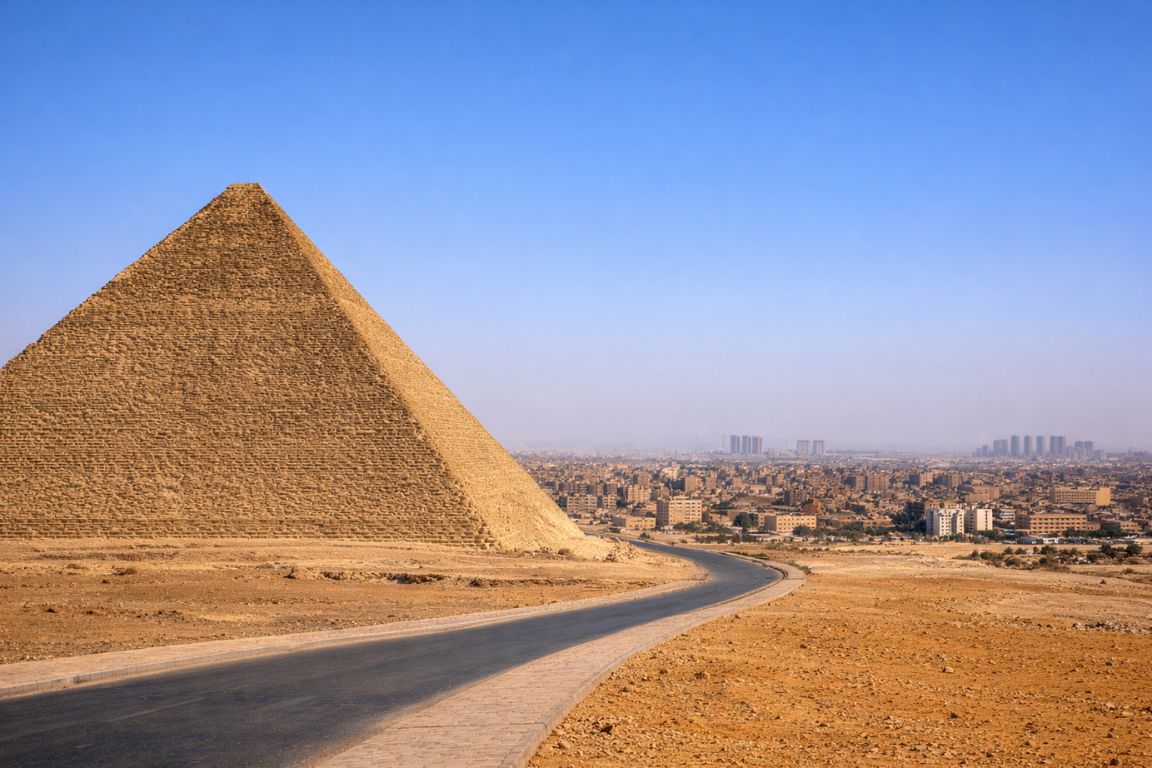
The Boats Museum is one of the three anchor stops of a GEM visit, alongside the Tutankhamun galleries and the Grand Staircase, and it fits naturally into both a half-day and a full-day plan. For a 3 to 4 hour visit, treat it as an essential stop after the Tutankhamun halls. On a combined day with the pyramids, seeing the boat that was buried beside the Great Pyramid, then standing before the pyramid itself, ties the whole story together.
The pairing with the pyramids is the strongest reason to think of the boat as more than a side gallery. This vessel was buried at the foot of Khufu's pyramid to serve him in the afterlife. Seeing the boat and the pyramid on the same day, about 2 km apart on the same plateau, connects the object to its origin in a way that a museum visit alone cannot. That is one argument for a combined itinerary rather than a museum-only stop.
To place it among the museum's highlights: most visitors treat the Tutankhamun galleries, the Grand Staircase with its Giza-pyramid panorama, and the Boats Museum as the three stops nobody should skip. The boat holds its own in that company. It is the one object in the building that is both a masterpiece and an active archaeological project, and it connects directly to the pyramid on the horizon in a way no other exhibit does. Give it equal weight when you budget your hours, rather than treating it as an afterthought once the gold has been seen.
If that appeals, the private Pyramids and GEM tour (choose your inclusions) covers both sites in one eight-hour day with a guide who can draw the line between them. For a museum-focused half-day instead, the boat slots neatly into a visit built around the Grand Staircase and the Tutankhamun collection. Grand Egyptian Museum tickets cover the boat either way, so the only real decision is how much of the surrounding plateau you want to fold into the same trip. Whichever you pick, give the hall its 30 to 45 minutes and do not let it become the stop you skipped.
| Visit type | How the boat fits |
|---|---|
| Half-day museum visit (3 to 4 hrs) | Essential stop after the Tutankhamun galleries |
| Full-day museum visit (4 to 6 hrs) | Paired with the Grand Staircase and main galleries |
| Combined pyramids and GEM day | Connects the boat to the pyramid it was buried beside |
| Guided visit | A guide explains the sailed-versus-ritual debate on the spot |
However you build the day, the boat earns its place among the museum's must-see anchors and rewards travelers who plan for it rather than stumble into it.