Grand Egyptian Museum vs the National Museum of Egyptian Civilization
Two Cairo museums, two different collections. The royal mummies live at the National Museum of Egyptian Civilization, while King Tut's complete treasure is at the Grand Egyptian Museum. This guide sorts out what is where and which to book.
Booking choice: Private English-speaking Egyptologist and Cairo/Giza hotel transfers. Admission, lunch and tips are extra. Approximately 3.5 hours. Check Private GEM Egyptologist Visit Dates
Your next choice is how to visit: Route royal-mummy intent to NMEC and Tutankhamun intent to GEM; do not pretend a GEM tour visits both.
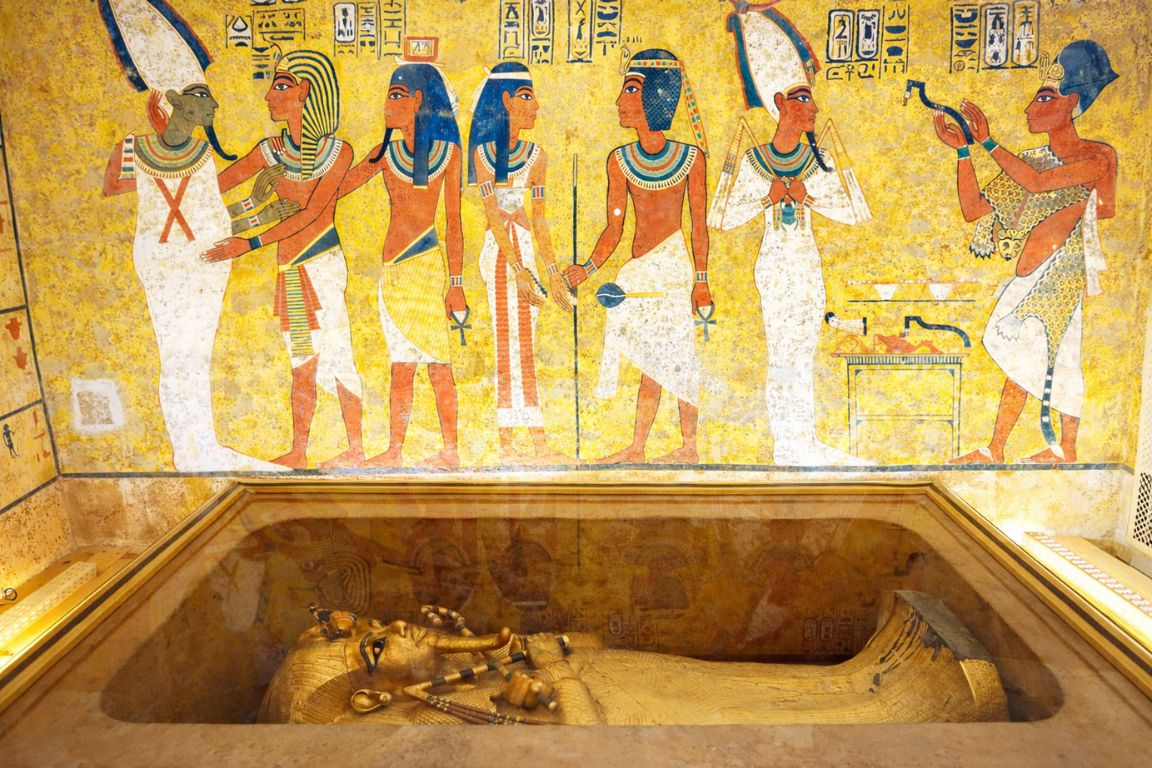
People plan a Cairo trip around one museum, then discover there are two new ones, and the thing they most wanted to see is in the other building. The confusion is understandable. Egypt spent the 2020s moving its greatest treasures into purpose-built homes, and the split between the two flagship museums is not obvious from the names. The short version: the royal mummies are at the National Museum of Egyptian Civilization, and Tutankhamun's golden treasure is at the Grand Egyptian Museum. This guide walks through what each holds, whether both fit in one day, and how to decide if you can only manage one.
Grand Egyptian Museum vs the National Museum of Egyptian Civilization: how do they differ?
The Grand Egyptian Museum sits beside the Giza Pyramids and tells the story of pharaonic Egypt through more than 100,000 artifacts, headlined by the complete Tutankhamun collection. The National Museum of Egyptian Civilization sits in Old Cairo and covers the whole span of Egyptian life, from prehistory to the modern day, with the royal mummies as its centerpiece.
These two museums were never designed to compete. They divide the national collection along different lines. GEM is thematic and monumental, built to give the largest objects, the colossi and the boats and the boy king's tomb, the space they were always missing. The National Museum of Egyptian Civilization is broader in sweep and quieter in tone, tracing how people actually lived across every era, with the Royal Mummies Hall as its emotional core. One is about the grandeur of ancient royalty. The other is about civilization as a continuous thread.
Location shapes the visit as much as the collections do. GEM is in Giza, on the same plateau as the pyramids and connected to them by a new pedestrian walkway. The National Museum of Egyptian Civilization is in Fustat, in Old Cairo, near the Coptic quarter and a short distance from Islamic Cairo. They sit on roughly opposite sides of greater Cairo, so pairing them means a real cross-city transfer, not a stroll. GEM, by contrast, anchors the Giza plateau and pairs naturally with the pyramids beside it.
| Factor | Grand Egyptian Museum (GEM) | National Museum of Egyptian Civilization (NMEC) |
|---|---|---|
| Location | Giza, beside the Pyramids of Giza | Fustat, Old Cairo |
| Opened | Fully opened November 2025 | Royal Mummies Hall opened 2021 |
| Collection focus | Pharaonic Egypt, monumental scale | All of Egyptian civilization, prehistory to modern |
| Signature draw | Complete Tutankhamun treasure | The royal mummies |
| Artifacts | Over 100,000 across 12 main galleries | Thousands across thematic halls |
| Best paired with | The Pyramids of Giza, same day | Coptic and Islamic Cairo |
| Foreign adult admission | Around EGP 1,450 (about $30, check the live listing) | A separate, lower ticket (confirm the current rate) |
| Advance booking | Online only, timed entry | Bookable on arrival or online |
It helps to understand why the collection was split this way. For most of the twentieth century, nearly everything sat in the single century-old museum in Tahrir Square, packed far beyond what the building was meant to hold. As Egypt built its new museums, the treasures were divided by theme rather than by era: the pharaonic monuments and the Tutankhamun tomb went to GEM in Giza, while the broader story of the civilization, and the mummies of the kings themselves, went to the National Museum of Egyptian Civilization in Fustat. Neither museum emptied the other so much as the collection was rehoused into spaces that could finally do it justice.
The mistake we see most often is travelers assuming the newest and largest museum must hold everything famous, so they book GEM, skip the National Museum of Egyptian Civilization, and only afterward learn the mummies were never at GEM. Knowing the split before you build your days is the whole point of this comparison. Tone is part of the difference too. GEM overwhelms with scale and gold; the National Museum of Egyptian Civilization tends to move people more quietly, and the Royal Mummies Hall in particular leaves a deeper impression on many visitors than any single golden object does.
| Collection or artifact | Which museum | Note |
|---|---|---|
| Complete Tutankhamun tomb assemblage | GEM | All 5,398 objects together for the first time |
| Royal mummies of the pharaohs | NMEC | Moved there in the 2021 Pharaohs' Golden Parade |
| Colossal Ramesses II statue | GEM | 11 metres, 83 tonnes, in the Grand Hall |
| Khufu Solar Boat | GEM | Reconstructed cedar boat in its own hall |
| Everyday-life and craft collections across eras | NMEC | Prehistoric through Islamic and modern Egypt |
| Grand Staircase colossi with pyramid view | GEM | 60-plus statues ending in a glass panorama |
Which museum has the royal mummies?
The royal mummies are at the National Museum of Egyptian Civilization, not at GEM. They were relocated there in April 2021 during the Pharaohs' Golden Parade, a televised procession that carried 22 royal mummies across Cairo. They now rest in the museum's dedicated, dimly lit Royal Mummies Hall, presented with a reverence closer to a tomb than a gallery.
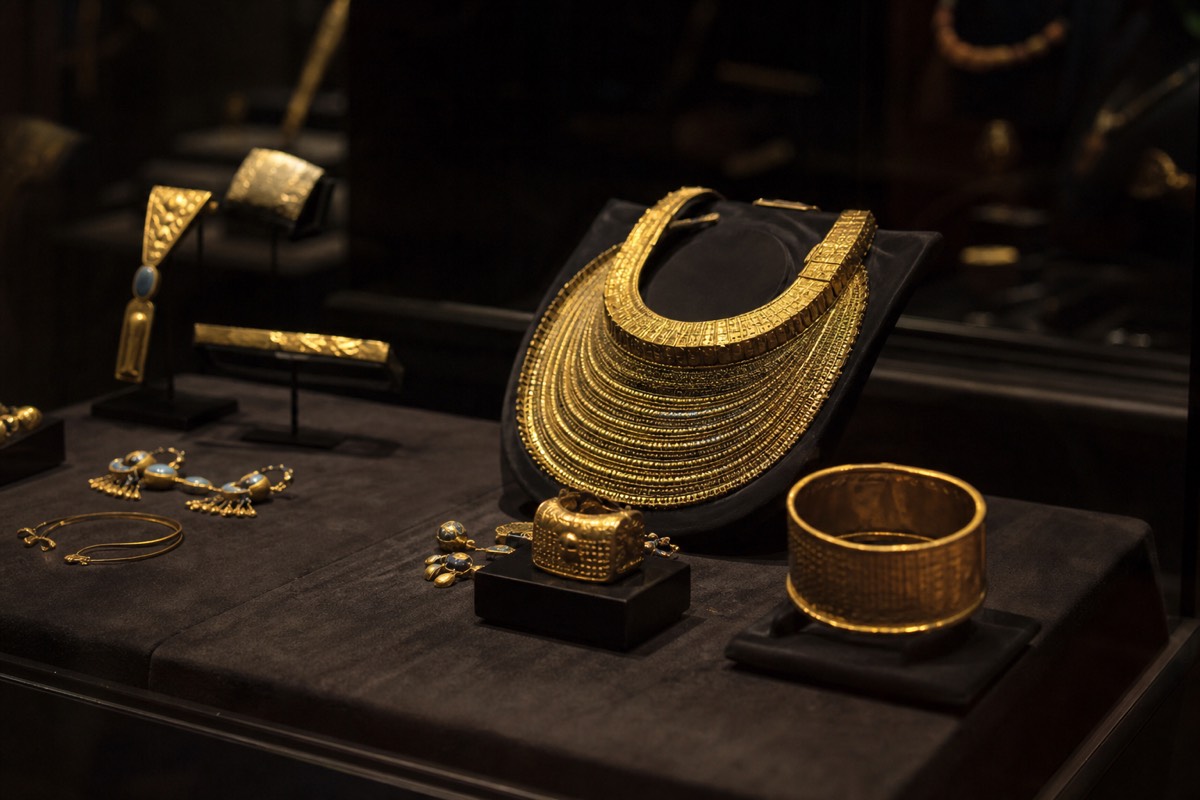
This is the single most common point of confusion, and getting it right saves a wasted trip. If seeing the actual preserved bodies of Egypt's pharaohs is on your list, GEM is the wrong address. The mummies are across the city in Fustat. The Royal Mummies Hall was purpose-designed with low light, controlled climate, and a hushed layout, so visitors move slowly and quietly past each king and queen. It is a genuinely different register from the golden spectacle at GEM.
The 2021 relocation was a moment of national theatre. The Pharaohs' Golden Parade carried the mummies through Cairo in individual, decorated vehicles, escorted with the ceremony of a state occasion and broadcast around the world. The point was not spectacle for its own sake; it marked the mummies moving from a cramped upper room in the old Tahrir museum into a purpose-built hall designed for both preservation and dignity. That intent carries through in the visit. You do not stumble on the mummies between other exhibits. You enter a dedicated space built around them.
The 22 mummies include some of the most consequential rulers Egypt ever produced. Among them are Ramesses II, the long-reigning builder-king; Hatshepsut, the female pharaoh who ruled as king; and Thutmose III, the general-king often called Egypt's Napoleon. Seeing the face of a ruler whose statues you have just admired elsewhere is the reason many people rank this hall as the emotional high point of their Cairo trip. The presentation is deliberately restrained, with each mummy shown alongside concise context rather than crowded displays, so the encounter stays personal. For a fuller treatment of why these bodies are not at the newer museum, our companion piece on the royal mummies answers the question directly.
| Detail | The royal mummies at NMEC |
|---|---|
| Where | Royal Mummies Hall, National Museum of Egyptian Civilization, Fustat |
| How many | 22 royal mummies (kings and queens) |
| When moved | April 2021, the Pharaohs' Golden Parade |
| Notable rulers | Ramesses II, Hatshepsut, Thutmose III |
| Atmosphere | Low light, climate-controlled, quiet, tomb-like |
| At GEM instead? | No. GEM does not display the royal mummies |
One practical note: the Royal Mummies Hall usually carries its own admission on top of the museum's general ticket. Photography is typically restricted inside the hall out of respect for the remains. Plan around both, and confirm the current rules when you arrive, because the museum adjusts them from time to time.
Which has King Tut?
King Tut is at the Grand Egyptian Museum. The complete Tutankhamun tomb assemblage, all 5,398 objects, is displayed together for the first time since Howard Carter cleared the tomb in the 1920s. It fills roughly 7,000 square metres across two dedicated halls on the museum's upper level, reached after the Grand Staircase. The golden death mask, the solid gold coffin, the Golden Throne, and the meteorite iron dagger are all here.
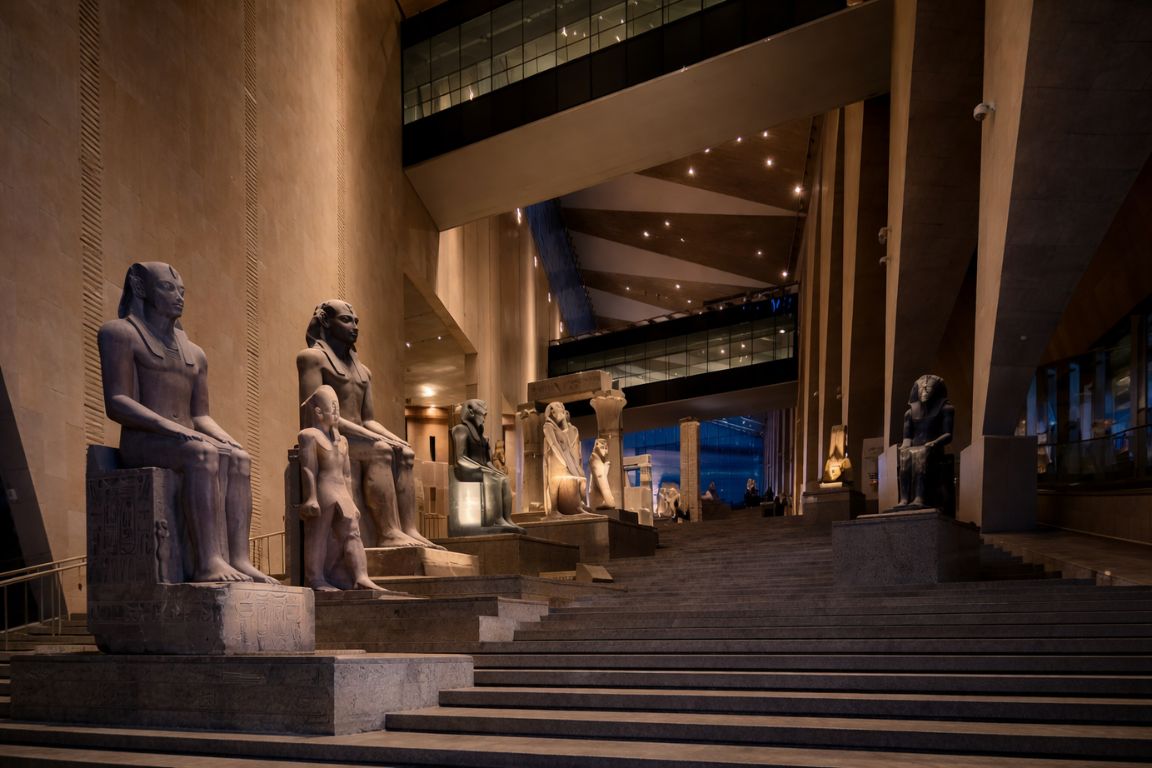
The Tutankhamun galleries are the reason GEM was built at the scale it was. For decades, the old Egyptian Museum in Tahrir could only show a fraction of the tomb's contents, and the rest sat in storage. Now the whole assemblage is presented as a single coherent collection: the nested shrines, the chariots, the beds, the jewellery, the ceremonial objects, and at the center the death mask that has defined the image of ancient Egypt for a century. Every piece of it is covered by the standard admission ticket, which surprises visitors who assume the headline treasure must cost extra. If you are weighing what your money actually buys, our breakdown of GEM ticket prices spells out what admission includes.
Because this is the most-searched confusion of all, we keep a dedicated explainer on where King Tut is now. The answer, stated plainly, is GEM. The National Museum of Egyptian Civilization holds the mummies of many pharaohs, but Tutankhamun's golden treasure is at GEM, and Tutankhamun's own mummy remains in his tomb in the Valley of the Kings at Luxor, not in either Cairo museum.
| Tutankhamun highlight | What it is | Where at GEM |
|---|---|---|
| Golden death mask | The iconic gold-and-lapis funerary mask | Tutankhamun galleries, upper level |
| Solid gold coffin | The innermost of his nested coffins | Tutankhamun galleries |
| Golden Throne | Gilded throne showing the young king and his queen | Tutankhamun galleries |
| Meteorite iron dagger | A blade forged from meteoric iron | Tutankhamun galleries |
| Complete assemblage | All 5,398 objects shown together | Roughly 7,000 sq m across two halls |
| Included in admission? | Yes, no separate ticket needed | Standard entry ticket |
How do tickets, hours and getting there compare?
GEM runs a strict online-only, timed-entry system with no walk-up sales, so you book a date and time before you travel. The National Museum of Egyptian Civilization is more relaxed, with tickets available on arrival and a lower admission price. The two sit on opposite sides of greater Cairo, so treat any same-day pairing as a planned cross-city transfer.
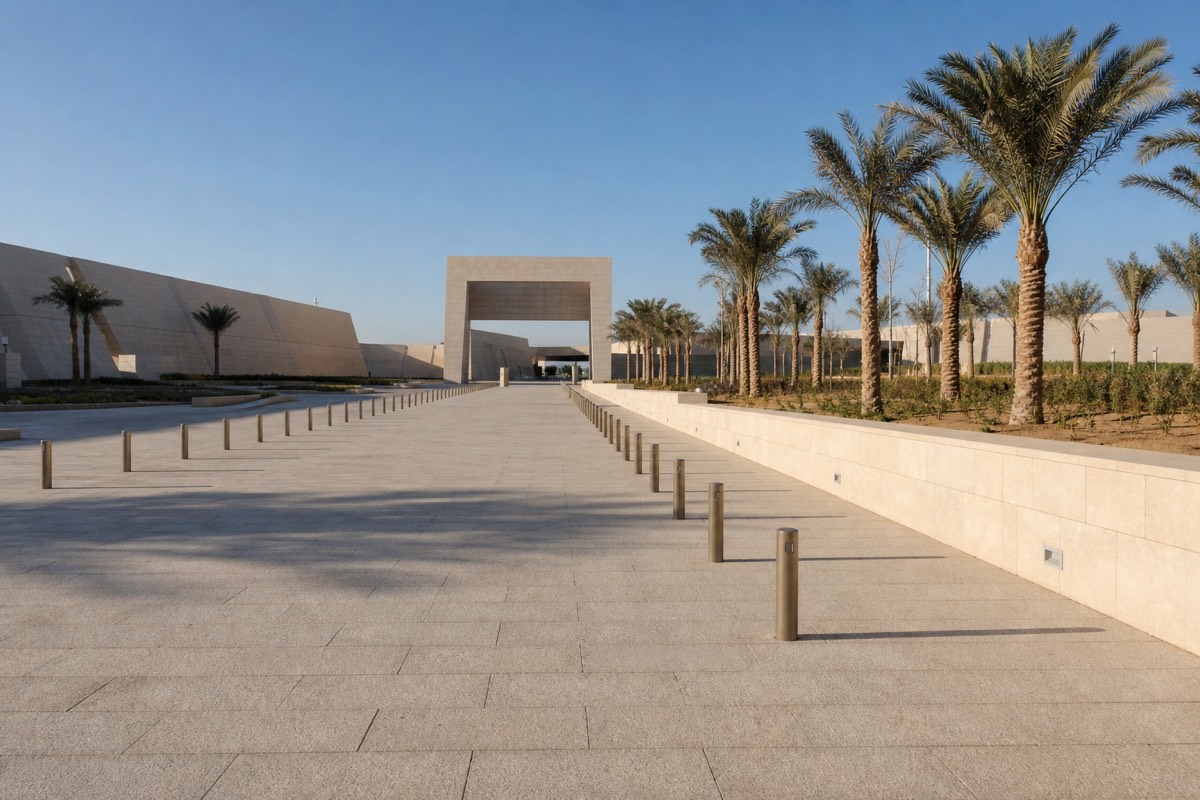
The booking styles could hardly be more different, and this matters for planning. Since walk-up sales at GEM ended, every GEM visitor pre-books online, and popular slots fill quickly on weekends. Both museums sell timed entries online, and Grand Egyptian Museum tickets in particular sell out fastest on Fridays and Saturdays, the Egyptian weekend, so lock those in early. The National Museum of Egyptian Civilization rarely needs the same lead time, though the Royal Mummies Hall can gather a queue at busy hours.
Travel time is the other variable. GEM is in Giza, roughly a 45-minute drive from central Cairo in normal traffic and about 2 km from the pyramids. The National Museum of Egyptian Civilization is in Fustat, closer to the old city core. Crossing between the two takes a real chunk of the day, so if you plan both, build the transfer into your schedule rather than hoping to squeeze it in. When you are ready to fix the logistics around a set entry time, our guide on how to plan your visit covers the timed-slot system in detail.
| Planning factor | GEM | NMEC |
|---|---|---|
| Ticketing | Online only, timed entry, no gate sales | On arrival or online |
| Foreign adult price | Around EGP 1,450 (about $30, check the listing) | Lower than GEM (confirm current rate) |
| Entry slots | 8:30 AM, 11:00 AM, 1:00 PM, plus 3 and 5 PM Wed and Sat | General daytime hours |
| Time to spend | 4 to 6 hours for a proper first visit | 2 to 3 hours, more with the mummies hall |
| Location | Giza, by the pyramids | Fustat, Old Cairo |
| Busiest window | 11 AM to 2 PM, worst Fri and Sat | Midday and weekends |
If a same-city cluster appeals more than a cross-city dash, the National Museum of Egyptian Civilization pairs naturally with the Coptic and Islamic quarters nearby, while GEM pairs with the pyramids on its own plateau. A multi-day Cairo plan can fold both museums in without the rush of trying to do everything in a single morning.
Can you visit GEM and the NMEC in one day?
You can, but it is an ambitious day rather than a relaxed one. GEM alone deserves 4 to 6 hours, and the two museums sit on opposite sides of greater Cairo. A realistic one-day plan trims each visit to its headline collections: a focused GEM morning, a cross-city transfer, then the National Museum of Egyptian Civilization and the Royal Mummies Hall in the afternoon.
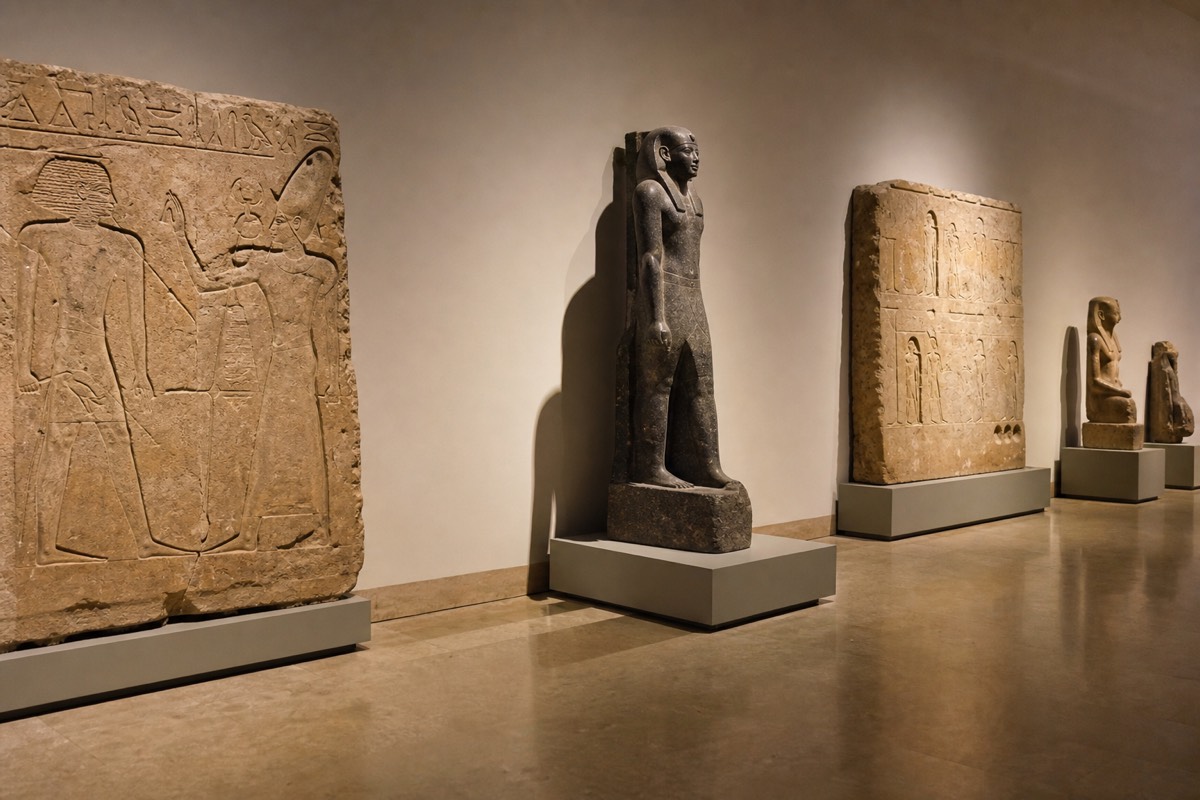
The honest answer is that doing both well in one day means accepting a highlights pace at each. If you try to see all of GEM's 12 galleries and then cross town for a full afternoon, you will run out of both time and energy. The version that works focuses on the essentials: at GEM, the Grand Hall, the Grand Staircase, and the Tutankhamun galleries; at the National Museum of Egyptian Civilization, the Royal Mummies Hall and the main civilization galleries. Book the earliest GEM slot so the afternoon stays open.
Traffic is the wildcard. A cross-Cairo transfer that takes 45 minutes at 10 AM can take far longer at rush hour, so the timeline below leaves a buffer. If the idea of managing both bookings, the driver, and the timing yourself sounds like a lot, that is exactly what a guided day removes. Either way, the sequence matters more than the speed.
| Time | Where | What to do |
|---|---|---|
| 8:30 AM | GEM, Giza | Enter on the first slot, start in the Grand Hall by the Ramesses II colossus |
| 9:00 to 11:00 AM | GEM | Grand Staircase, then the Tutankhamun galleries on the upper level |
| 11:00 to 11:45 AM | GEM | Khufu Solar Boat and a quick pass of one main gallery |
| 11:45 AM to 1:00 PM | Transfer | Cross Cairo to Fustat, allow extra time in traffic, grab lunch en route |
| 1:00 to 2:30 PM | NMEC | Royal Mummies Hall, then the main civilization galleries |
| 2:30 to 3:30 PM | NMEC | Thematic halls, or continue into nearby Coptic Cairo if energy allows |
For most travelers with more than a day in Cairo, splitting the two museums across two days is the better call. It lets GEM share its day with the pyramids next door, and it lets the National Museum of Egyptian Civilization share its day with the old city around it. If you only have one day and both are non-negotiable, the plan above works, but go in knowing you are sampling rather than absorbing.
Which should you choose if you only have time for one?
For a first trip to Egypt, most visitors should choose the Grand Egyptian Museum. It holds the complete Tutankhamun treasure, sits next to the pyramids for an easy combined day, and delivers the monumental scale people picture when they imagine ancient Egypt. Choose the National Museum of Egyptian Civilization instead if the royal mummies are the one thing you cannot leave Cairo without seeing.
The choice really comes down to what pulls you. If it is gold, colossi, and the boy king's tomb assembled in one place, GEM is unmatched, and its position beside the Giza plateau means a single day can easily cover both the museum and the pyramids. If it is the human reality of the pharaohs, the actual faces of Ramesses II and Hatshepsut, then the National Museum of Egyptian Civilization is the one that will stay with you, and nothing at GEM substitutes for it.
Think about who you are traveling with, as well. Families with children usually get more out of GEM, where the space, the interactive galleries, and the sheer spectacle hold young attention better than the hushed reverence of a mummies hall. Travelers with a serious interest in the long arc of Egyptian history, on the other hand, often prefer the National Museum of Egyptian Civilization, because its story runs from prehistory through the Islamic and modern periods rather than stopping with the pharaohs. There is no wrong answer, only the one that matches what you came to see.
There is also the Egyptian Museum in Tahrir to keep in mind, the century-old original that still holds a dense and atmospheric collection even after the headline pieces moved out. If you are comparing all three Cairo museums, our guide to the Egyptian Museum in Tahrir completes the picture. For a one-day GEM plan that folds in the pyramids rather than a second museum, consider a private Pyramids and GEM tour (choose your inclusions), which handles the tickets and the midday move for you.
| You are | Choose | Why |
|---|---|---|
| First-time visitor to Egypt | GEM | Tutankhamun, scale, and the pyramids next door in one day |
| Set on seeing the pharaohs' mummies | NMEC | The Royal Mummies Hall is only here |
| Traveling with children | GEM | Space, spectacle, and interactive galleries |
| Interested in everyday life across all eras | NMEC | Prehistory to modern Egypt in one narrative |
| Short on time near the pyramids | GEM | Same plateau, easy to combine |
| Have two or more Cairo days | Both | One day each, paired with what is nearby |
Whichever you pick, book GEM's timed slot as soon as your dates are set, since it is the one with no flexibility at the door. The National Museum of Egyptian Civilization can flex around it. Get the fixed point locked first, then build the rest of your Cairo days outward from there.