Grand Egyptian Museum vs the Egyptian Museum in Tahrir
Two great Cairo museums, one big change: the Tutankhamun collection has moved. Here is exactly what shifted to the Grand Egyptian Museum, what still fills the old Tahrir building, and how to plan around both.
Booking choice: Private English-speaking Egyptologist and Cairo/Giza hotel transfers. Admission, lunch and tips are extra. Approximately 3.5 hours. Check Private GEM Egyptologist Visit Dates
Your next choice is how to visit: Choose the museum containing the desired collection; include a verified Tahrir tour rather than a generic multi-day product.
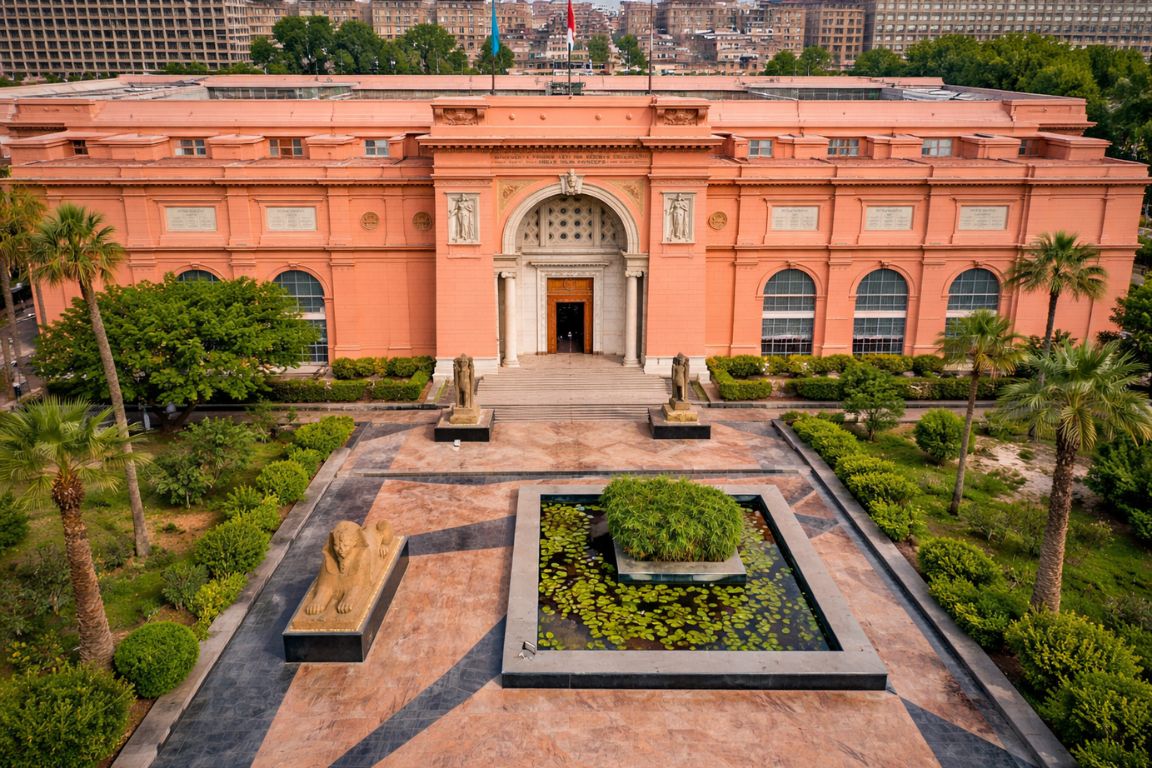
For most of the last century, Cairo had one place to see the treasures of ancient Egypt: the pink neoclassical museum on Tahrir Square, opened in 1902. That changed when the Grand Egyptian Museum opened fully in November 2025 out at Giza, and the biggest single question travellers now ask is what actually moved. The short version is that Tutankhamun went to Giza and a great deal stayed on Tahrir Square, but the full picture is more useful than that. This guide lays out the differences between the two museums now, settles where King Tut's treasures are, covers what is still worth seeing at the old museum, and helps you decide whether to visit one or both.
Grand Egyptian Museum vs the Egyptian Museum in Tahrir: what's the difference now?
The Grand Egyptian Museum in Giza is a vast, modern, climate-controlled building holding over 100,000 artifacts across 12 galleries, including the complete Tutankhamun collection and the Khufu Solar Boat. The Egyptian Museum in Tahrir is the historic 1902 museum in central Cairo, denser and more atmospheric, which kept much of its collection after the headline pieces moved to Giza. Both remain open.
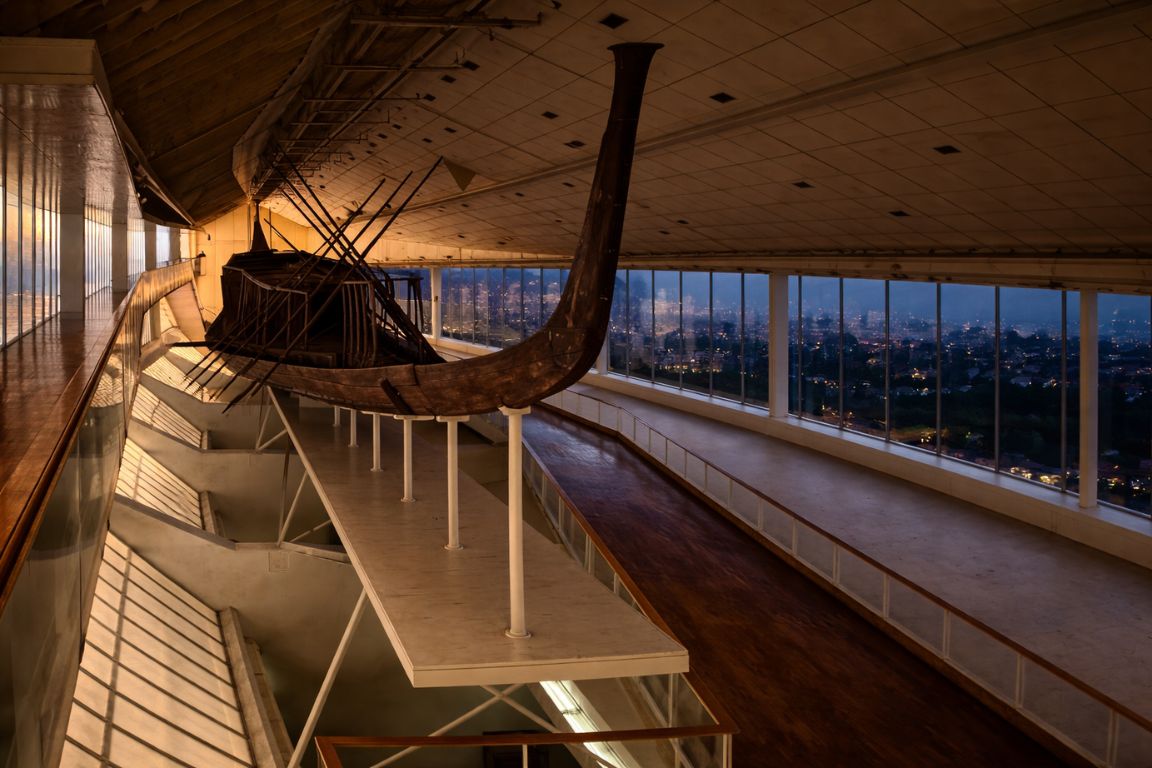
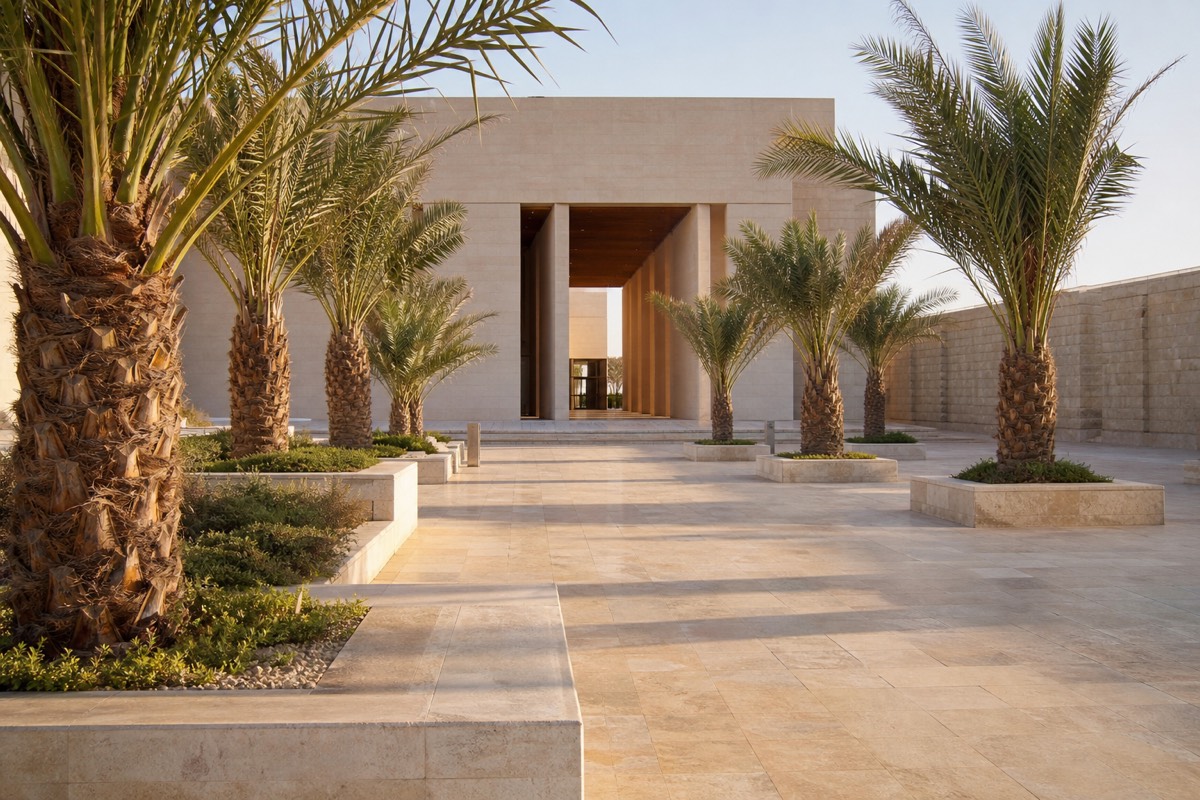
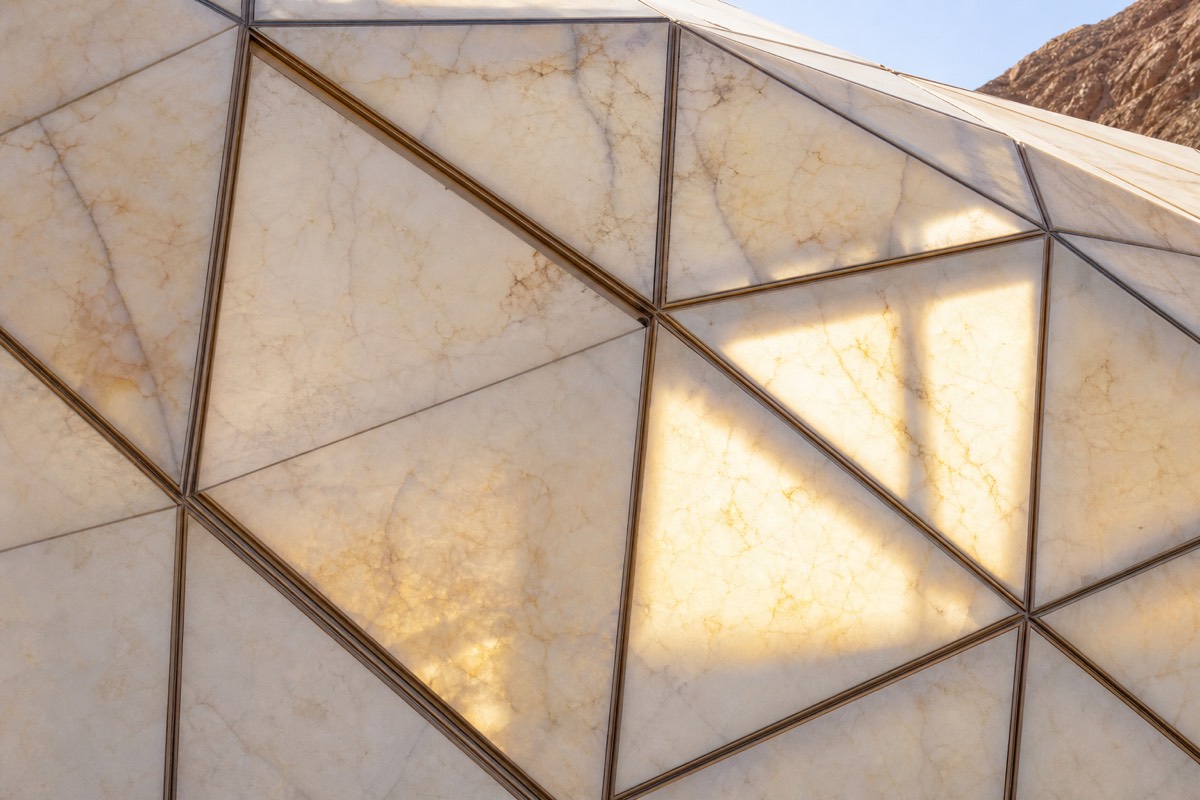
The two are not competing for the same visit, and it helps to stop thinking of the new one as simply replacing the old. GEM is the largest archaeological museum built for a single civilisation, spread across a 500,000-square-metre complex about two kilometres from the pyramids. The galleries are climate-controlled, the lighting is tuned to the objects, and the layout gives ancient Egypt a clear narrative structure. Tahrir is the opposite kind of experience: a century-old building packed with objects, warm in summer, and layered with the atmosphere of early Egyptology. Where GEM feels engineered, Tahrir feels excavated.
Location shapes the choice as much as the collections. GEM sits out at Giza and needs a dedicated trip, best paired with the pyramids on the same plateau. Tahrir is in the middle of the city on the square that shares its name, easy to fold into a downtown Cairo day. For a full sense of whether the Giza museum earns the journey, our honest take on whether it's worth visiting weighs the scale, the time it demands, and who tends to love it.
It helps to be clear about why the new museum was built at all, because the reason explains the difference in feel. Tahrir opened in 1902 for a much smaller collection and a different era of archaeology. Over the following century it filled far past its design, holding well over a hundred thousand items in a building with limited climate control and almost no room to add context around the objects. Cases were crowded, corridors were tight, and many pieces sat in storage because there was simply nowhere to show them. GEM was built to solve exactly those problems: space to display objects that had never been seen, controlled climate to protect fragile gold and organic materials, and a layout that walks you through Egyptian history in an order that makes sense. So the contrast between the two is not really old versus new for its own sake. It is a museum that outgrew its building against a museum built to be grown into.
| Factor | Grand Egyptian Museum (Giza) | Egyptian Museum (Tahrir) |
|---|---|---|
| Opened | Fully November 2025 | 1902 |
| Location | Giza, about 2 km from the pyramids | Tahrir Square, central Cairo |
| Size | Over 100,000 artifacts, 12 galleries | Historic building, previously 120,000-plus items |
| Climate | Fully climate-controlled | Limited, can be warm in summer |
| Atmosphere | Modern, monumental, structured | Historic, dense, layered |
| Foreign adult ticket | Around EGP 1,450 (about $30 USD) | Lower, around EGP 450 to 550, check the live listing |
Which museum has Tutankhamun and King Tut's treasures?
The Grand Egyptian Museum has Tutankhamun. The complete 5,398-object tomb assemblage, including the golden death mask, the solid gold coffin, and the Golden Throne, moved from Tahrir to GEM and is now displayed together for the first time across two dedicated halls covering about 7,000 square metres. The Tahrir museum no longer holds the headline King Tut treasures.
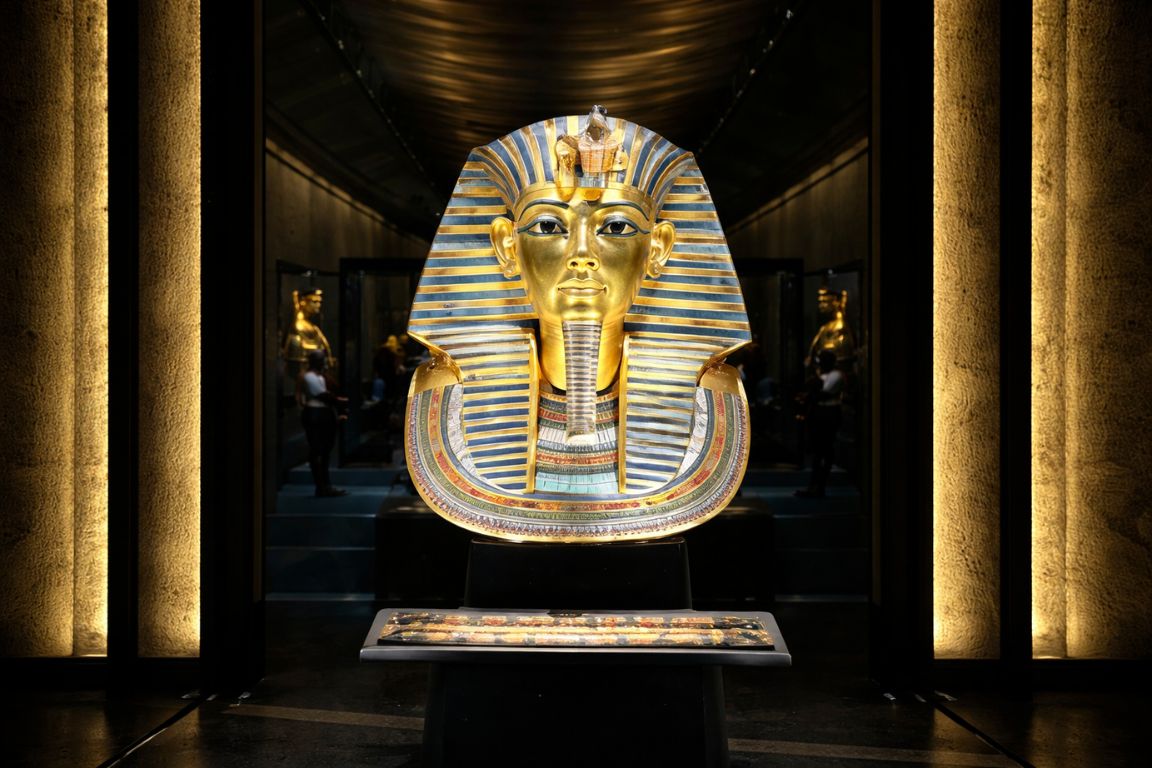
This is the single most important thing to get right when planning, because it reverses decades of habit. For generations, the Tutankhamun galleries were the reason to visit Tahrir. That collection has now moved to Giza in full. At GEM it is not simply relocated, it is reunited: for the first time since Howard Carter's team cleared the tomb in the 1920s, all 5,398 objects are shown in one place, on the museum's second floor, reached after the Grand Staircase. The mask that once sat in a crowded Tahrir room now has its own chamber with dedicated lighting.
The scale of the King Tut display at GEM is the draw. Two halls, roughly 7,000 square metres, holding the coffins, the shrines, the throne, the chariots, and thousands of smaller objects that could never all be shown together in the old building. It is included in standard GEM admission, which surprises many visitors who assume the gold requires a premium ticket. For the full walkthrough of what is on show and where, see our guide to the complete Tutankhamun collection. If you would rather have an Egyptologist lead you through those halls, several tours build the King Tut visit into a guided day.
| Tutankhamun object | Now at |
|---|---|
| Golden death mask | Grand Egyptian Museum, Giza |
| Solid gold coffin | Grand Egyptian Museum, Giza |
| Golden Throne | Grand Egyptian Museum, Giza |
| Meteorite iron dagger | Grand Egyptian Museum, Giza |
| Full 5,398-object assemblage | Grand Egyptian Museum, two halls |
| Tutankhamun's mummy | Neither, it stays in the tomb in Luxor |
What moved from the Egyptian Museum to GEM, and what stayed?
The Tutankhamun collection and the Khufu Solar Boat moved to the Grand Egyptian Museum. The royal mummies moved separately to the National Museum of Egyptian Civilization in 2021. The Narmer Palette, the Yuya and Thuya treasures, and much Old Kingdom and general statuary stayed at Tahrir. The result is a three-way split of Egypt's headline collections across Cairo.
Thinking of it as a three-way split makes planning far easier. Before the moves, Tahrir held nearly everything, and a single visit there covered the mask, the mummies, and the general collection at once. That is no longer how Cairo works. The Tutankhamun treasures, the single biggest draw, went out to Giza and are now reunited in full at GEM. The royal mummies, once a paid extra room at Tahrir, went to the National Museum of Egyptian Civilization in the widely televised 2021 Pharaohs' Golden Parade, when the preserved bodies of Egypt's kings and queens were carried across Cairo in a procession. Neither of those returned to Tahrir.
What stayed is still substantial, which is why the old museum is far from hollow. The Narmer Palette, the Yuya and Thuya burial treasures, and a great deal of Old Kingdom and later statuary remained on Tahrir Square, alongside thousands of smaller objects. So each museum now owns a distinct chapter: GEM for Tutankhamun and monumental scale, the NMEC for the royal mummies and the sweep of Egyptian civilisation, and Tahrir for the foundational early pieces and the historic setting. Map your days to that split rather than expecting any one museum to hold it all.
| Collection | Where it lives now | Moved or stayed |
|---|---|---|
| Tutankhamun treasures | Grand Egyptian Museum | Moved from Tahrir |
| Khufu Solar Boat | Grand Egyptian Museum | Relocated to GEM |
| Royal mummies | National Museum of Egyptian Civilization | Moved in 2021 |
| Narmer Palette | Egyptian Museum, Tahrir | Stayed |
| Yuya and Thuya treasures | Egyptian Museum, Tahrir | Stayed |
| Old Kingdom statuary | Much at Tahrir | Largely stayed |
What is still worth seeing at the Tahrir museum?
Plenty. The Tahrir museum kept the Narmer Palette, the treasures of Yuya and Thuya, significant Old Kingdom statuary, and a dense collection spanning much of ancient Egyptian history. Its historic 1902 building is itself part of the appeal. The royal mummies are at neither museum now, having moved to the National Museum of Egyptian Civilization in 2021, so plan that separately.
Tahrir did not empty out when Tutankhamun left. The Narmer Palette, one of the foundational objects of Egyptian history and among the earliest to record a unified kingdom, remains there. So do the tomb treasures of Yuya and Thuya, great-grandparents of Tutankhamun, which are among the finest surviving non-royal burials. Rooms of Old Kingdom statuary, Middle Kingdom pieces, and countless smaller objects still fill the halls. For visitors who care about the texture of early archaeology, the museum's own building, with its high galleries and glass cases, is an artifact in its own right.
There is one common point of confusion worth settling. The royal mummies, the preserved bodies of Egypt's great pharaohs, are at neither GEM nor Tahrir. They moved to the National Museum of Egyptian Civilization in the 2021 Pharaohs' Golden Parade, and that is where you go to see them. So the three Cairo museums now divide the story: King Tut's treasures at GEM, the royal mummies at the NMEC, and a deep general collection plus the old-museum atmosphere at Tahrir. The Khufu Solar Boat, another piece people sometimes expect at Tahrir, is at GEM in its own hall, covered in our guide to Khufu's Solar Boat.
The building itself deserves a word, because at Tahrir the architecture is part of what you are visiting. The 1902 structure was purpose-built to hold Egypt's antiquities, and its high, top-lit galleries and long rows of glass cases represent how a great national collection was presented at the turn of the twentieth century. Walking it is a little like stepping into an older idea of what a museum should be, before interactive screens and climate-controlled vitrines. Some travellers find that dated, and some find it the entire charm. For anyone drawn to the history of how ancient Egypt came to be studied and displayed, rather than only the objects themselves, Tahrir offers something GEM by design does not, and that alone can justify a visit even after the headline treasures have gone west to Giza.
| Highlight | Where it is now |
|---|---|
| Narmer Palette | Egyptian Museum, Tahrir |
| Yuya and Thuya treasures | Egyptian Museum, Tahrir |
| Old Kingdom statuary | Much remains at Tahrir |
| Royal mummies | National Museum of Egyptian Civilization |
| Tutankhamun treasures | Grand Egyptian Museum |
| Khufu Solar Boat | Grand Egyptian Museum |
Should you visit both, and can you do it in one trip?
Yes, visit both if your schedule allows, and it is very doable across a Cairo trip, though not comfortably in one day. GEM needs a dedicated Giza day of four to six hours, best paired with the pyramids next door. Tahrir is a central-Cairo half-day to full day. They are on opposite sides of the city, so plan them as separate outings rather than a single rush.
The reason to see both is that they now tell different parts of the same story. GEM gives you Tutankhamun in full, the Khufu boat, and monumental scale in modern conditions. Tahrir gives you the Narmer Palette, the Yuya and Thuya treasures, and the irreplaceable atmosphere of the museum where Egyptology grew up. Seeing one does not make the other redundant. If anything, they complement each other, and repeat visitors to Cairo often say the contrast is the point.
There is also a sensory reason to do both, hard to capture in a comparison table. Tahrir has a texture GEM cannot replicate. The cases sit close, the light is imperfect, the crowd patterns are older and looser, and some visitors describe the objects as feeling less protected from you, more within reach. GEM is spectacular and precise. Tahrir is peculiar and layered, a building that has absorbed more than a century of visitors. Going from one to the other in the same trip lets you feel how the presentation of ancient Egypt has changed across a hundred and twenty years, which is a story in itself on top of the objects each holds.
On logistics, do not try to cram both into a single day. GEM alone rewards four to six hours, and adding the pyramids, which sit on the same plateau, fills the day naturally. Tahrir is a different trip into the city centre and deserves its own morning or afternoon. A common two-part plan is a Giza day for GEM and the pyramids, then a separate central-Cairo day for Tahrir and other downtown sites. Longer itineraries make this easy: a three-day Cairo tour spreads the pyramids, Coptic Cairo, and GEM across days without a scramble, while private Pyramids and GEM tour (choose your inclusions) handles the Giza half in one guided day.
| Plan | Time needed | Notes |
|---|---|---|
| GEM only | 4 to 6 hours | Best paired with the pyramids on the same plateau |
| Tahrir only | Half day to full day | Central Cairo, easy to combine with downtown sites |
| Both, same day | Not recommended | Opposite sides of the city, too rushed |
| Both, separate days | Two outings | Giza day plus a central-Cairo day |
Which is better for first-time visitors?
For most first-time visitors to Egypt, the Grand Egyptian Museum is the priority. It holds the complete Tutankhamun collection, the Khufu Solar Boat, and colossal statuary in modern, comfortable conditions, and it pairs with the pyramids in a single Giza day. Choose Tahrir first only if you are short on time in central Cairo or you specifically want the historic-museum atmosphere and the pieces that stayed there.
The logic is straightforward. A first trip to Egypt is usually built around the pyramids, and GEM sits two kilometres away on the same plateau, connected by a walkway, holding the objects that came out of that era of tomb-building. Seeing the artifacts and the monuments together, ideally the museum in the morning and the pyramids in the afternoon, gives a first-timer the fullest single day Egypt can offer. Add the reunited Tutankhamun collection and the Khufu boat, both unique to GEM, and the case for prioritising Giza is strong.
There is a comprehension benefit to the order, too. Standing at the base of the Great Pyramid is extraordinary on its own, but standing there after a morning inside GEM changes what you are looking at. You have just seen the treasures, the statues, and the burial goods that this civilisation produced, so the monuments stop being abstract piles of stone and become the tombs and temples that all of it was made for. The reverse order can also work, especially when avoiding the hottest outdoor hours. Museum-first suits visitors who want the collection’s context before the monuments; pyramids-first can suit those prioritising cooler outdoor conditions. Where your schedule allows it, put GEM in front of the plateau.
That said, Tahrir is not a lesser choice, just a different one. Travellers with a real interest in the history of archaeology, or those already spending time in central Cairo, get a great deal from the old museum and its retained collection. If you have two museum days in your itinerary, do both and let GEM anchor the Giza day. Whichever you start with, book GEM ahead of time, since it sells timed entry online only through visit-gem.com with no tickets at the gate. A simple entry-only ticket secures your slot, and you build the rest of the day around it.
One planning note that trips people up: because GEM runs on strict timed entry, the day tends to organise itself around your slot rather than the reverse. If you hold a morning entry, the pyramids naturally fall into the afternoon of the same Giza day, and Tahrir slides to a different day entirely. Tahrir, by contrast, is walk-in friendly and central, so it flexes to fill gaps in your schedule. The most reliable approach is to lock the GEM slot first, since it is the fixed point, then arrange the pyramids around it and treat Tahrir as the movable piece you drop into whichever city day has room. Plan in that order and neither museum feels rushed.
| You are | Start with | Why |
|---|---|---|
| First-time visitor to Egypt | GEM | Tutankhamun, the Khufu boat, and the pyramids in one Giza day |
| Short on time in central Cairo | Tahrir | Quick to reach downtown, no trip out to Giza needed |
| Interested in early Egyptology | Tahrir | Historic 1902 building and the pieces that stayed |
| Have two museum days | Both | Let GEM anchor the Giza day, Tahrir the city day |