Which Cairo Museum Has King Tut Now?
King Tut's treasures are now at the Grand Egyptian Museum, moved from the old Egyptian Museum in Tahrir Square.
Booking choice: Self-guided GEM admission including permanent galleries, Tutankhamun and the Solar Boat. No guide or transfers. Non-refundable; this provider listing is for ages 6 and above. Check GEM Admission Dates
Your next choice is how to visit: Book GEM for Tutankhamun treasures, with separate museum choices for Tahrir or royal mummies.
If you grew up seeing King Tut at the old museum on Tahrir Square, the answer has changed. The collection has a new home, and knowing which building holds what saves a wasted trip across the city. Between the two new museums and the old one, three different sites now hold pieces of the story, so it is worth being precise. Here is where the boy king's treasures are now, and what stayed behind.
Which Cairo museum has King Tut now?
King Tut's treasures are now at the Grand Egyptian Museum near the Giza pyramids. The complete Tutankhamun collection, including the golden death mask, moved there from the old Egyptian Museum in Tahrir Square. GEM now displays the full 5,398-object tomb assemblage together for the first time, across two dedicated halls covering roughly 7,000 square metres.
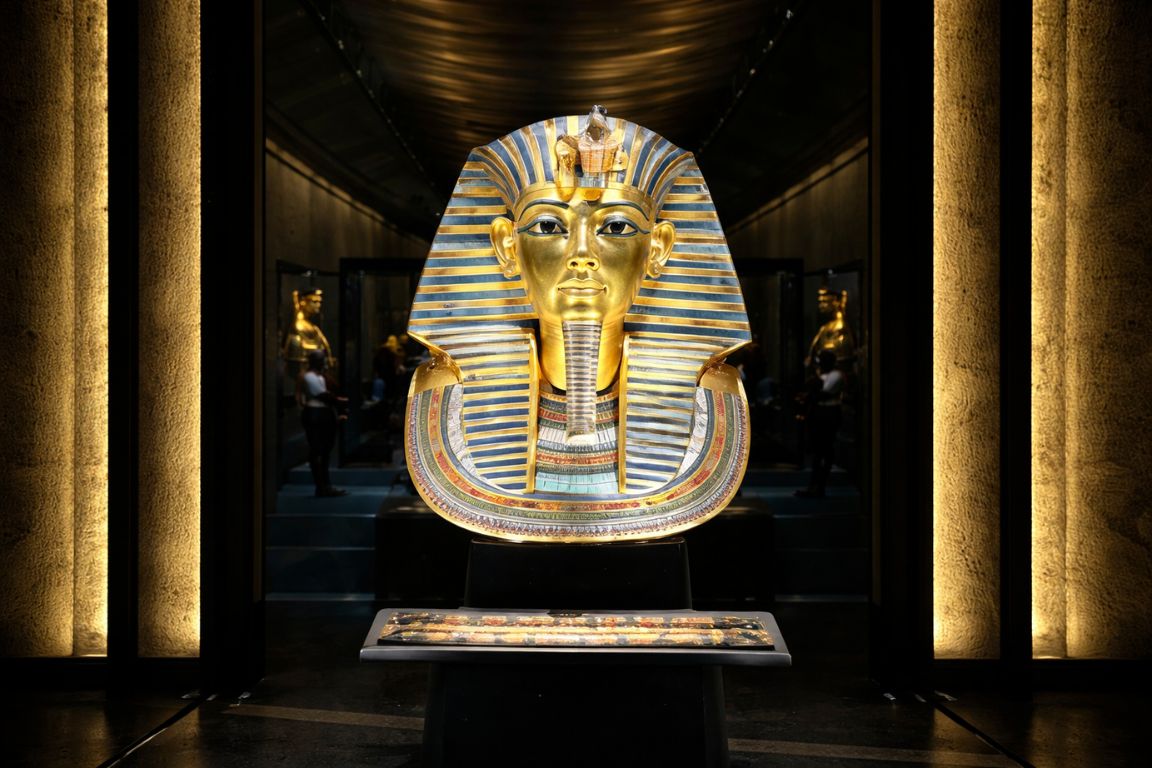
For decades the mask and a selection of pieces were the star draw at the downtown museum, with much of the tomb in storage or scattered. That changed with the move to GEM, where the whole collection is finally shown as one. Grand Egyptian Museum tickets are the way in, and one standard admission covers the Tutankhamun halls.
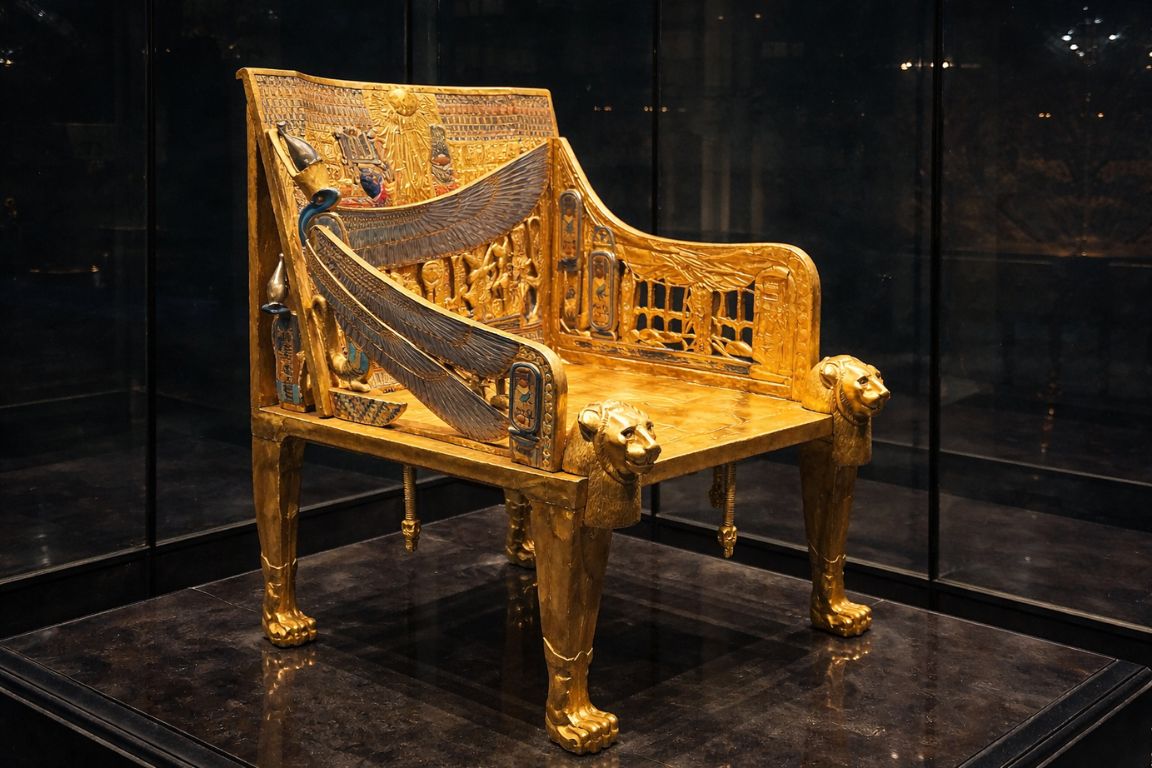
The difference in scale is the point. At the old museum you saw a fraction of the tomb; at GEM the full 5,398 objects sit together across roughly 7,000 square metres on the second floor, reached after the Grand Staircase. Alongside the mask you now see the solid gold coffin, the Golden Throne, the meteorite-iron dagger and the everyday objects that were split up or hidden away for a century. It is, quite simply, the first time in the modern era that the tomb has been shown as the single, complete assemblage Howard Carter actually uncovered in 1922.
We catalogue the objects themselves in our guide to the complete Tutankhamun collection.
When did the collection move to GEM?
The Tutankhamun collection was transferred to the Grand Egyptian Museum in the lead-up to its full opening in November 2025. The last pieces, including the death mask, were moved from Tahrir in the months before, completing a relocation that took years of careful conservation work. GEM opened fully after roughly two decades of construction.
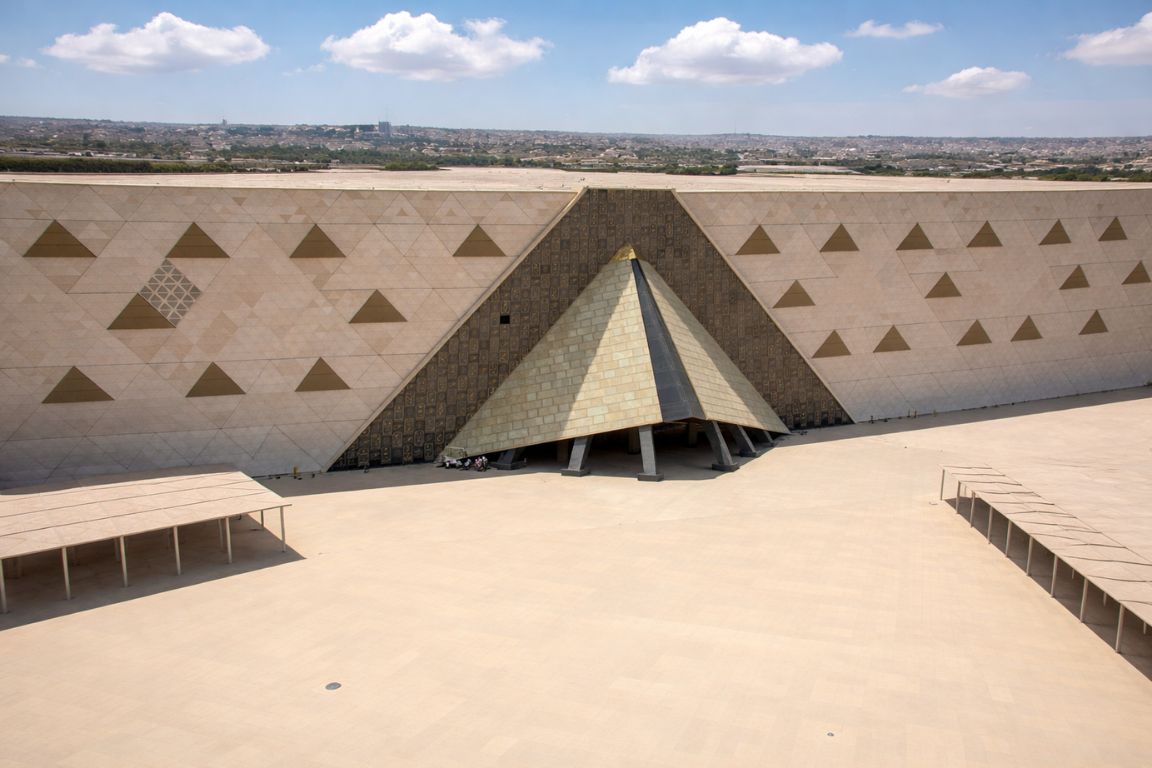
The timing was deliberate rather than rushed. Moving objects this fragile is slow work, and the museum was built specifically to hold them in modern, climate-controlled conditions. The result is that the collection you may have seen in cramped downtown rooms now has space around it.
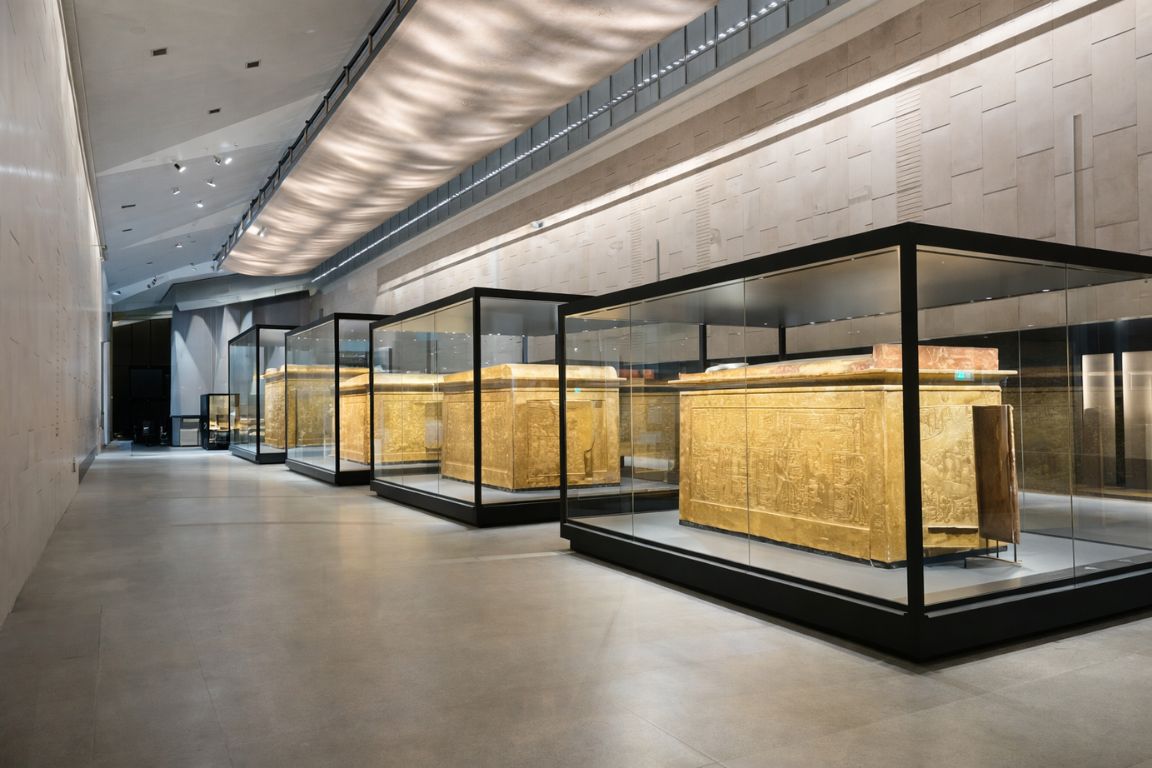
That space is the real change. At the old museum the tomb was famous for feeling overwhelming in the wrong way, too much gold in too little room. At GEM the same objects have room to breathe across two halls, with lighting designed object by object, so you can actually look at what you are looking at rather than press through a crowd.
What is still at the Egyptian Museum in Tahrir?
The Egyptian Museum in Tahrir Square remains open and still holds a vast collection, even though the Tutankhamun treasures have left for GEM. It historically displayed more than 120,000 items, and plenty remains worth seeing. So the downtown museum is still a real destination, just no longer the place to see King Tut's tomb treasures.
| Museum | What it holds now |
|---|---|
| Grand Egyptian Museum (GEM) | The complete Tutankhamun treasures, plus Ramesses II and the Solar Boat |
| Egyptian Museum, Tahrir | A large general collection; still open, but not the Tut treasures |
| National Museum of Egyptian Civilization | The royal mummies |
Put simply, the old museum lost its single most famous draw but kept an enormous amount else. Its historic collection once ran past 120,000 items in cramped, limited-climate rooms, and much of that remains on view. Think of the change as a redistribution rather than a closure: the Tutankhamun treasures went to GEM, the royal mummies went to the National Museum of Egyptian Civilization, and the downtown museum carries on with the rest.
We compare the new and old museums directly in our guide to GEM versus the Egyptian Museum in Tahrir.
Where are King Tut's mummy and the royal mummies?
King Tutankhamun's mummy stays in his tomb in the Valley of the Kings at Luxor, not in any Cairo museum. The other royal mummies are displayed at the National Museum of Egyptian Civilization in Cairo. So the tomb treasures are at GEM, the royal mummies are at NMEC, and Tut's own body remains at Luxor.
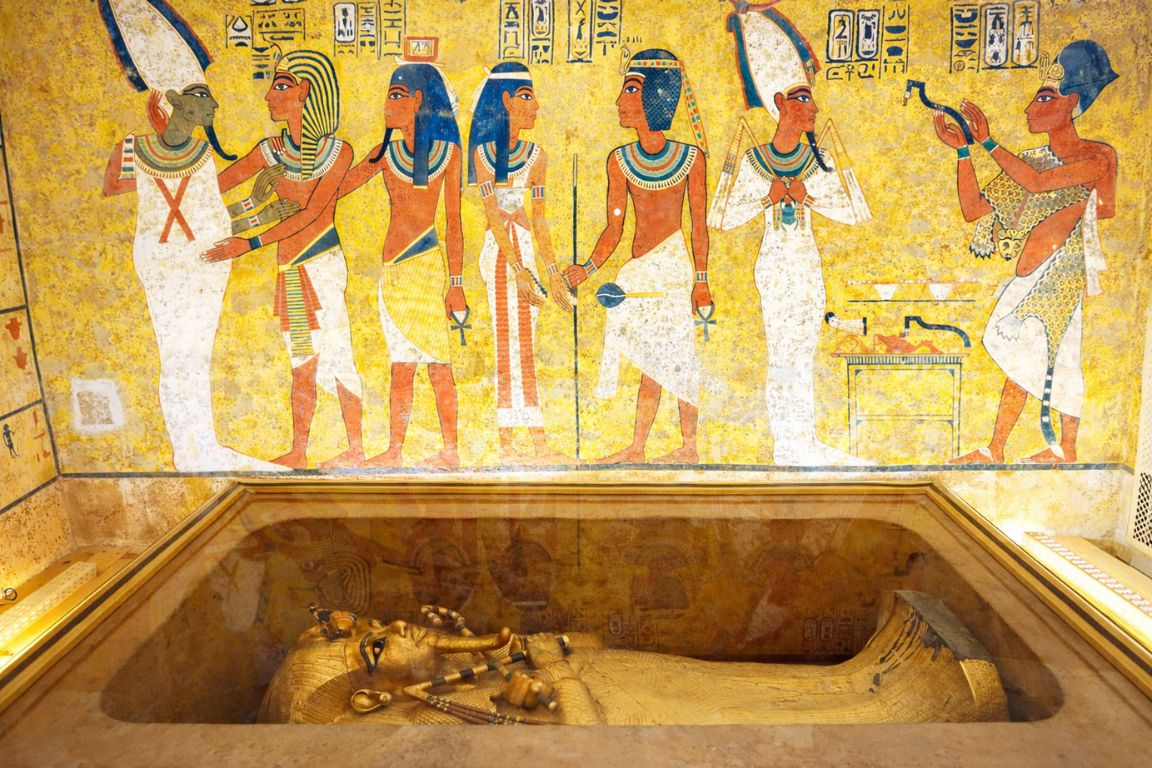
Three locations, three different things. It sounds fiddly, but the split is clean once you know it: treasures at Giza, mummies in Cairo, the king himself at Luxor. Most visitors only realise the collection was ever separated once they see it whole at GEM. For the treasures there, we cover the practicalities under the National Museum of Egyptian Civilization comparison.
How do you see the collection at GEM?
You see the Tutankhamun collection with a standard GEM admission ticket, which covers the two dedicated halls along with the rest of the galleries. Add a guide if you want the stories behind the objects, or go self-guided with the audio guide. Plan at least two hours for the Tutankhamun halls alone.
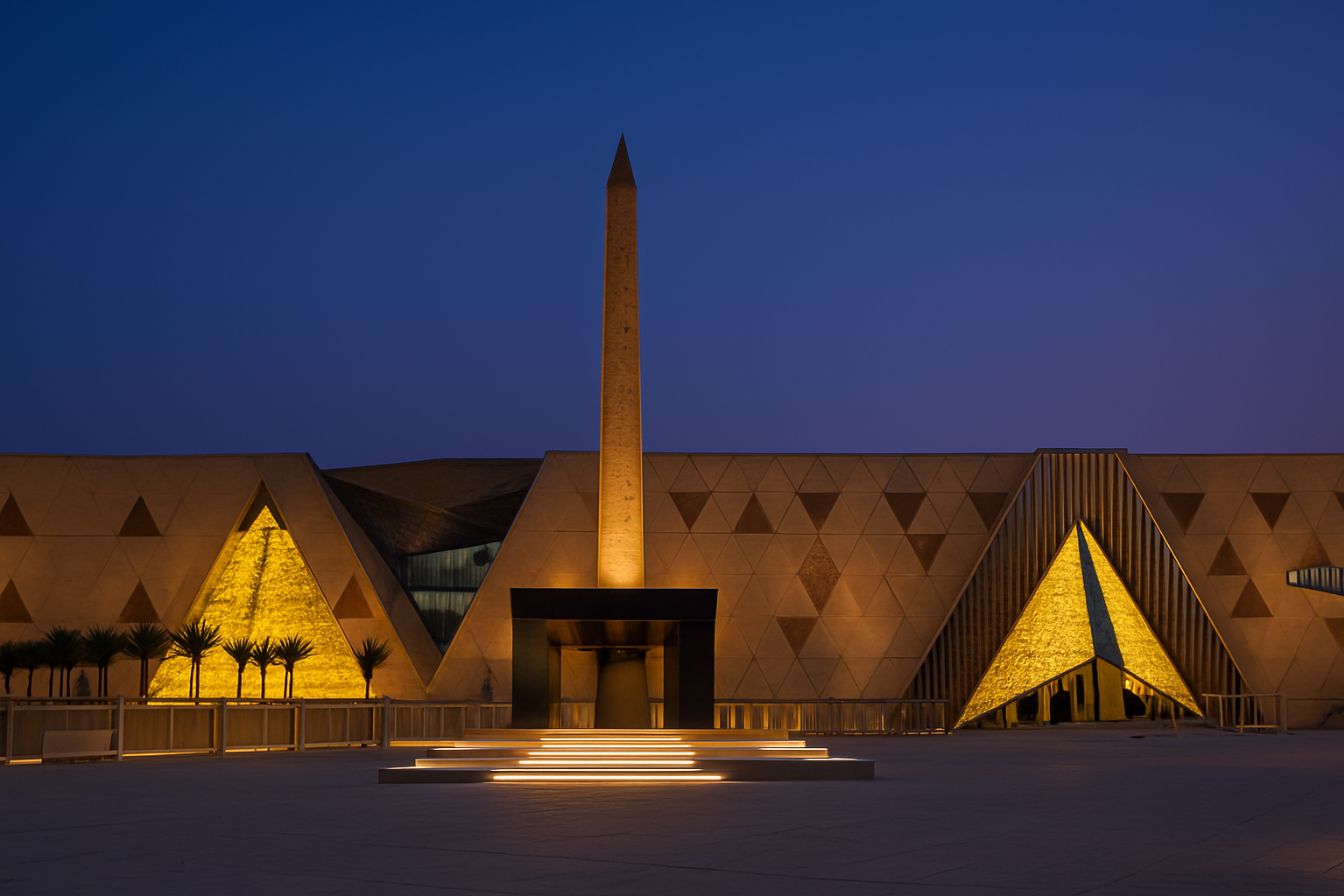
Booking is the part to get right early. Entry is timed and online only, with the first slot at 8:30 AM and galleries opening at 9:00. Crowds are heaviest between about 11 AM and 2 PM and worst on Friday and Saturday, so the early slot gives you the calmest time with the mask. Whichever ticket you choose, that timing does more for the visit than anything else.