Grand Egyptian Museum Photography Guide
Photography is welcome across most of the museum, with a few firm limits. Here is what you can shoot, where the best frames are, and how to get them without breaking the rules.
Booking choice: Private English-speaking Egyptologist and Cairo/Giza hotel transfers. Admission, lunch and tips are extra. Approximately 3.5 hours. Check Private GEM Egyptologist Visit Dates
Your next choice is how to visit: Visit photographic subjects at own pace; guided alternative is museum context, not professional shoot or access waiver.
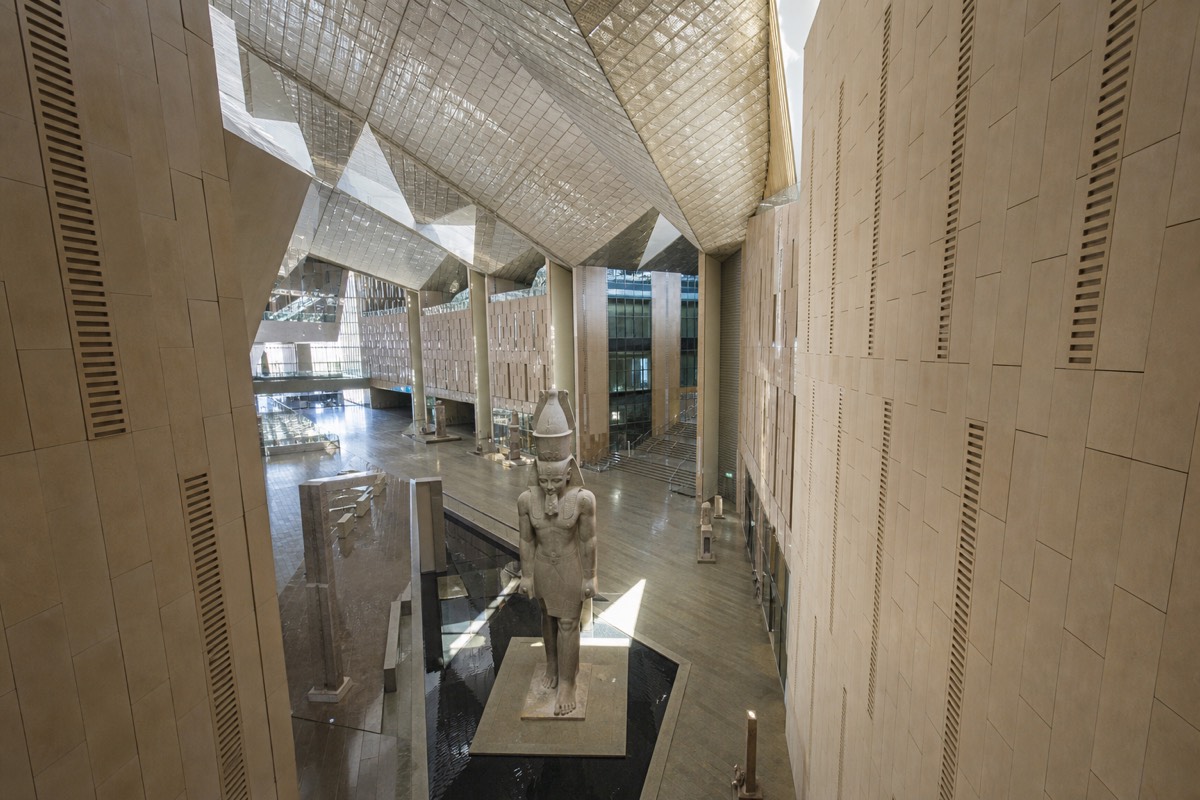
The museum is one of the most photogenic buildings in Egypt, and unlike many world museums it lets you shoot freely across most of it. The catch is a short list of firm rules, mostly there to protect fragile pigments and the flow of visitors, plus a few spots where the restrictions tighten. Get the rules straight, learn where the light falls, and you will leave with frames that do the place justice. Confirm the current rules on the day at visit-gem.com, since gallery-specific limits can change.
Can you take photos inside the Grand Egyptian Museum?
Yes. Personal photography is permitted in most areas of the museum, with your phone or a personal camera, and there is no general ban on shooting the galleries. The limits are specific rather than blanket: no flash, no tripods and no selfie sticks, along with tighter rules in a few sensitive spots such as parts of the Tutankhamun display. Personal, non-commercial use is the assumption throughout.
This is good news for anyone who has been frustrated by museums that forbid cameras outright. Here you can photograph the Grand Hall, the Grand Staircase, the colossal statuary and the sweep of the galleries without asking. A phone in hand is entirely normal, and the architecture alone, the atrium, the light through the angular facade, the pyramid panorama at the top of the staircase, rewards even a casual snapshot.
What the museum is protecting against is damage and disruption, not photography itself. Flash harms fragile ancient pigments, tripods and selfie sticks block walkways and other visitors, and a handful of the most sensitive or high-security displays carry extra limits. Stay inside those lines and you can shoot to your heart's content. The one thing to remember is that this is a working conservation environment, so when a sign or a staff member marks a specific restriction, it is there for the object's sake.
It is worth setting expectations on what "most areas" really means, because the phrase does a lot of work. In practice the vast majority of what you came to see is fair game: the architecture, the atrium, the Grand Hall and its colossus, the full sweep of the Grand Staircase, the chronological galleries, the Solar Boat hall and the gardens outside. The restricted zones are the exception, not the rule, and they are clearly marked where they apply. So the honest headline is that this is a photographer-friendly museum by world standards, and the short list of don'ts is easy to live with once you know it.
| Situation | Allowed? | Note |
|---|---|---|
| Phone photos in the galleries | Yes | The default across most of the museum |
| Personal camera (DSLR / mirrorless) | Yes | Standard body and lens for personal use |
| Flash | No | Prohibited to protect fragile pigments |
| Video in sensitive displays | Restricted | Tighter limits in parts of the Tutankhamun display |
| Commercial or professional shoots | By arrangement | Beyond personal use; check with the museum |
What are the photography rules (flash, tripods, selfie sticks)?
The core rules are consistent: no flash anywhere, no tripods or monopods, no selfie sticks, no drones, and no external lighting rigs. Your phone and a personal camera are fine for still photography. Some of the most sensitive displays, including parts of the Tutankhamun galleries, add limits on video, so watch for on-site signage and follow staff direction there.
Flash is the firmest rule and the most important. Repeated flash degrades the ancient pigments on painted and gilded surfaces, so it is switched off everywhere, no exceptions. Set your phone or camera to no-flash before you enter and forget about it. In the low, controlled light of the galleries a steady hand and a higher ISO do the work flash would have done, without the harm.
Tripods, monopods and selfie sticks are barred for a different reason: they take up space and get in other people's way in a building designed for large numbers. The same logic covers drones and any external lighting. Security screening at the entrance runs to airport standards, so support gear tends to be held there rather than argued over inside. If you are travelling with serious kit, leave the stands and rigs at the hotel and bring only the camera body and a lens.
| Item | Status | Why |
|---|---|---|
| Flash | Prohibited | Damages fragile ancient pigments |
| Tripods and monopods | Prohibited | Block walkways and other visitors |
| Selfie sticks | Prohibited | Space and safety around artifacts |
| Drones | Prohibited | Not permitted in or over the complex |
| External lighting rigs | Prohibited | Beyond personal photography |
| Phone and personal camera | Allowed | Still photography for personal use |
The distinction the museum draws is between personal and commercial photography. Shooting your own memories is the assumption everywhere the rules allow it. Anything that looks like a professional or commercial shoot, the kind of setup that needs stands, lighting or a crew, is a separate matter handled by arrangement rather than something you can improvise on the day. In practice, for the ordinary visitor this line never comes up: a phone or a single camera never trips it. It matters only if you arrive with kit that looks like a production.
Security screening at the entrance is thorough, on a par with an airport, so it is worth packing with that in mind. Bags are checked, and prohibited support gear is held there rather than waved through. If you are carrying a camera bag, keep it under the museum's size limits and leave anything that could be mistaken for a rig at your hotel. Sorting this before you arrive turns the entrance from a friction point into a formality.
Pack accordingly and the day runs smoothly. What you want to wear for a long shooting day, breathable outside, a layer for the cool galleries, matters too, and we cover it in our note on what to wear.
What are the best photo spots?
The strongest frames cluster around the building's set pieces: the colossal Ramesses II statue in the Grand Hall, the sweep of colossi up the Grand Staircase, the glass panorama of the three pyramids at the top, the golden mask and treasures in the Tutankhamun galleries, and Khufu's Solar Boat in its own hall. The Hanging Obelisk on the exterior plaza is your first shot, before you even enter.
Start outside. The Hanging Obelisk stands on the plaza, so you can frame it against the sky on the approach and again on the way out. Inside, the Grand Hall gives you the Ramesses II statue, 11 metres and 83 tonnes, best shot from low and wide to catch the scale rather than close up where it flattens. The Grand Staircase is the museum's signature: shoot up it to stack the colossi, then turn at the top for the pyramid panorama through the glass, a frame that puts ancient monuments and modern architecture in one shot.
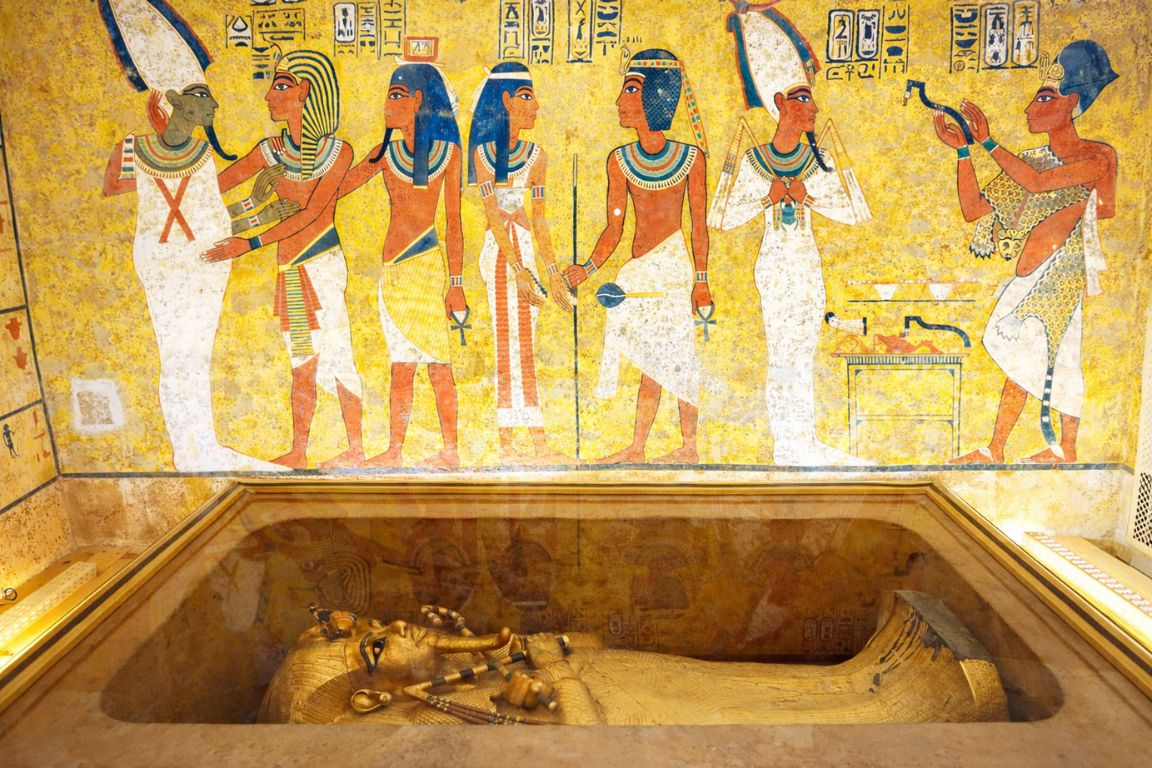
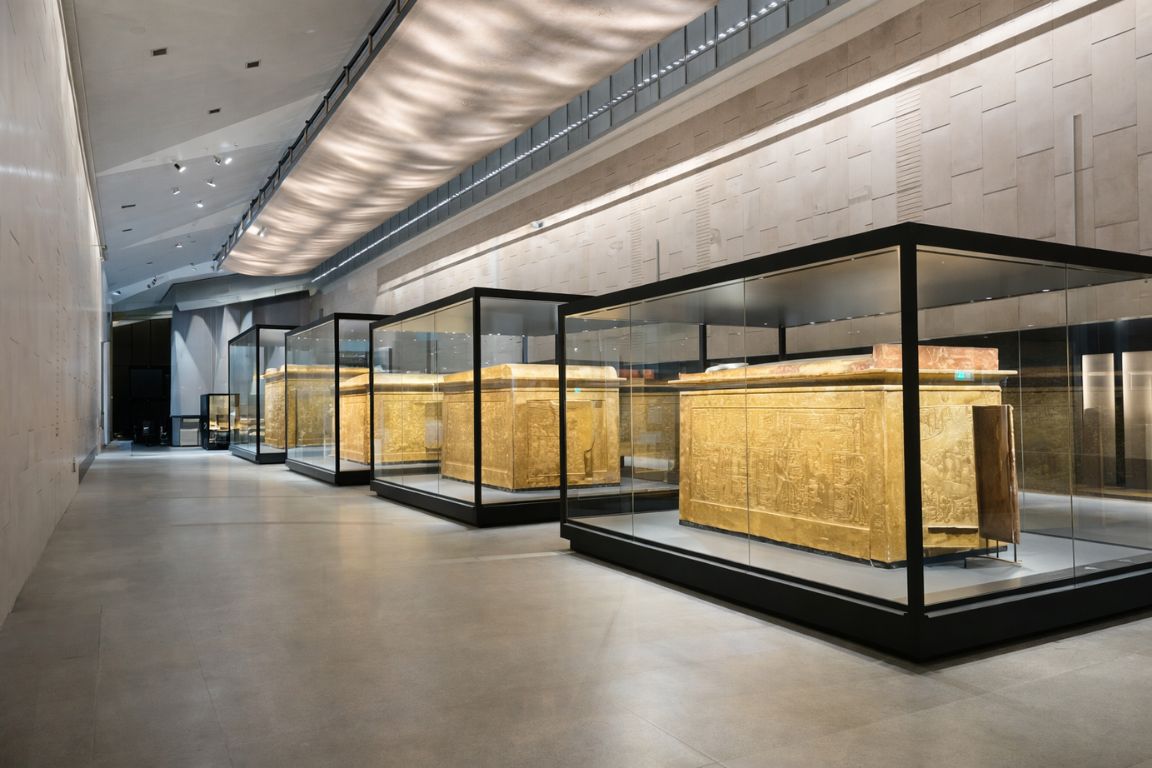
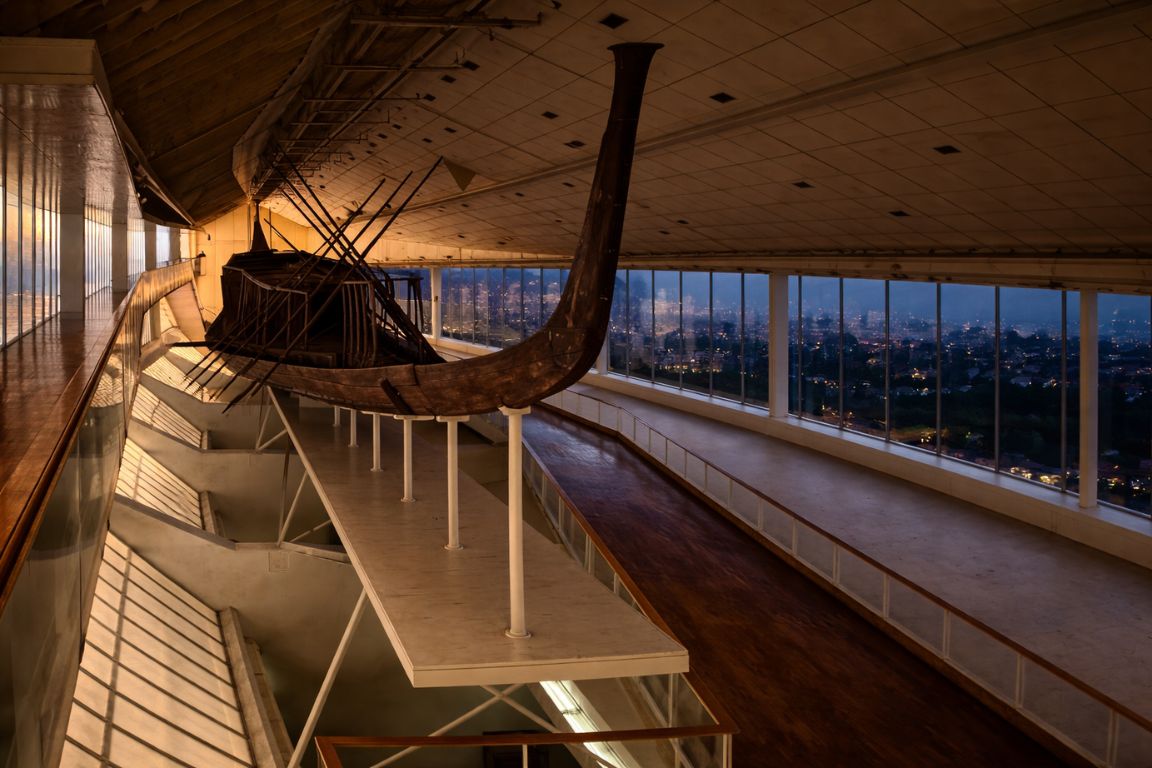
The Tutankhamun galleries hold the treasures everyone comes for, the death mask, the solid gold coffin, the Golden Throne, and they photograph beautifully in the controlled light, though this is where you most need to respect the tighter display rules. The Solar Boat, in its separate hall, is a wide-angle subject given its length, and the visible Boat 2 restoration adds a working-archaeology frame you will not get elsewhere. For the classic outdoor shot, the pyramids seen from the museum grounds sit within a UNESCO World Heritage landscape, and the light there rewards early or late timing.
| Spot | The shot | Tip |
|---|---|---|
| Hanging Obelisk (plaza) | Obelisk against open sky | Shoot on the approach, before crowds build |
| Grand Hall | Ramesses II, full height | Get low and wide for the scale |
| Grand Staircase | Colossi stacked up the flight | Shoot upward, then turn for the panorama |
| Staircase viewpoint | Three pyramids through the glass | Ancient and modern in one frame |
| Tutankhamun galleries | Golden mask and treasures | No flash; mind the tighter display rules |
| Solar Boat hall | The full cedar boat | Wide angle for the length |
A few framing habits lift these shots from snapshots to keepers. For the colossal statuary, get low and shoot upward so the piece towers the way it does in person, since eye-level shots shrink the scale. For the goldwork in the Tutankhamun galleries, fill the frame and let the controlled lighting do the work rather than fighting it. For the architecture, use the building's own lines, the rise of the staircase, the geometry of the atrium, to lead the eye. And leave the crowd out where you can by shooting early, because a clean background does more for a museum photo than any filter.
Reflections and glass are the two technical snags worth anticipating. Many treasures sit behind protective cases, so shoot at a slight angle rather than straight on to cut the glare, and get the lens close to the glass to reduce reflections of the room behind you. A dark sleeve or your own body can shade a stubborn reflection in a pinch. None of this needs special gear, just a moment's patience, which is easiest to find in the quiet of the first hour.
Routing yourself to these in the right order saves a lot of backtracking, and our the museum map lays out where each one sits.
What is the best time of day for photos?
Early morning is the strongest window. The first entry slot at 8:30 puts you in the galleries before the tour groups, so the Tutankhamun rooms and the staircase are at their quietest, and the morning sun through the glass facade lights the atrium at its most dramatic. Late afternoon on the extended Wednesday and Saturday evenings gives a warmer, quieter alternative with different light.
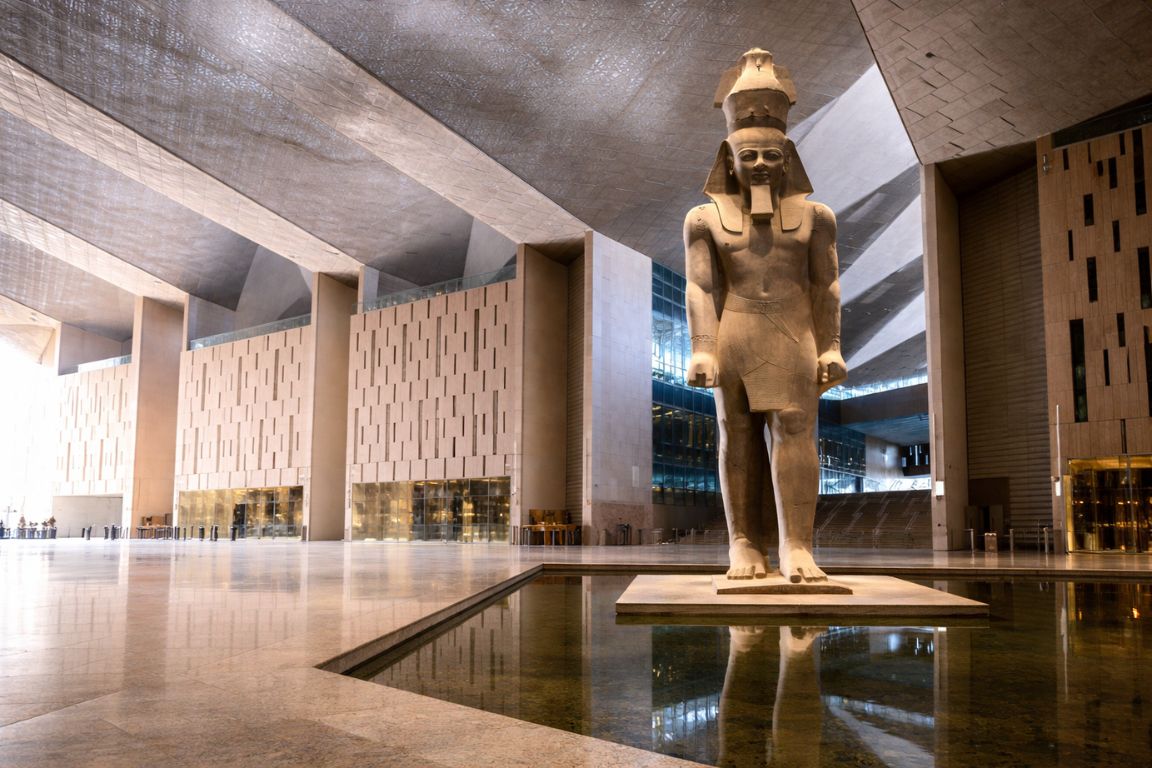
Light and crowds move together here, and both favour the early slot. The glass facade catches the morning sun at an angle that fills the atrium and rakes across the forecourt statuary, an effect that fades by midday. Just as important, the galleries are emptiest in that first hour, so you can frame the mask, the colossi and the staircase without a crowd in the shot. The window from about 11 am to 2 pm is the busiest of the day, and Fridays and Saturdays are the most crowded of the week, so those are the times to avoid if clean frames matter.
The extended-hours evenings, when the galleries stay open late on Wednesday and Saturday, are the sleeper option. After the daytime visitors thin out, the interior light turns warmer and the rooms quiet down, which suits a slower, more deliberate shoot. For the full breakdown of when the building is at its calmest, our guide to the best time of day to visit goes slot by slot.
Booking the right slot is really a photography decision as much as a scheduling one, because you cannot swap crowds for a filter later. An early entry can give you more time to work with the morning light, but it does not guarantee empty rooms. If your priority is an uncluttered frame, allow time to wait for a clear angle and follow the display’s current photography rules. Everything else about your kit is secondary to standing in the right room at the right hour.
Do not overlook the exterior light either. The forecourt statuary and the Hanging Obelisk catch a low morning sun that models their surfaces, and by midday that modelling flattens into glare. If you want the approach shots to sing, arrive early enough to work the plaza before you go in, then let the interior light carry the galleries. The same soft window returns in the late afternoon, which is when the extended-day evenings begin to pay off outdoors as well as in.
| Window | Light and crowd | Best for |
|---|---|---|
| 8:30 AM opening | Dramatic morning light, thin crowds | Tutankhamun and staircase without people |
| 11 AM to 2 PM | Peak crowds | Best avoided for clean frames |
| Mid-afternoon | Softer light, thinning groups | A calmer second pass |
| Wed and Sat evenings | Warm interior light, quiet rooms | Slow, deliberate shooting |
Whichever window you pick, remember the museum runs on timed entry booked at visit-gem.com, so lock in the slot that gives you the light you want before anything else.
Phone vs camera: which should you bring?
For most visitors a modern phone is all you need. It handles the low gallery light well, slips past the no-tripod rule by design, and is quick to frame in a crowd. A dedicated camera earns its place if you want a wide angle for the Solar Boat and the staircase or better reach and detail on the treasures, as long as you leave the tripod and any lighting rig at the hotel.
The rules quietly favour the phone. Since tripods, monopods and external lighting are all out, a phone's stabilisation and low-light modes cover most of what you would otherwise use a stand for. It is also faster and less conspicuous in busy galleries, and it keeps you inside the personal-use assumption without a second thought. For the majority of travellers, the phone is not a compromise, it is the right tool.
A camera makes sense for two things: wide scenes and fine detail. The Solar Boat's length and the vertical rise of the staircase reward a proper wide-angle lens, and the goldwork of the Tutankhamun treasures shows more in a camera's detail than a phone crop. If you bring one, bring only the body and a lens or two, set it to no-flash, push the ISO for the controlled light, and steady yourself against a wall or railing rather than reaching for a stand you cannot use. If you would rather concentrate on shooting while someone else handles the tickets and the drive, our team offers a visit with hotel pickup that gets you to the door with your slot secured.
| Gear | Strengths | Keep in mind |
|---|---|---|
| Phone | Low-light modes, stabilisation, fast, discreet | All most visitors need; no stand required anyway |
| Camera body and lens | Wide angle, reach, fine detail on goldwork | No-flash, higher ISO, brace against a wall |
| Tripod / monopod / rig | None here | Prohibited; leave at the hotel |
| Power bank | Keeps you shooting all day | Long visits drain a battery fast |
Bring the gear that matches your ambition, respect the short list of rules, and chase the morning light. The building does most of the work for you.
How do you photograph the pyramids from the museum?
The museum was built to frame the pyramids, so the best exterior shots come from the top of the Grand Staircase, where a glass panorama lines the building up with all three, and from the gardens and plaza outside. Early morning and late afternoon give the softest light on the plateau, which sits within a UNESCO World Heritage landscape about 2 km away, and both windows also happen to be the quietest.
The signature frame is the interior-to-exterior one at the top of the staircase. From there the three Giza pyramids appear through the glass, so you can hold the museum's modern architecture and the ancient monuments in a single composition, something no other vantage on the plateau gives you. Shoot it when the outside light is strong but not harsh, which again points to early or late in the day rather than the flat glare of noon.
Outside, the gardens and plaza open up wider views. The pyramids read best against a clear sky, and a low sun rakes texture across the desert that a midday sun flattens. If you are pairing the museum with the plateau itself, the monuments photograph beautifully in late-afternoon light, which is one more reason the common plan of galleries first, plateau second works for photographers as well as for crowd-dodgers. Keep the horizon level, give the pyramids room in the frame rather than cropping tight, and let the scale speak.
| Vantage | The frame | Best light |
|---|---|---|
| Top of the Grand Staircase | Three pyramids through the glass, with the architecture | Strong but soft morning or late-day sun |
| Gardens and plaza | Wide desert-and-monument views | Low sun for texture; clear sky |
| The plateau itself | Pyramids and Sphinx up close | Late afternoon |
| Midday, any vantage | Flat, high-contrast light | Best avoided for landscapes |
These outdoor shots carry no gallery restrictions, so this is where a wider lens or a phone's panorama mode earns its keep. Just remember the no-drone rule still applies over the whole complex and the protected plateau.